
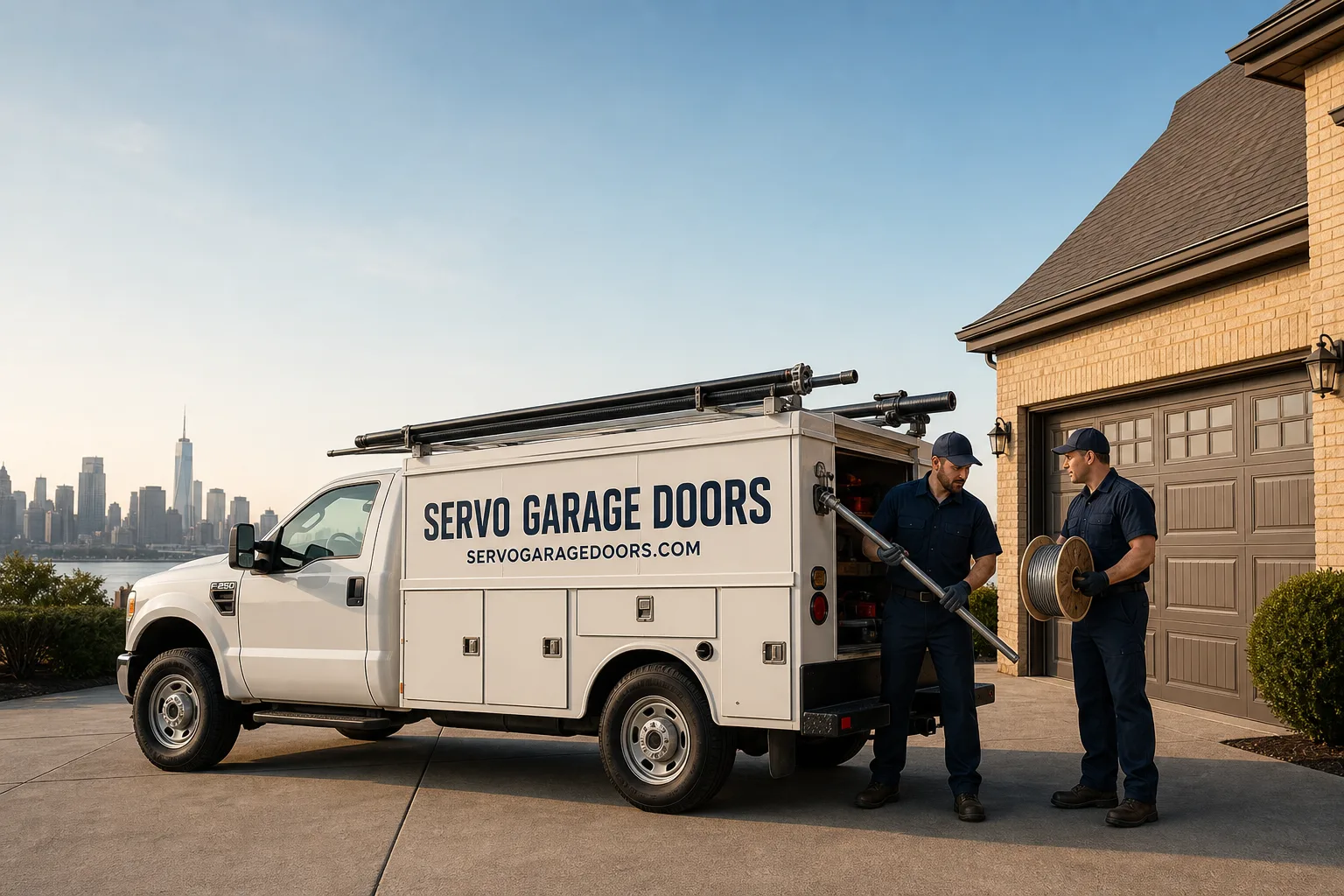
Full 25-point door and opener safety check with every visit - springs, cables, rollers, tracks, and your LiftMaster or Chamberlain opener included
You get a price before we start. It does not change when the truck arrives.
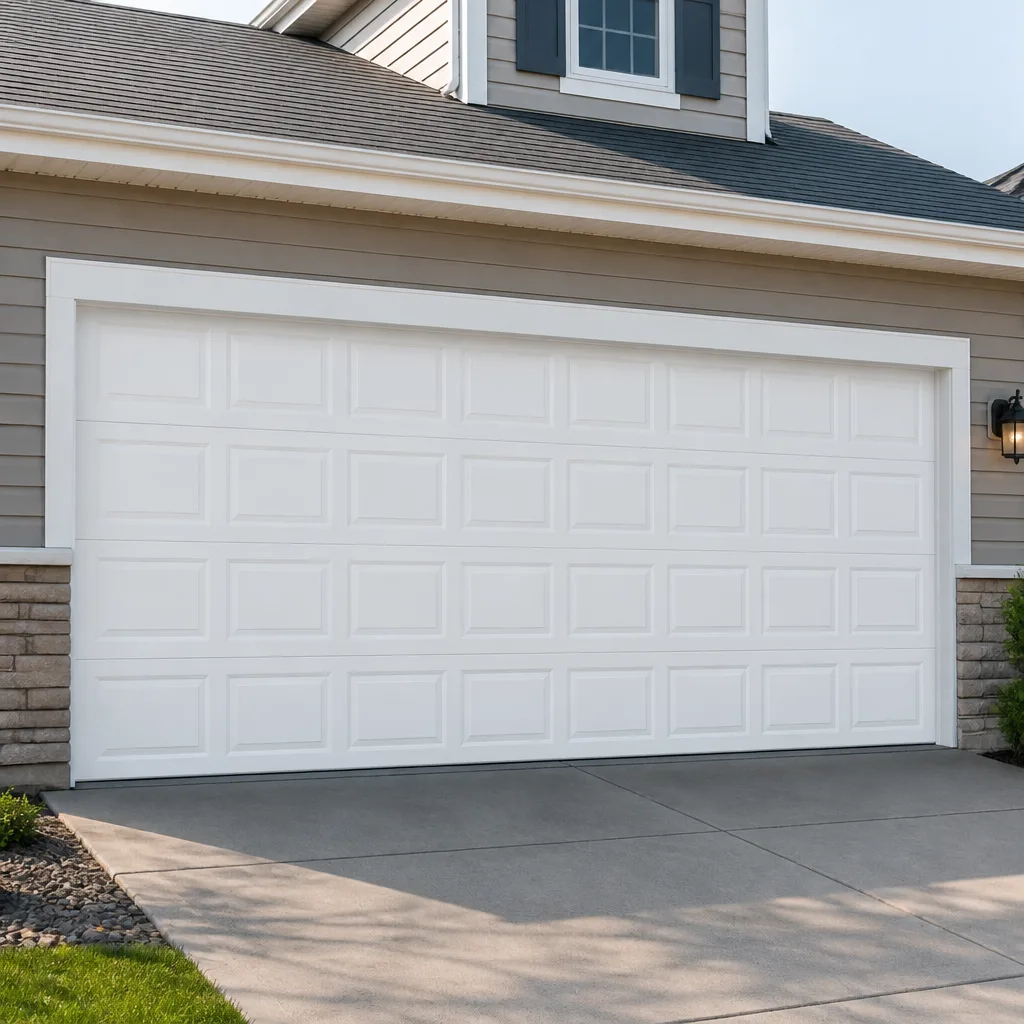
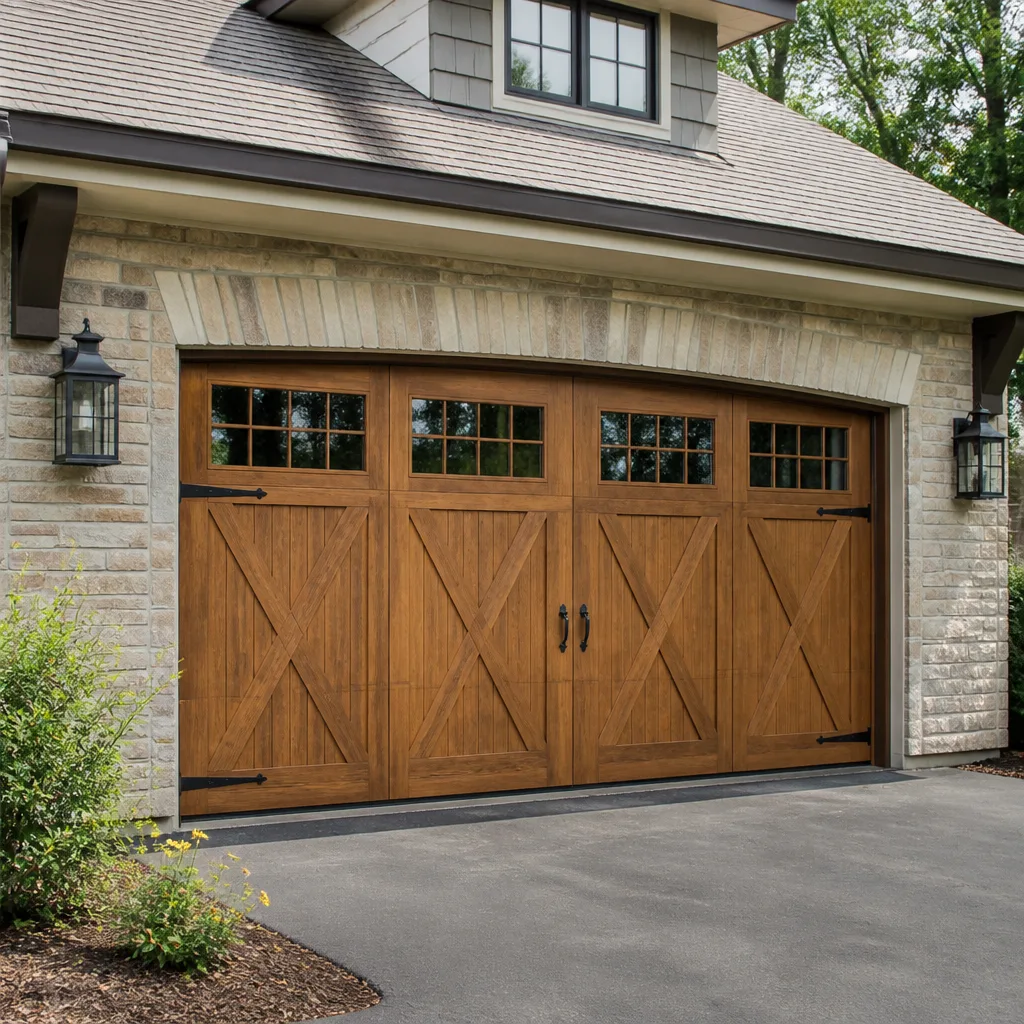
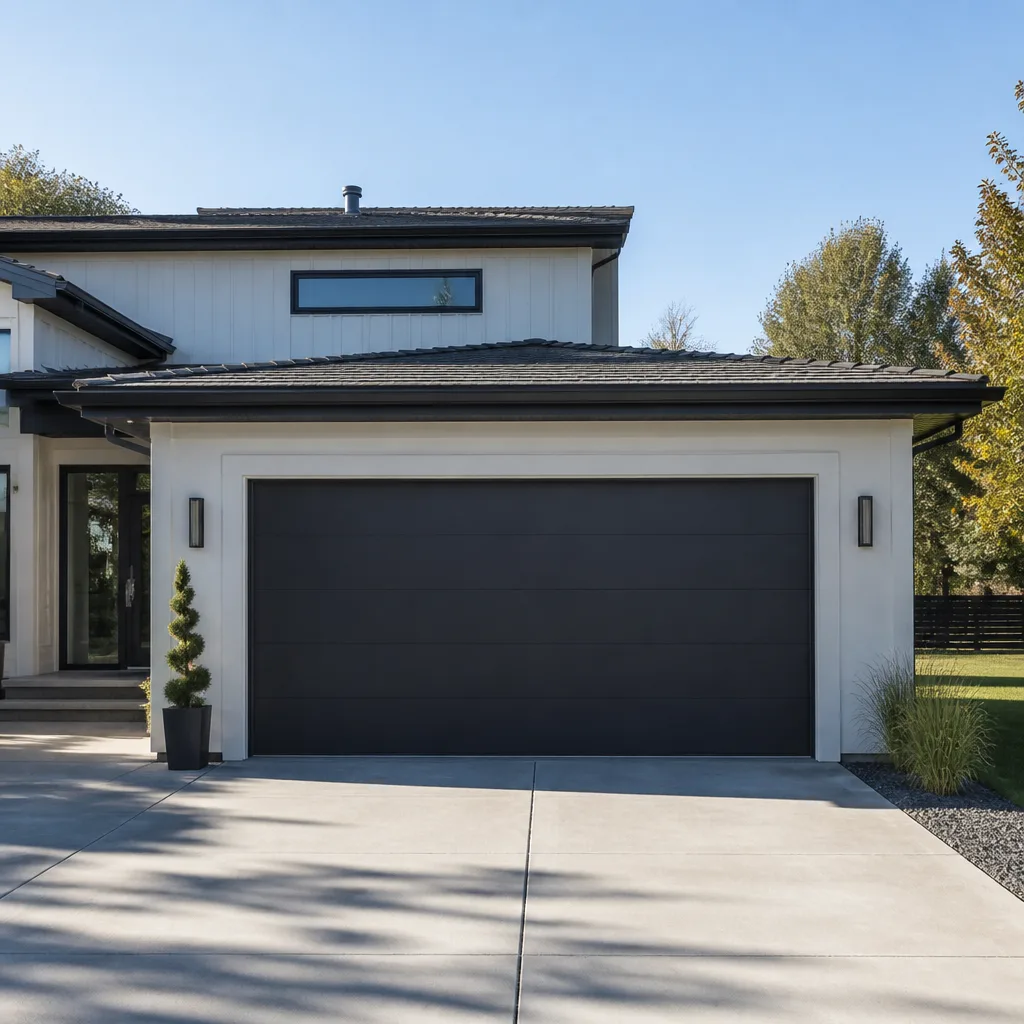
 Before
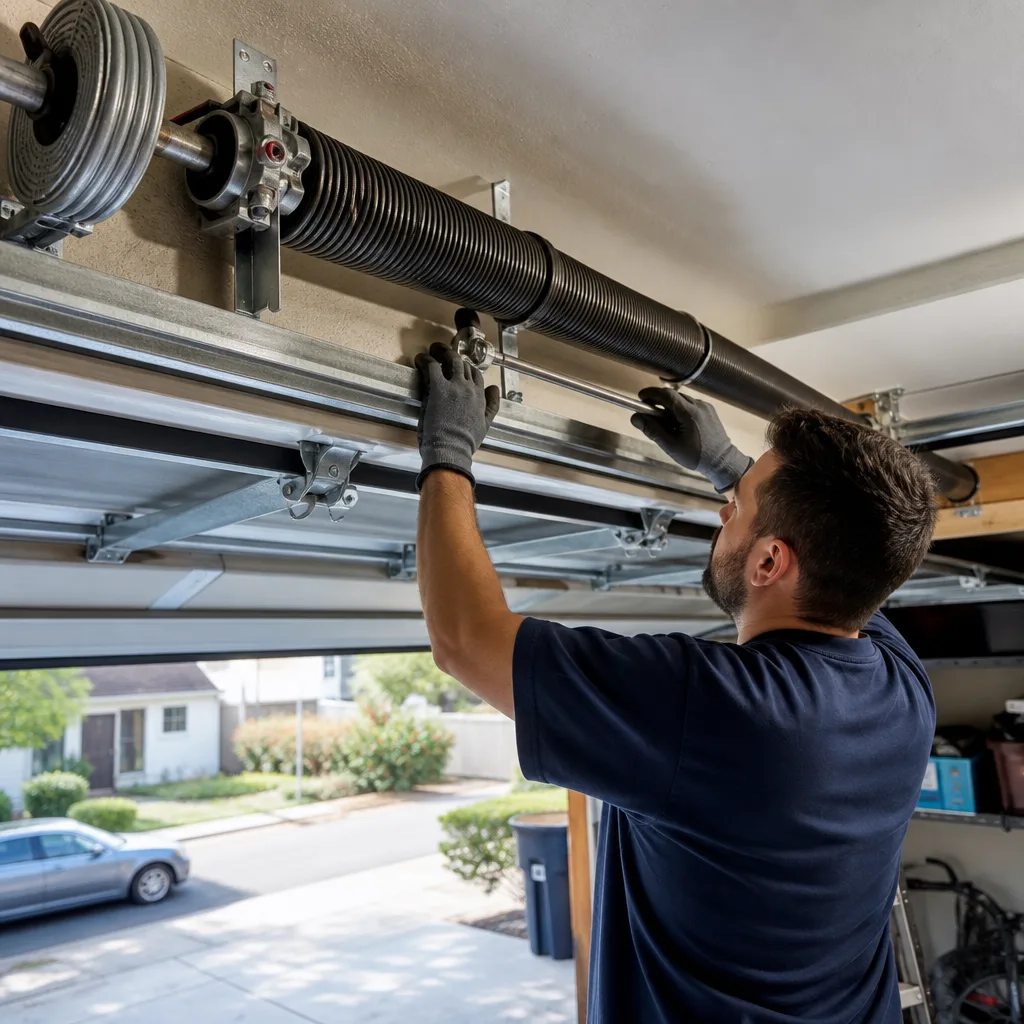 After
After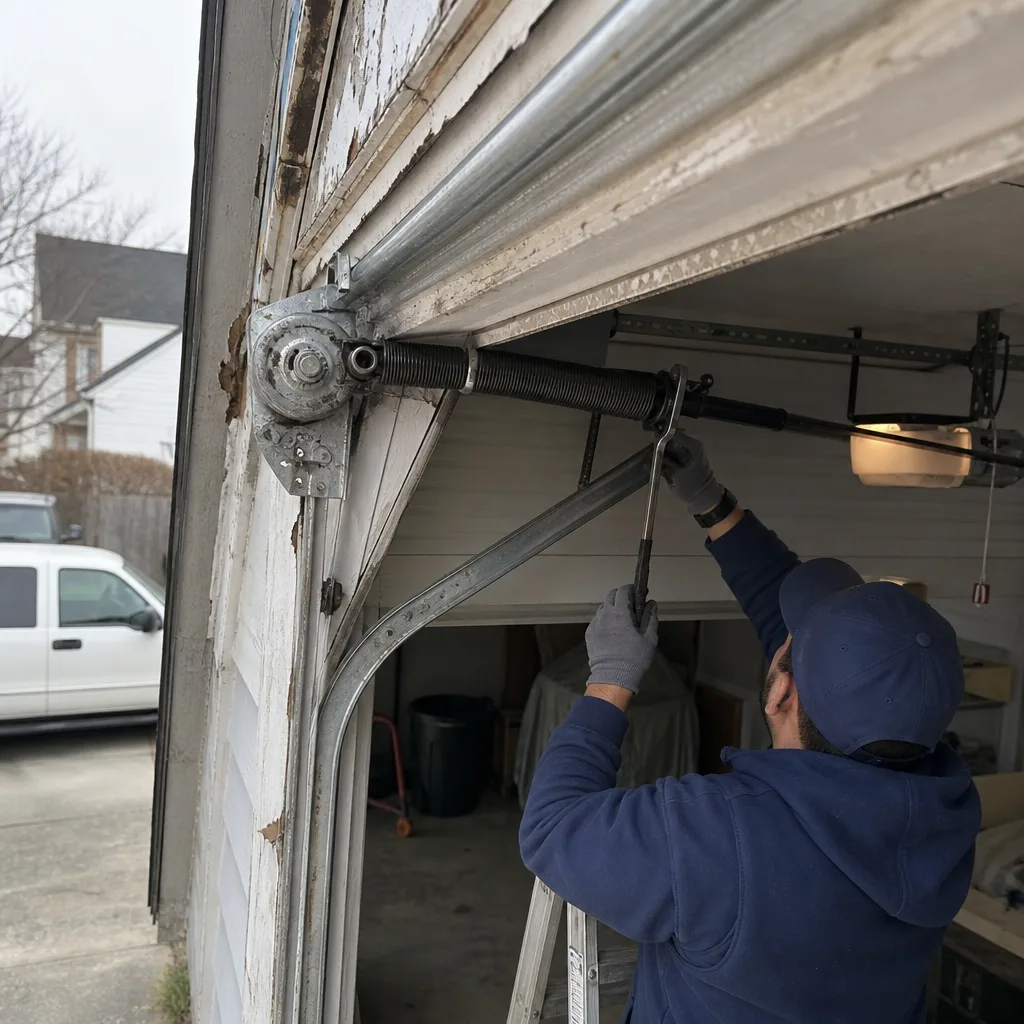 Before
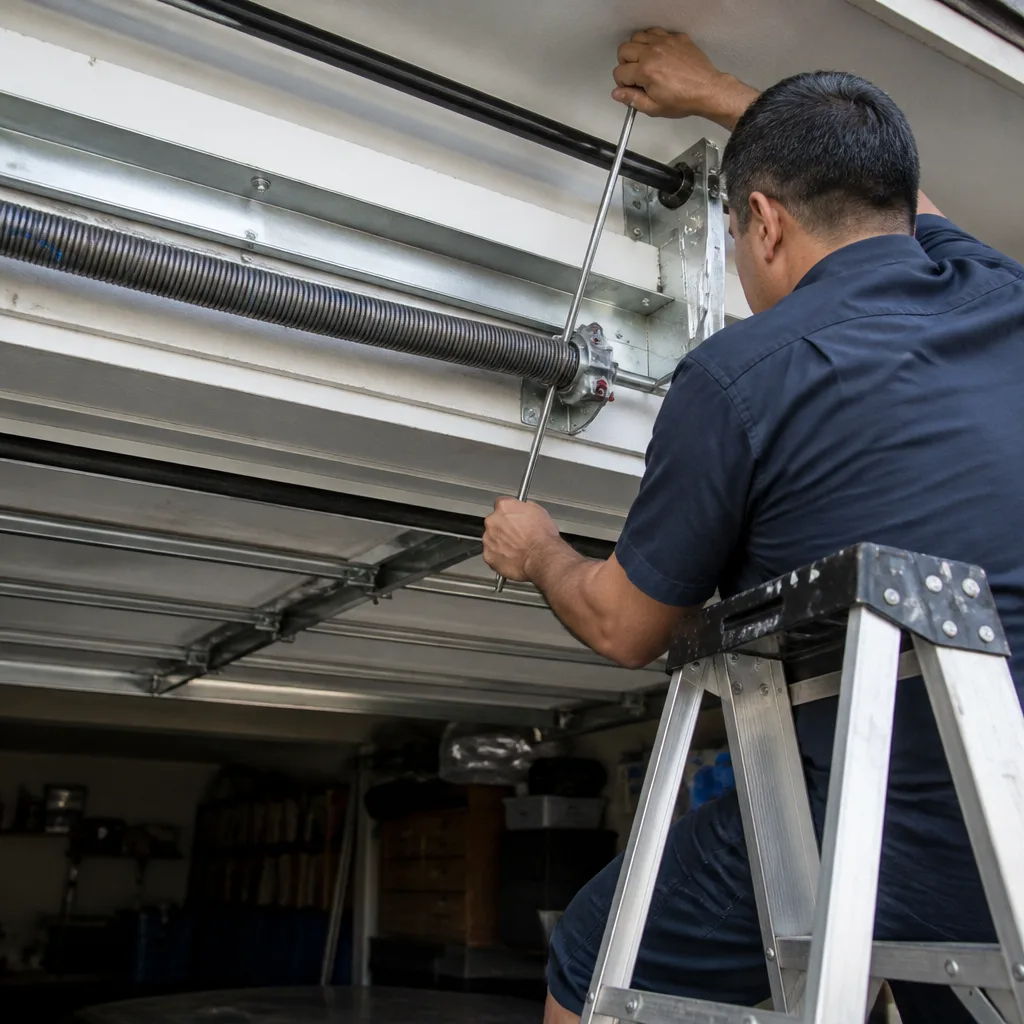 After
After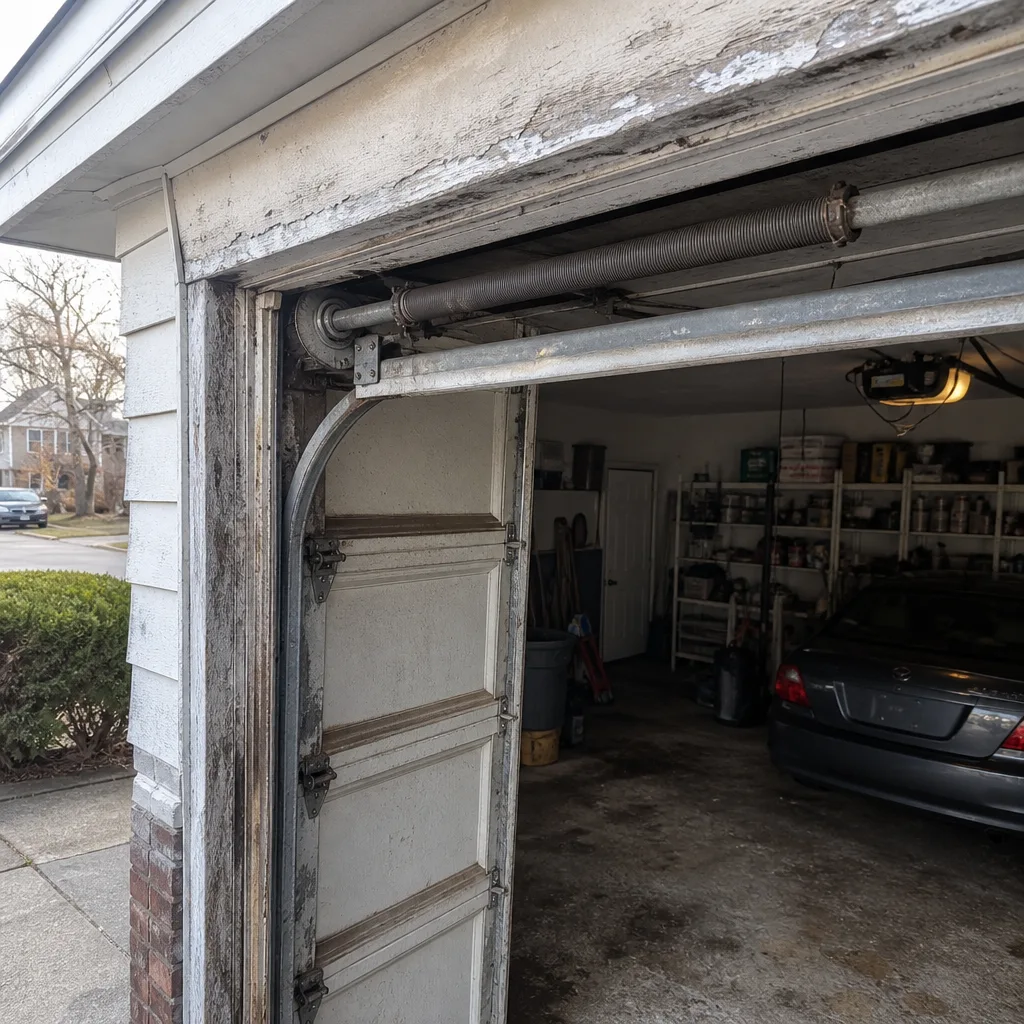 Before
 After
AfterGarage Door Won’t Close All the Way
A garage door that stops partway down and reverses – or just stalls and sits – is almost always responding to a signal it was designed to obey: a safety sensor that sees something in the path, a limit setting that tells it the floor is higher than it is, or a mechanical problem that loads the motor until it gives up. In most cases, the door is doing exactly what it was told to do. The problem is what’s telling it.
The good news is that most causes are visible if you know where to look. The less good news is that a couple of them involve components under serious mechanical tension, and those are not safe to adjust yourself. This page walks through what each cause looks, sounds, and behaves like so you can give whoever answers your call an accurate picture before they arrive.
What’s Happening
A garage door that won’t close all the way is almost always stopping because of one of four things: misaligned or obstructed safety sensors, a limit switch set too high, a broken or weakened spring that can’t hold the door’s weight through the full travel, or a damaged track that’s physically blocking movement. The door isn’t broken in the way a car with a seized engine is broken – it’s responding to a condition. Identifying which condition is most of the diagnostic work.
Most openers are programmed to reverse when they sense resistance above a set threshold. That threshold exists to keep the door from crushing something – or someone. So when the door reverses or stalls short of the floor, it could be a genuine obstruction, a sensor reading something that isn’t there, or a mechanical drag the motor correctly decided not to fight. All three feel identical from where you’re standing, which is why the steps below matter.
Why It Happens
1. Safety Sensor Misalignment or Obstruction
Every opener built after 1993 has two photoelectric sensors near the floor on each side of the door frame – usually with small amber and green indicator lights. If those sensors can’t see each other clearly, the opener refuses to close. A blinking or off light on either sensor is the tell. Causes range from a sensor knocked out of alignment to a cobweb across the lens to direct sunlight hitting the receiver at the wrong angle. This is the most common reason a door reverses immediately after you press the button.
2. Limit Switch Set Incorrectly
The limit switch tells the opener how far to travel before it decides the door is fully closed. If that number drifts – which can happen after a power surge, a firmware reset, or a DIY adjustment that went slightly wrong – the opener stops short of the floor because it thinks the floor is already there. The sign here is a door that stops at the same height every time, doesn’t reverse aggressively, and shows no sensor light issues. It just parks a few inches up and stops.
3. Spring Failure or Fatigue
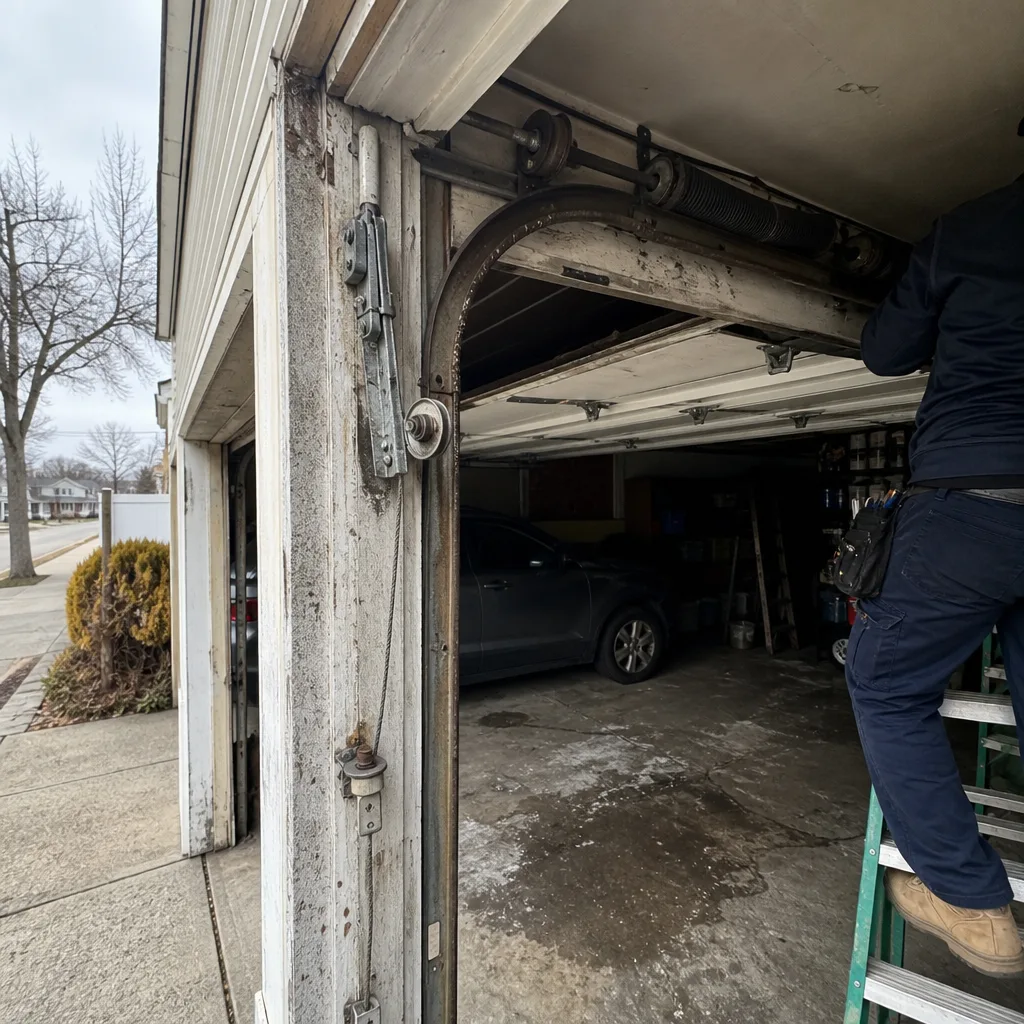
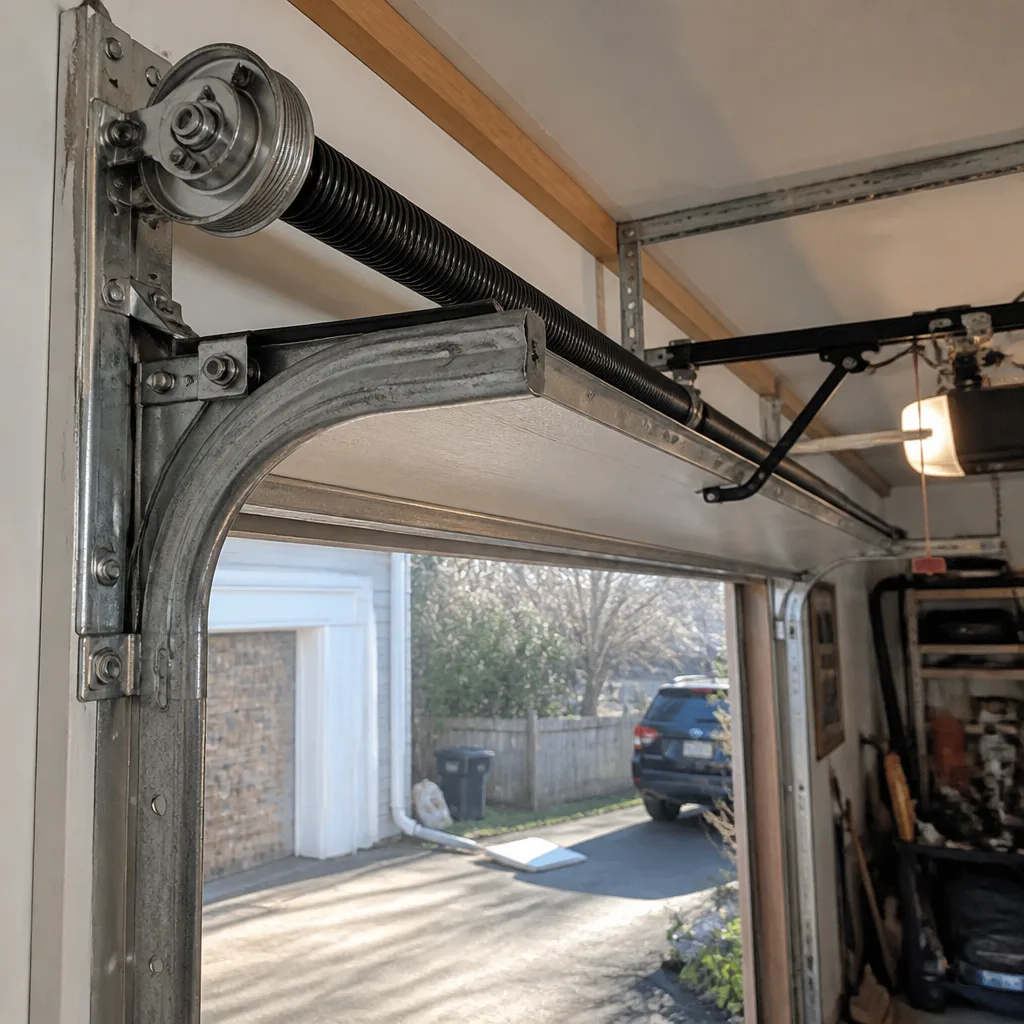
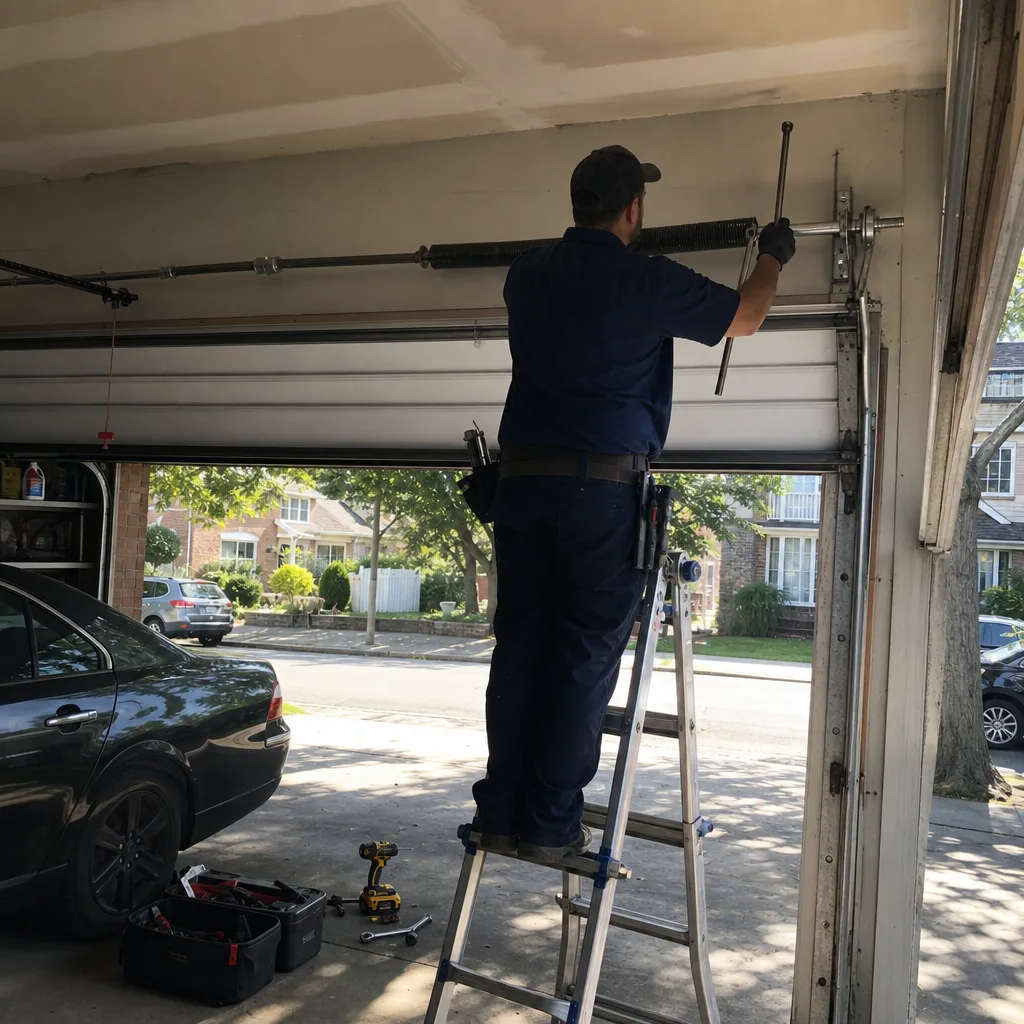
Torsion springs – the large coiled spring above the door – counterbalance the door’s weight. When a spring breaks or loses tension, the door becomes much heavier than the opener was sized to move. The opener either stalls partway down or the door drops faster than it should and the motor cuts out in self-protection. A broken spring is usually loud – a sharp crack, sometimes described as a gunshot – and you’ll often see a visible gap in the coil. Do not operate the door manually or attempt to adjust springs yourself. Torsion springs store enough energy to cause serious injury. Stop using the door and call.
4. Damaged Track or Roller Obstruction
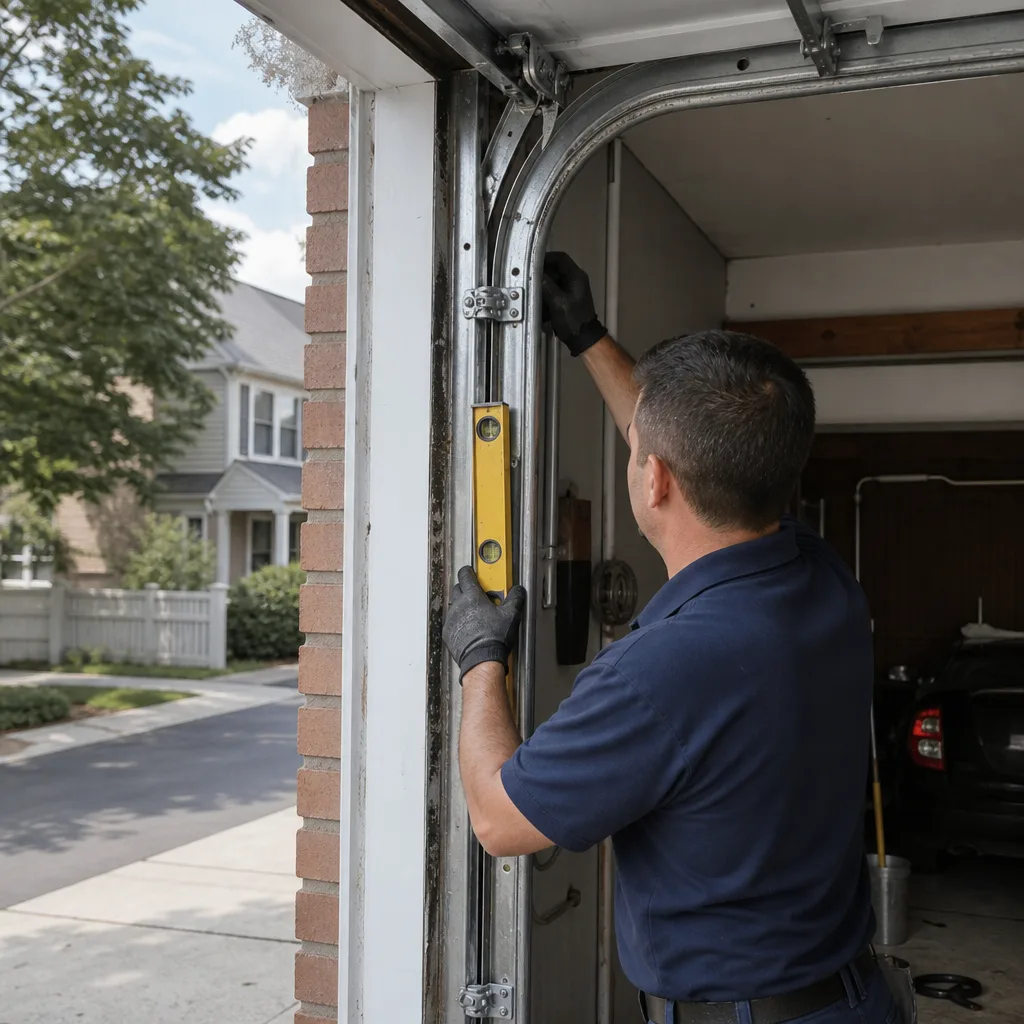
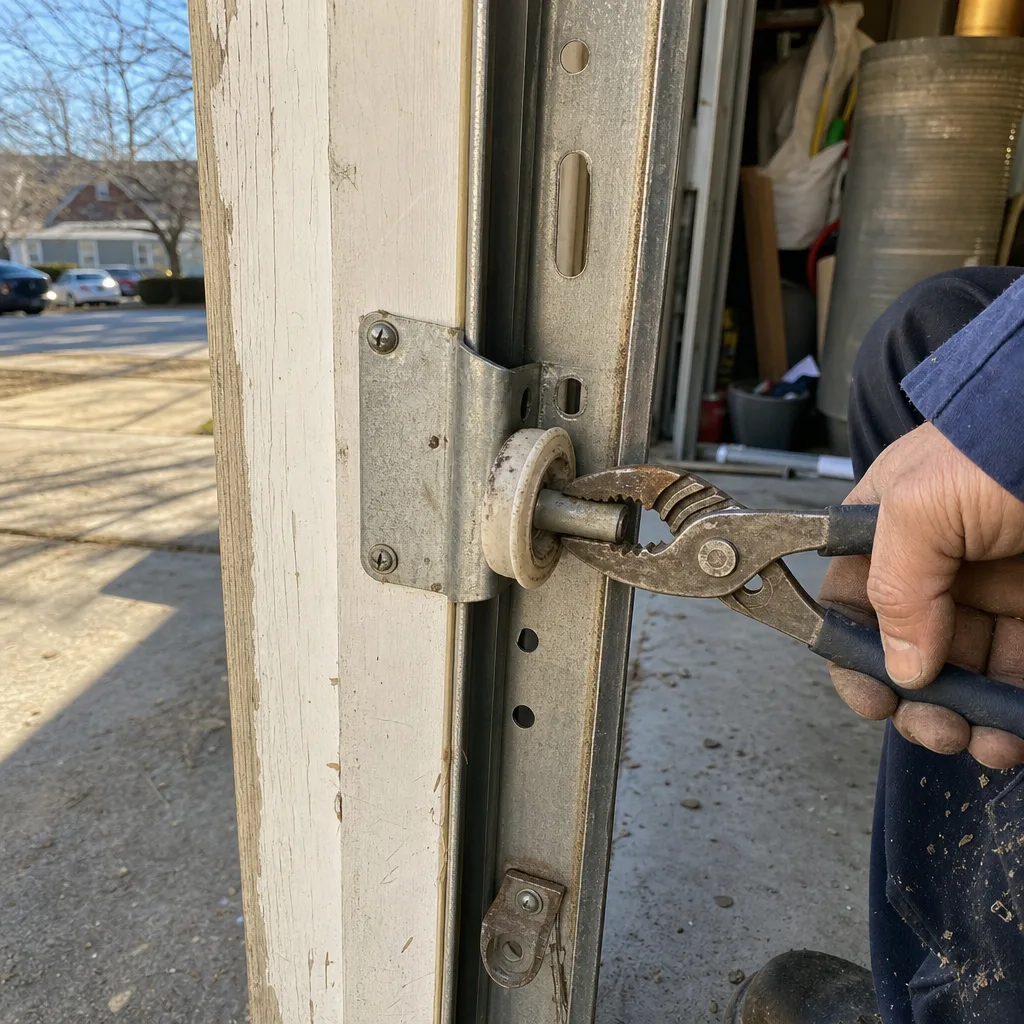
The horizontal and vertical tracks guide the door’s rollers through every cycle. A bent section, a roller that’s come off the track, or debris lodged in the rail can stop the door at the exact point of the problem. You’ll often hear a scraping or grinding noise at the same spot each time, and if you look at the track while the door travels, you may see the panel bow or hesitate at a specific point. Minor track dents sometimes look harmless from across the garage but are enough to stop the door cold.
BeforeAfterWhat to Do Right Now
- Check the sensor lights first. Walk to the sensors near the floor on each side of the door frame. One should show a steady amber light, one a steady green. If either is off or blinking, that’s your starting point. Look for anything blocking the beam – a broom handle, a garbage bag, a garden hose – and remove it. Gently realign the sensor so the lights go steady before you try the door again.
- Look and listen for a broken spring. From inside the garage, look at the horizontal bar above the door. If you see a torsion spring with a visible gap or separation in the coil, stop. Do not operate the door. Do not pull the red emergency release cord. Call your local Servo Garage Doors team directly – this repair requires a trained technician with the right tools, and attempting it without them is genuinely dangerous.
- Photograph the door’s stopped position. Before you call, take a photo showing exactly where the door sits and the full track on both sides. This gives the technician a concrete starting point before they arrive, and it becomes part of the documented record Servo keeps on every job.
- Check the track for visible damage. Stand to the side and look along the vertical track. A bent or dented section is usually visible. Don’t try to straighten it by hand – track that’s been forced out of shape often has stress damage that isn’t obvious, and bending it back without the right equipment can make it worse.
- Disconnect the opener if the door is stuck open and you need to secure the space. Pull the red release cord to disengage the trolley, then lower the door manually – but only if you’ve already confirmed the spring is intact and the door moves smoothly by hand. If there’s any resistance or the door feels heavy, leave it and call. A door under an intact spring should feel nearly weightless. If it doesn’t, that’s information.
How We Fix It
When your local Servo Garage Doors technician arrives, the first thing they do is observe the door through a full cycle – or as much of a cycle as is safe – before touching anything. That’s not theater; it’s how you find the actual cause instead of the most recent one.
Sensor problems are usually resolved the same visit: cleaned, aligned, and tested. Limit switch adjustments take a few minutes on most openers once the right travel distance is confirmed. Spring replacement is a more involved repair – the old spring comes off, the correct replacement is matched to the door’s weight and size, and the new spring is wound and tensioned with calibrated tools. Track repairs range from minor realignment to section replacement depending on the extent of the damage.
The technician documents what they found with photos before any work starts – that’s not optional at Servo, it’s Clause 4 of The Haven Standard, and it traces back to the founding rule the company was built on in 2015: the customer sees the failed part, photographed, before anyone quotes a replacement. You get a flat written price and written scope before work begins, every time, no exceptions. Most of these repairs close in under two hours. The relevant services are Garage Door Repair and, where the opener itself is the source of the problem, Garage Door Opener Repair.
If a repair is not right, the 365-Day Done Right Promise means we make it right – backed by The Haven Standard and a terms page, not a handshake.
Frequently Asked Questions
It depends on why it’s stopping. A sensor misalignment or a limit adjustment is a nuisance, not an emergency – the door is actually behaving safely. A broken spring is a different situation: operating a door with a failed spring puts real stress on the opener motor, the cables, and anyone nearby if something lets go. If you’ve heard a loud snap, if the door dropped hard, or if moving it by hand feels heavy, treat it as urgent and don’t use the door. Call (970) 536-1724 and your local Servo team will tell you honestly whether it needs same-day attention.
For repair calls – including spring failures, sensor issues, and track problems – yes, your local Servo Garage Doors team handles same-day service, and calls are answered by a live person 24/7, including holidays. You’ll get a named technician and a text when they’re on the way. Call (970) 536-1724 and we’ll give you an honest arrival window, not a vague callback range.
No. A flat written price and written scope are delivered before any work starts – that’s Clause 1 of The Haven Standard, and it applies to every job without exception. What you agree to in writing is what you pay. If the technician finds something additional, they’ll document it and quote it separately before touching it.
Both can produce that pattern, and the difference usually comes down to what you hear and feel. A limit issue is quiet – the motor simply stops and the door sits there. A track issue typically comes with a scrape, a vibration, or a visible hesitation at the problem point, and if you watch the track while the door moves you may see the panel deflect slightly. A technician can tell them apart in the first cycle. If you’re not sure, photograph where it stops and what you can see around that point – that photo is genuinely useful when you call (970) 536-1724.
Get It Fixed
Your local Servo Garage Doors team is reachable right now at (970) 536-1724 – a live person answers, every time, including nights and weekends. You can also book online. Tell us what you’re seeing, and we’ll have a named technician headed your way with a written price before any work starts.
Written by Marcus Deller, Owner at Servo Garage Doors, serving communities nationwide since 2015.
What Our Customers Say
"Opener had been stalling for months. The tech showed me the logic board reading, replaced the board instead of the whole unit, and it cost a third of the other quote I had."
- Robert K."They sent a photo of the snapped torsion spring before quoting anything. Price on the estimate was the price on the invoice. I have never had that happen with a home repair."
- Dana W."Text came through with the technician name and photo twenty minutes before he arrived. Small thing, but I stopped worrying about who was at the door."
- Priscilla M.