
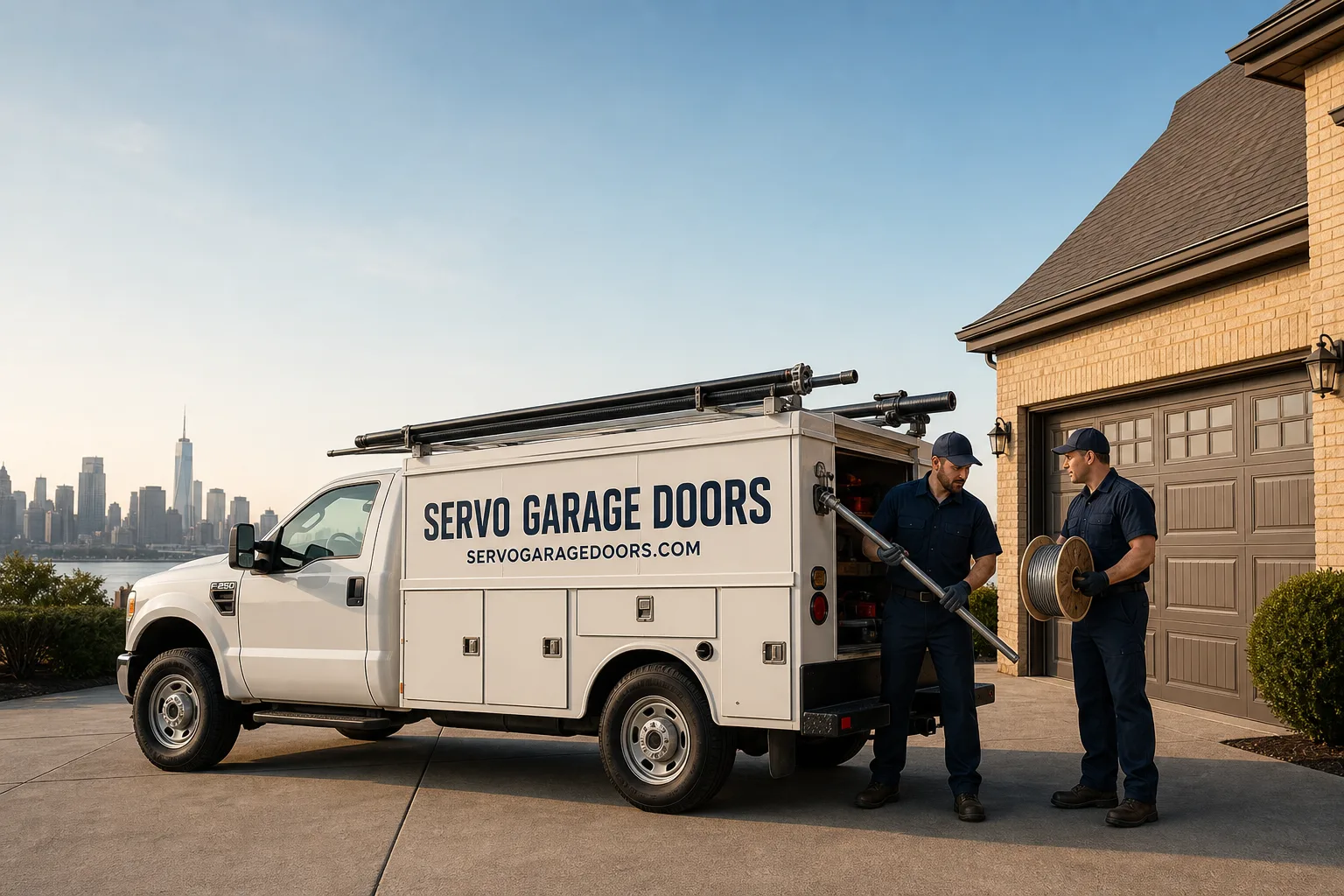
Full 25-point door and opener safety check with every visit - springs, cables, rollers, tracks, and your LiftMaster or Chamberlain opener included
You get a price before we start. It does not change when the truck arrives.
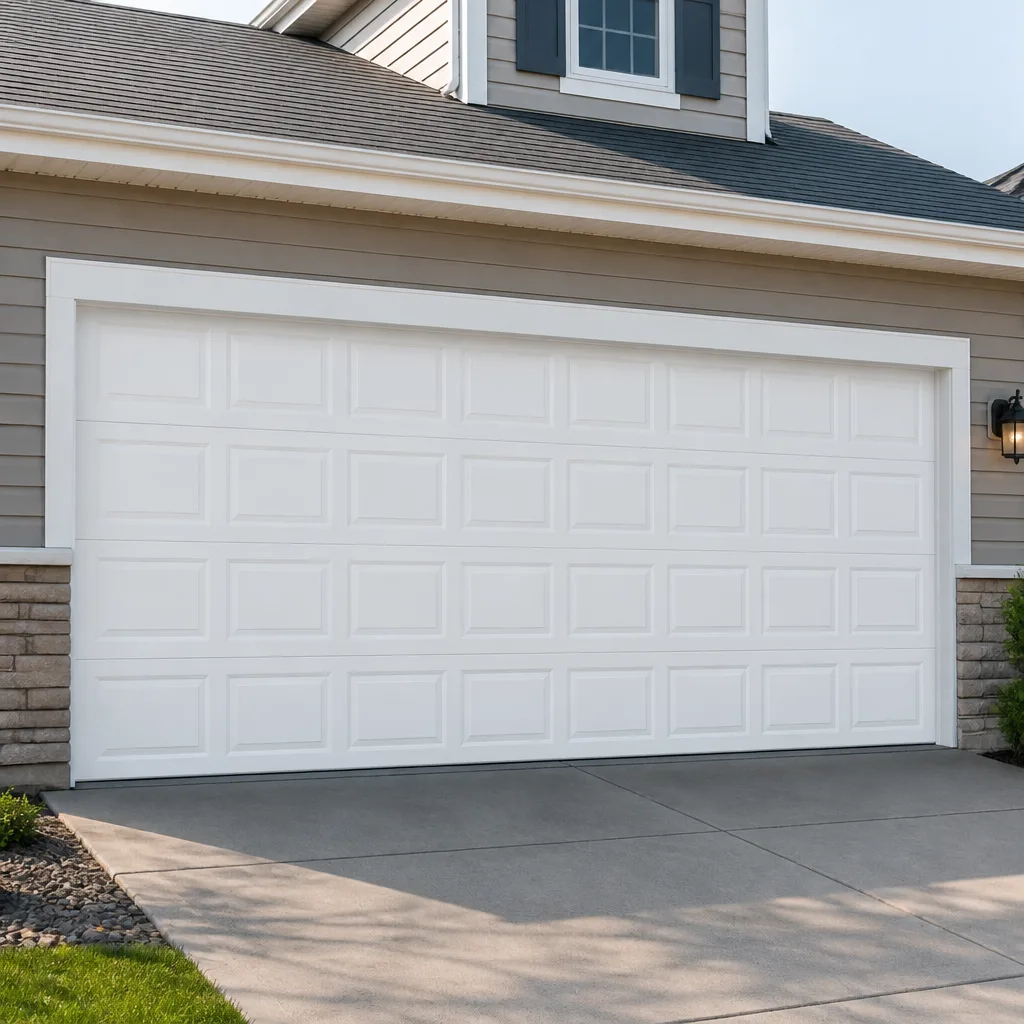
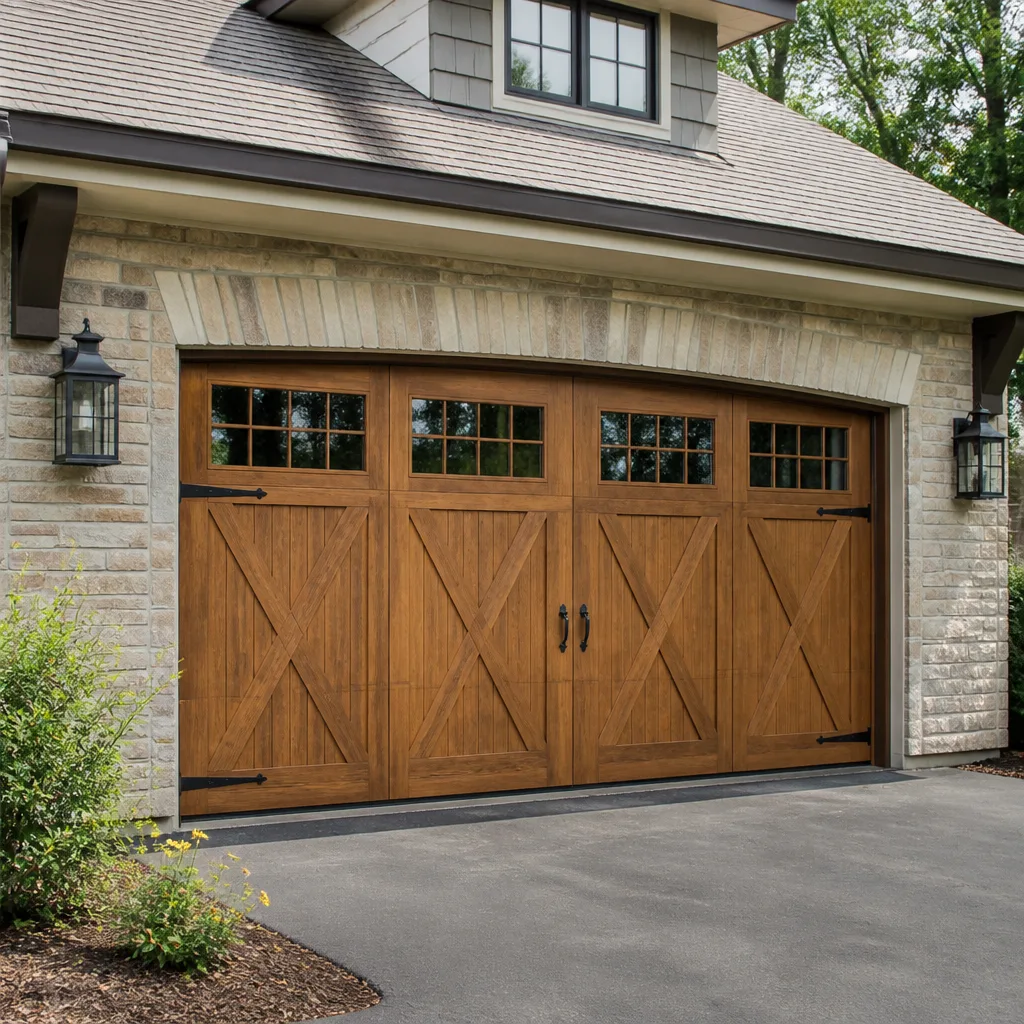
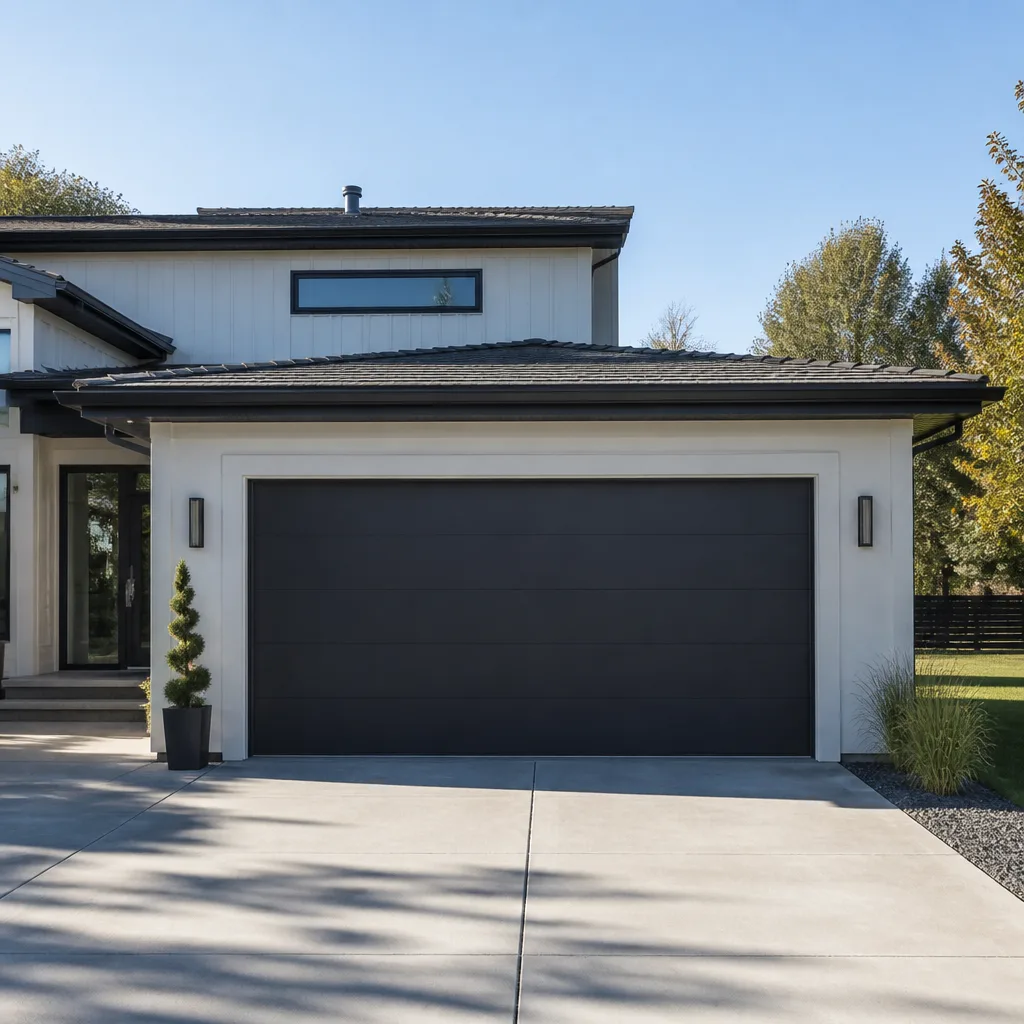
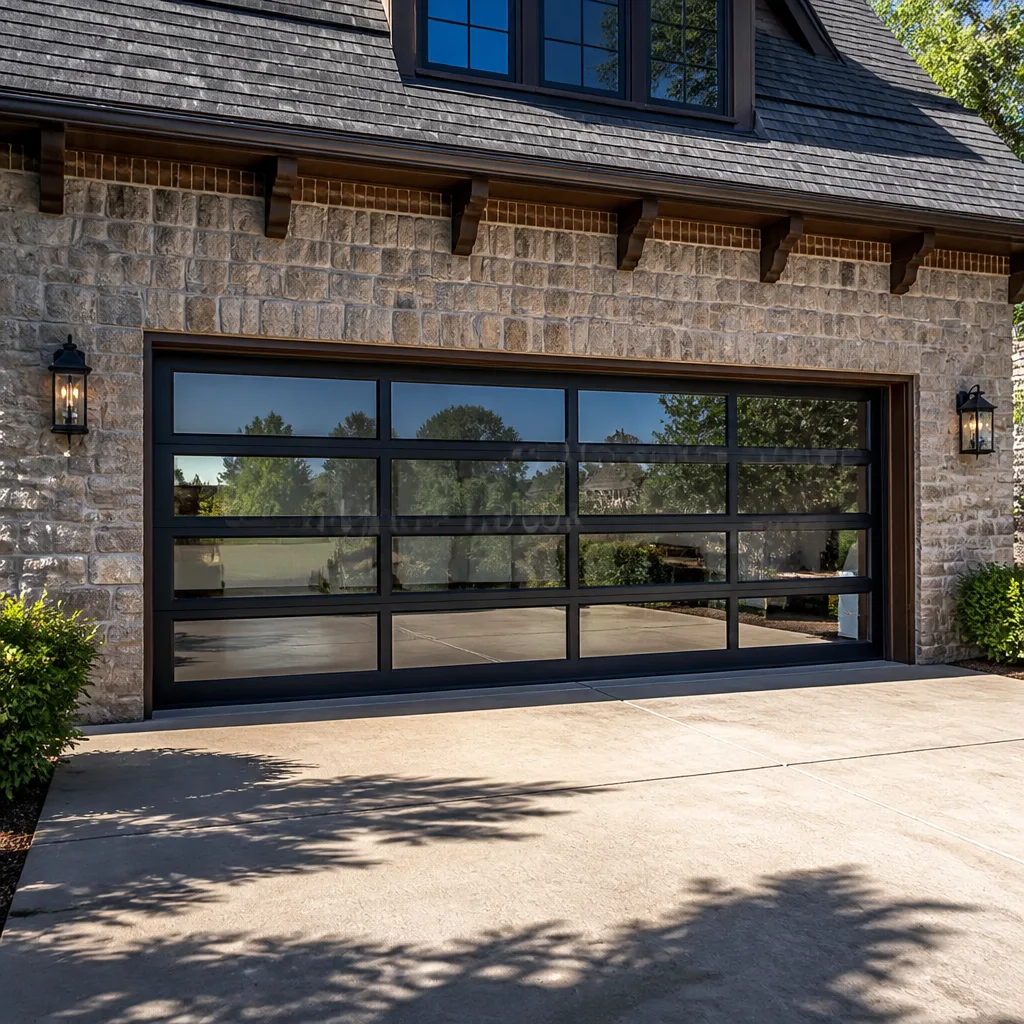
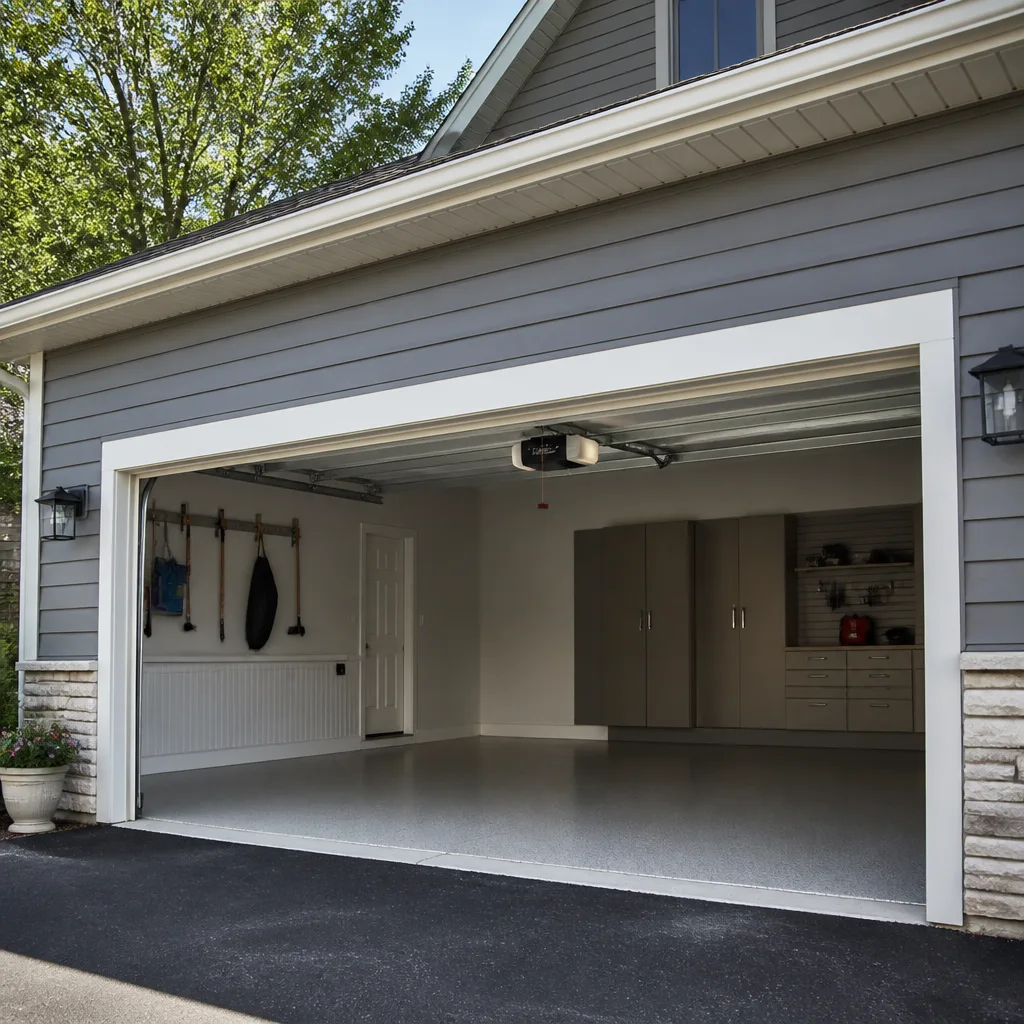
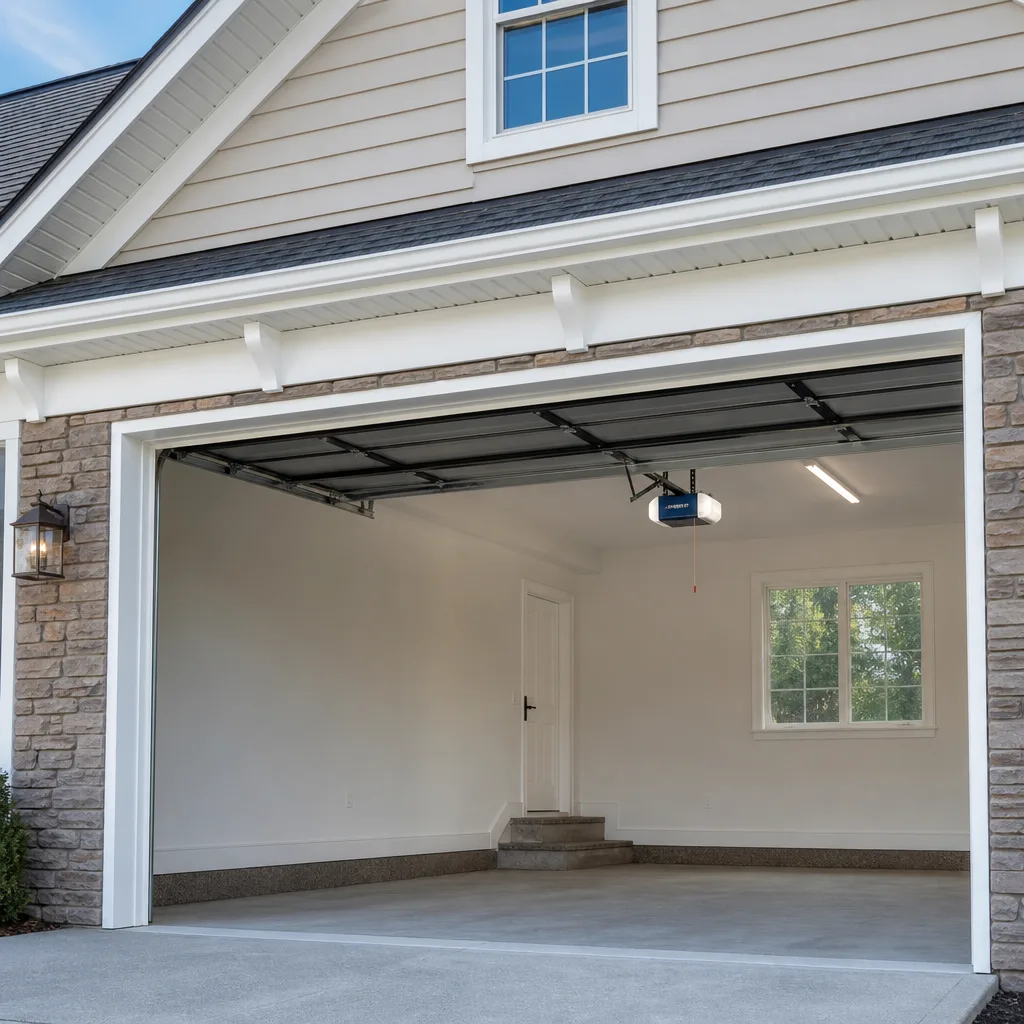
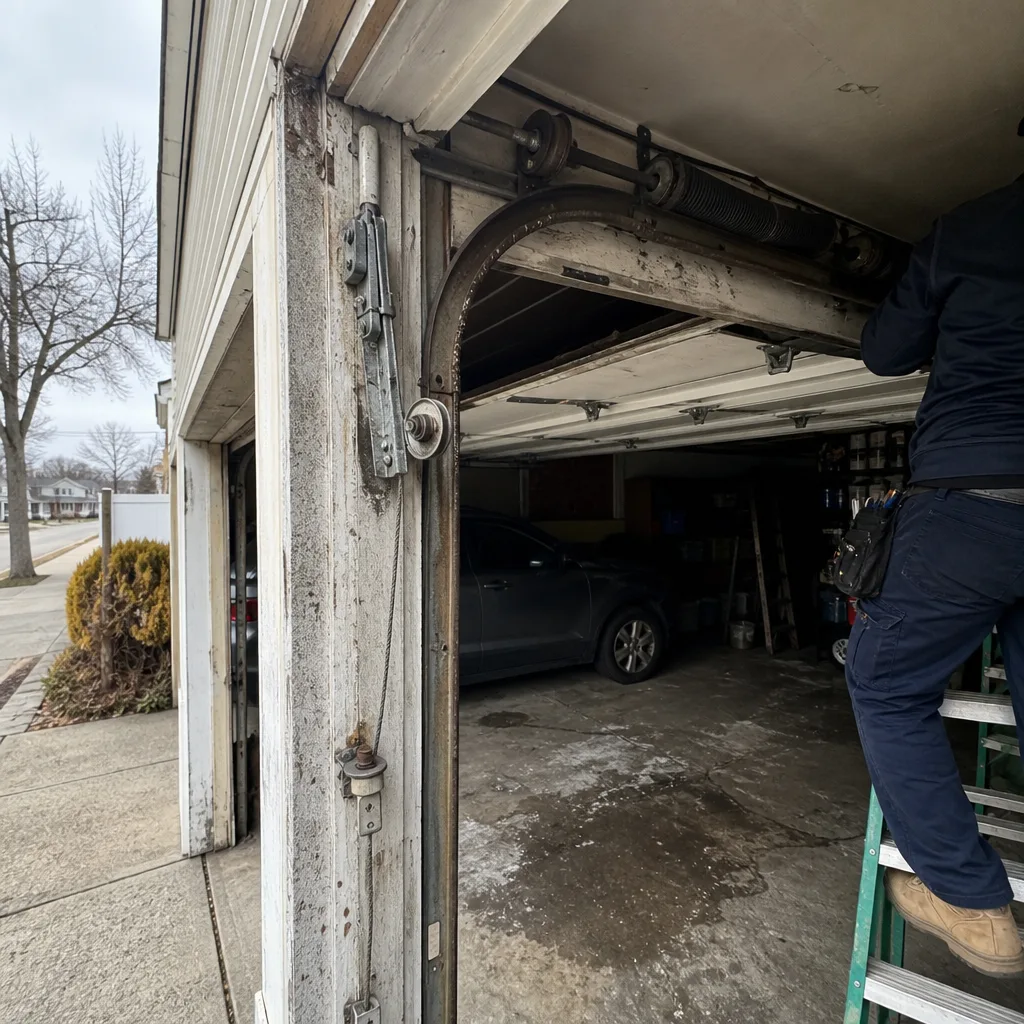 Before
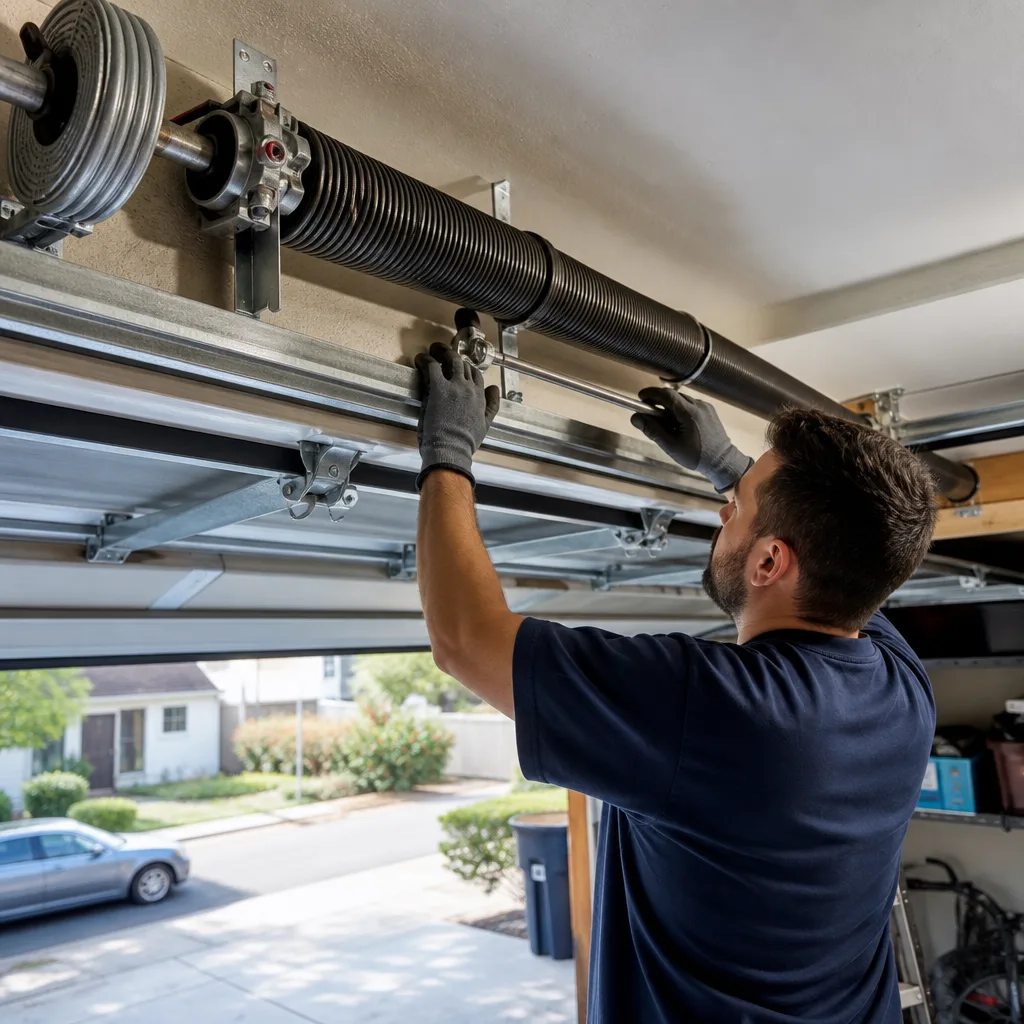 After
After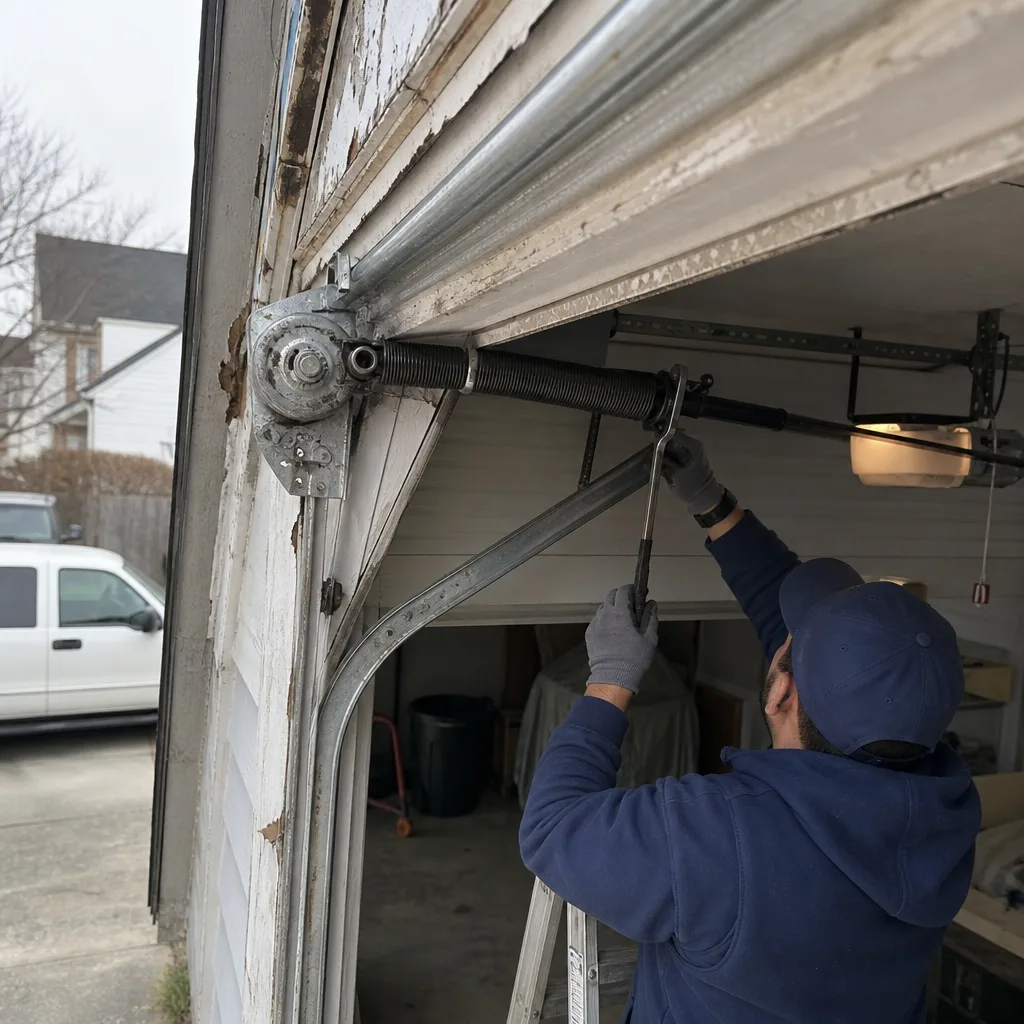 Before
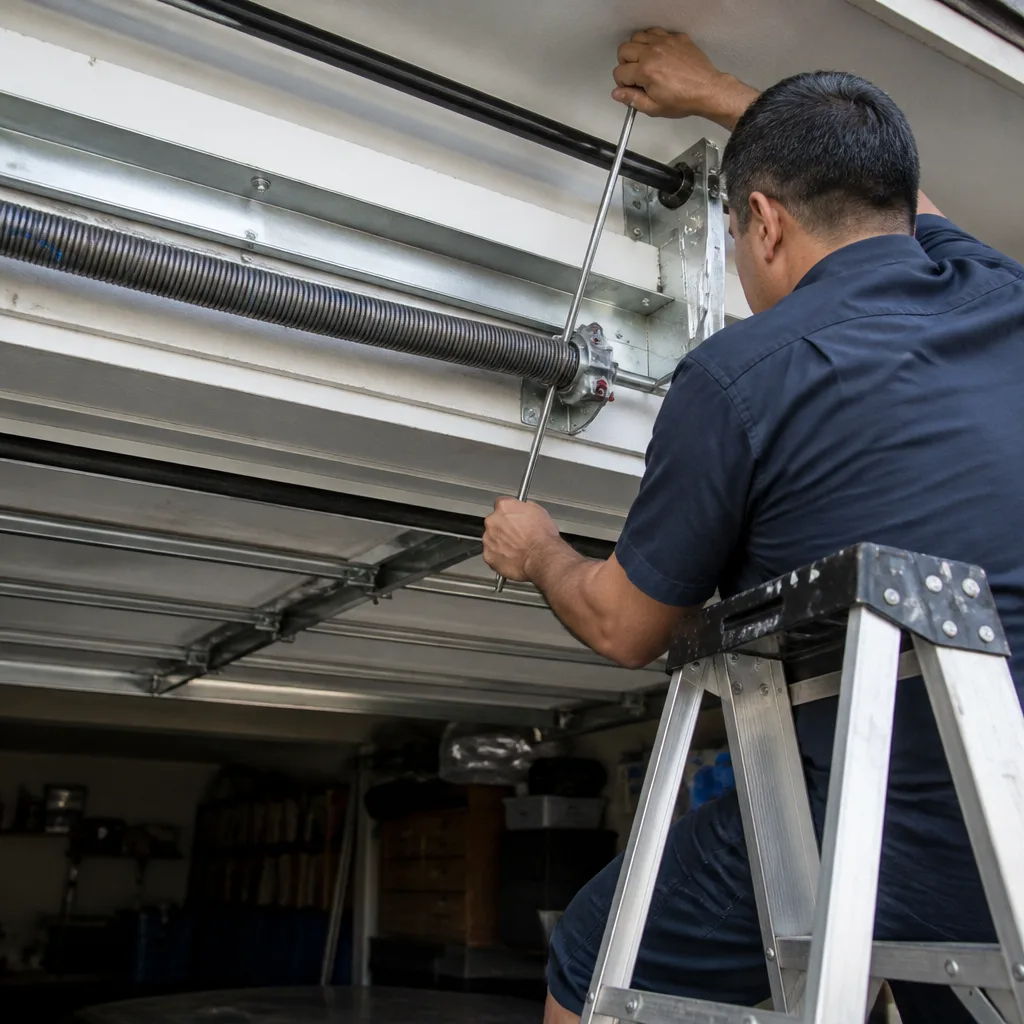 After
After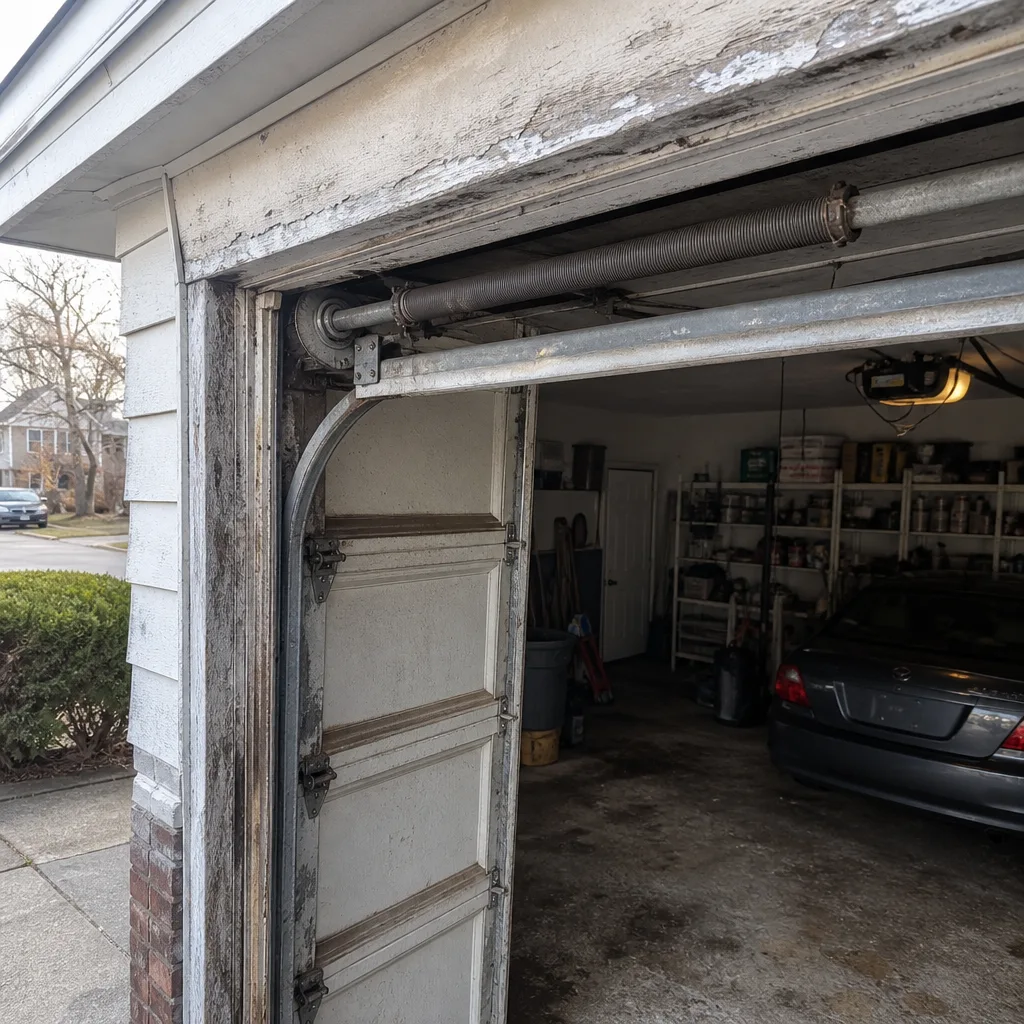 Before
 After
AfterLoud Grinding When the Door Opens
What’s Happening
A loud grinding noise when your garage door opens almost always means metal is dragging against metal somewhere in the drive system or along the track. The three most common causes are worn or dry rollers, a failing garage door opener drive gear, or debris and rust in the track. Left alone, any one of these will damage surrounding hardware and can bring the door to a full stop.
Here is the short version of why that matters: the grinding you are hearing is friction that does not belong there. Friction in a garage door system is never neutral – it either wears out the part that is creating it, or it overloads the opener and motor trying to compensate. A door that grinds today is a door that jams or drops in the near future. The noise is the warning, not the problem itself.
Why It Happens
Worn or Dry Rollers
Rollers are the small wheels that run inside your vertical and horizontal tracks. They are made of nylon or steel, and both types wear out. When a nylon roller cracks or a steel roller loses its bearing, it stops rolling and starts dragging – which produces a grinding or scraping sound that is most obvious during the first few inches of movement. If you look at the rollers along the track while the door is closed, a visibly cracked, chipped, or wobbling roller is almost always the one making the noise.
Failing Opener Drive Gear or Chain
Most residential openers use a drive gear made of plastic that meshes with a metal worm gear on the motor shaft. When that plastic gear strips – and it does strip, typically between five and ten years of daily use – it produces a grinding or stuttering sound from the opener head, not from the door itself. A chain-drive opener that is too loose will also slap and grind against the rail. If the noise is coming from the ceiling unit rather than the wall or tracks, this is the likely cause.
Rust or Debris in the Track
Tracks collect grit, dried lubricant, and in humid or salt-air environments, surface rust. When a roller hits a patch of rust or a piece of debris lodged in the track, you will hear a short, sharp grinding or crunching sound at a specific point in the door’s travel – usually at the same spot every time. If the grinding only happens at one moment in the cycle and then stops, check whether you can see buildup or discoloration inside the track at that height.
Torsion Spring Coils Rubbing
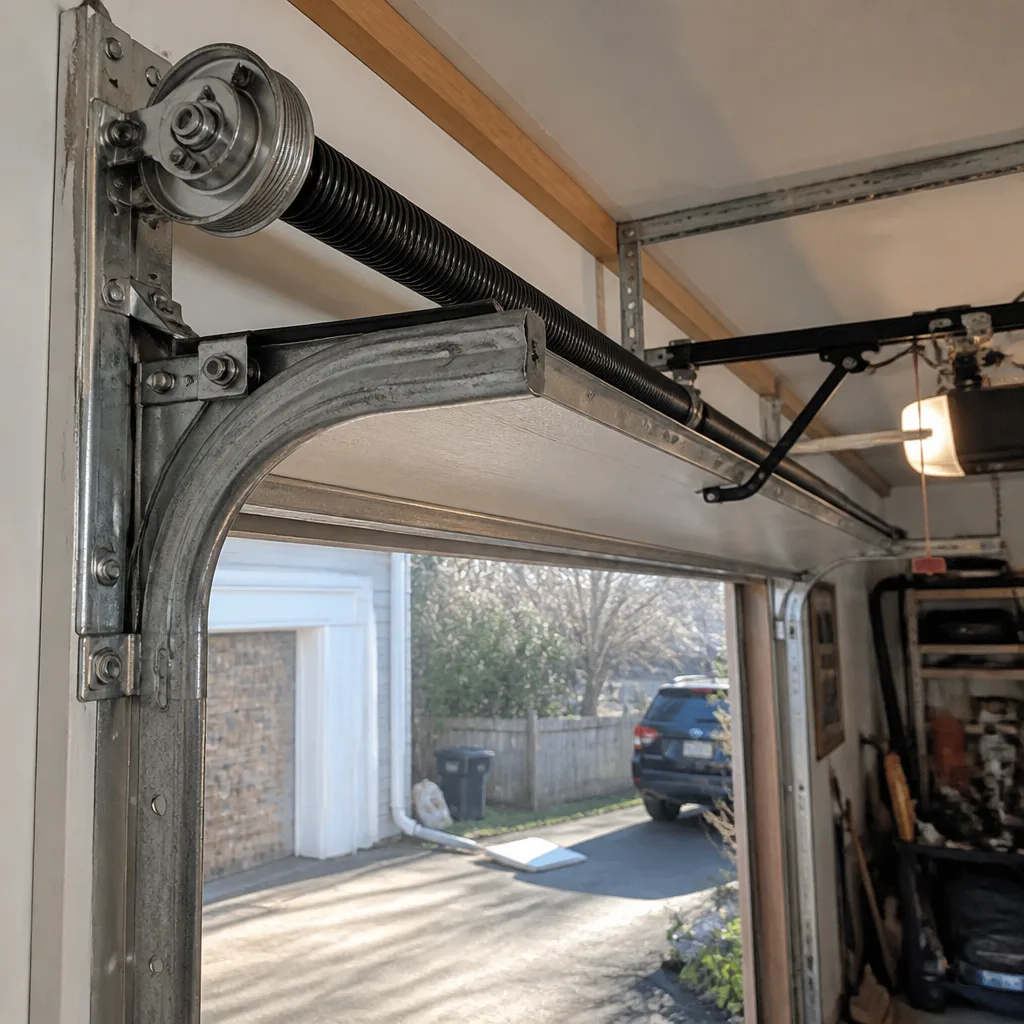
A torsion spring under normal tension makes almost no sound. But a spring that is losing its shape due to metal fatigue, or one whose coils are separating unevenly, can produce a low grinding or scraping sound as the door moves. This one is harder to self-diagnose because the sound carries through the header and can seem to come from multiple directions. Do not attempt to inspect, adjust, or lubricate a torsion spring yourself. These springs operate under extreme tension – enough to cause serious injury if the spring or its hardware releases unexpectedly. If you suspect the spring is the source, stop using the door and call your local Servo Garage Doors team.
What to Do Right Now
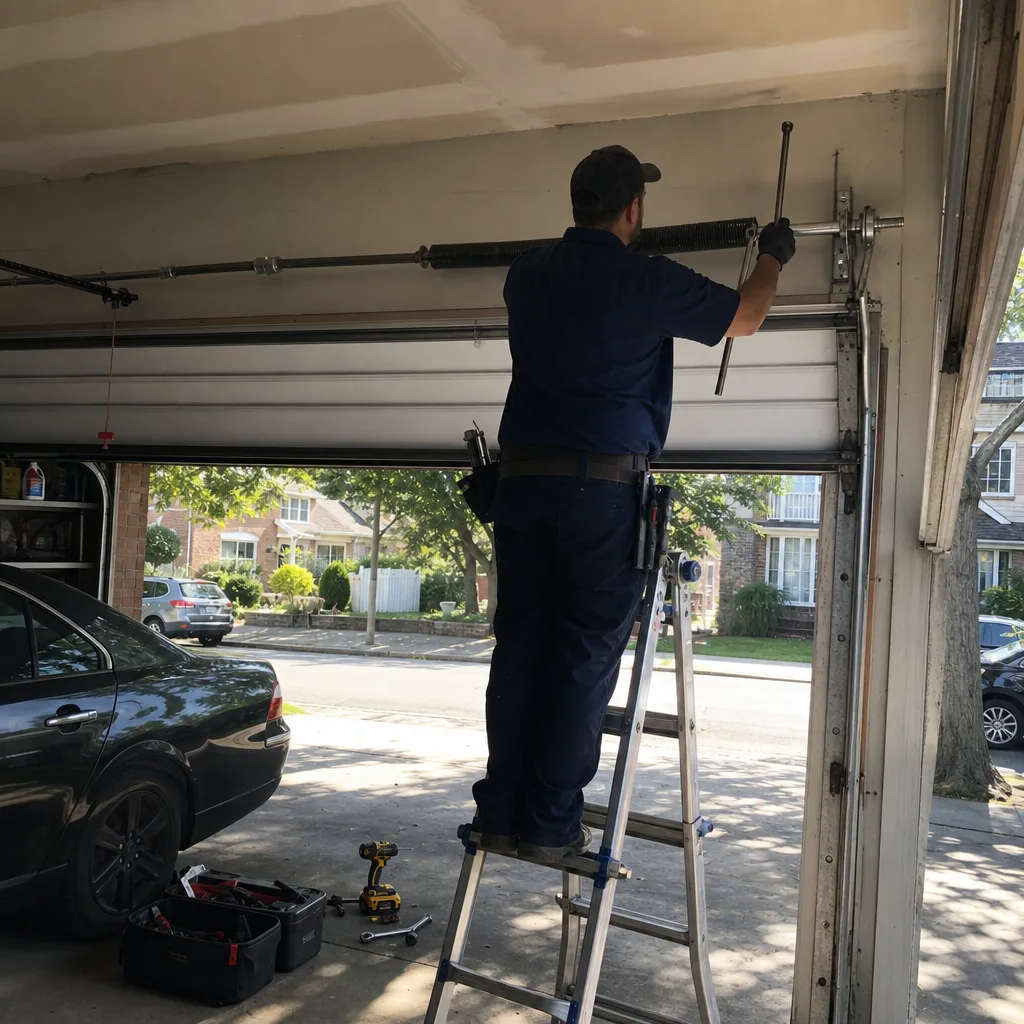
- Stop using the door manually. If the grinding is severe or the door is moving unevenly, disconnect the opener and do not try to move the door by hand. A door that is off its tracks or has a compromised spring can drop without warning.
- Look at the rollers. With the door closed and stationary, walk the length of the track on each side. Look for rollers that are visibly cracked, sitting at an angle, or have pieces missing. Take a photo if you see one – that image will be useful when the technician arrives.
- Listen for the location. Open the door once slowly if it is safe to do so, and pay attention to whether the grinding sound comes from the ceiling-mounted opener head, from a specific point in the track, or from the door’s entire travel path. Location narrows the diagnosis considerably.
- Do not spray lubricant as a first step. WD-40 on a damaged roller or a stripped drive gear will not fix the underlying problem and can make it harder to see what is actually worn. If lubrication is what is needed, a technician will use the correct product in the right place.
- Photograph the opener head and the track. If anything looks visibly wrong – rust, a gap in the spring coil, a roller sitting crooked – photograph it before you call. Servo’s documented photo record starts the moment a technician arrives, and your own photos give us a before-state to compare against.
BeforeAfterHow We Fix It
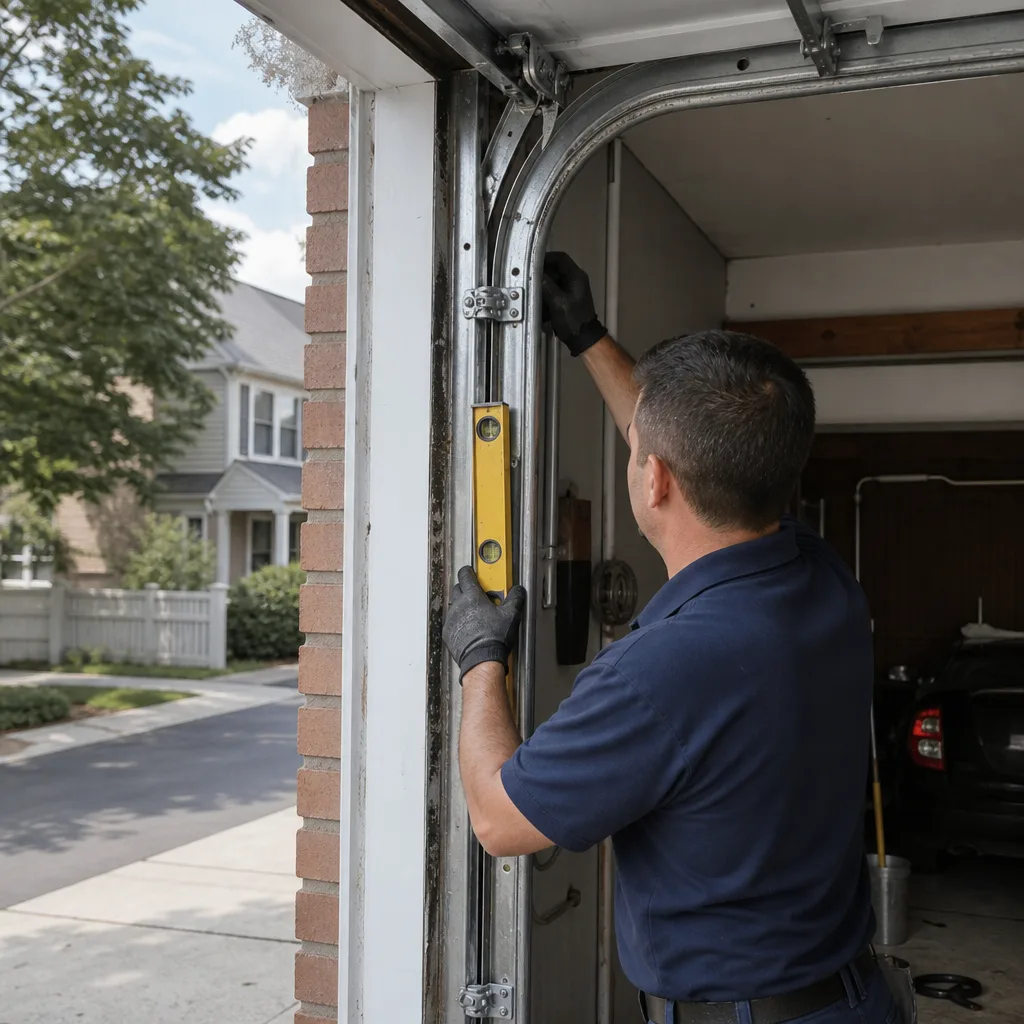
When your local Servo Garage Doors technician arrives, the first thing that happens is a full inspection of the door system – rollers, tracks, opener drive, spring, and cable hardware. Under Clause 4 of The Haven Standard, you see what we found, photographed, before anyone quotes a replacement part. That is not a formality; it is the founding rule Servo was built on in 2015.
For roller and track issues, the repair path is typically a full roller replacement on both sides of the door, followed by a track cleaning and alignment check. For a stripped drive gear, the gear and sprocket assembly is replaced at the opener head – usually a same-day repair when parts are on the truck. If the spring is involved, a trained technician handles it with the correct winding bars and safety protocol; this is not a component that tolerates improvisation.
The services that resolve this symptom are Garage Door Repair and, where the opener drive is the source, Garage Door Opener Repair. Most grinding-noise repairs are completed in a single visit. Your price – flat, written, covering parts and labor – is delivered before anything starts, per Clause 1 of The Haven Standard. The 365-Day Done Right Promise applies.
Frequently Asked Questions
It depends on the source, but in most cases you should not leave it more than a day or two. A grinding roller or dirty track is an urgent maintenance issue; a grinding spring or a drive gear that is close to failure can leave the door stuck open or cause it to drop. If the door is moving unevenly, binding, or the noise has gotten louder recently, treat it as urgent. Call (970) 536-1724 and your local Servo Garage Doors team will walk through what you are hearing to help you decide how quickly to schedule.
For repair and emergency calls, yes – your local Servo Garage Doors team answers live 24 hours a day, 7 days a week, including holidays. When you call (970) 536-1724, you reach a real person, not a recording, and you will know the name of the technician heading your way and get a text when they are on the way.
No. The written price is delivered after the technician inspects the door and before any work begins – that is Clause 1 of The Haven Standard, and it applies to every job without exception. If the inspection turns up something additional, you are told about it and given a separate written price for that scope. Nothing is added to your job without your explicit approval.
The technician photographs the worn or failed component and shows you before quoting a replacement. That practice is Clause 4 of The Haven Standard and the founding rule Servo was built around – the customer sees the failed part before anyone quotes anything. You are also welcome to bring in a written estimate from another company; Servo offers a free second opinion on any competing written quote, no coupon required.
Get It Fixed
Call (970) 536-1724 – a live person answers around the clock. Your local Servo Garage Doors team will diagnose the grinding, show you exactly what is worn, and give you a flat written price before touching anything. The 365-Day Done Right Promise backs every repair we do.
Written by Marcus Deller, Owner at Servo Garage Doors, serving communities nationwide since 2015.
What Our Customers Say
"Opener had been stalling for months. The tech showed me the logic board reading, replaced the board instead of the whole unit, and it cost a third of the other quote I had."
- Robert K."They sent a photo of the snapped torsion spring before quoting anything. Price on the estimate was the price on the invoice. I have never had that happen with a home repair."
- Dana W."Text came through with the technician name and photo twenty minutes before he arrived. Small thing, but I stopped worrying about who was at the door."
- Priscilla M.