
Full 25-point door and opener safety check with every visit - springs, cables, rollers, tracks, and your LiftMaster or Chamberlain opener included
You get a price before we start. It does not change when the truck arrives.


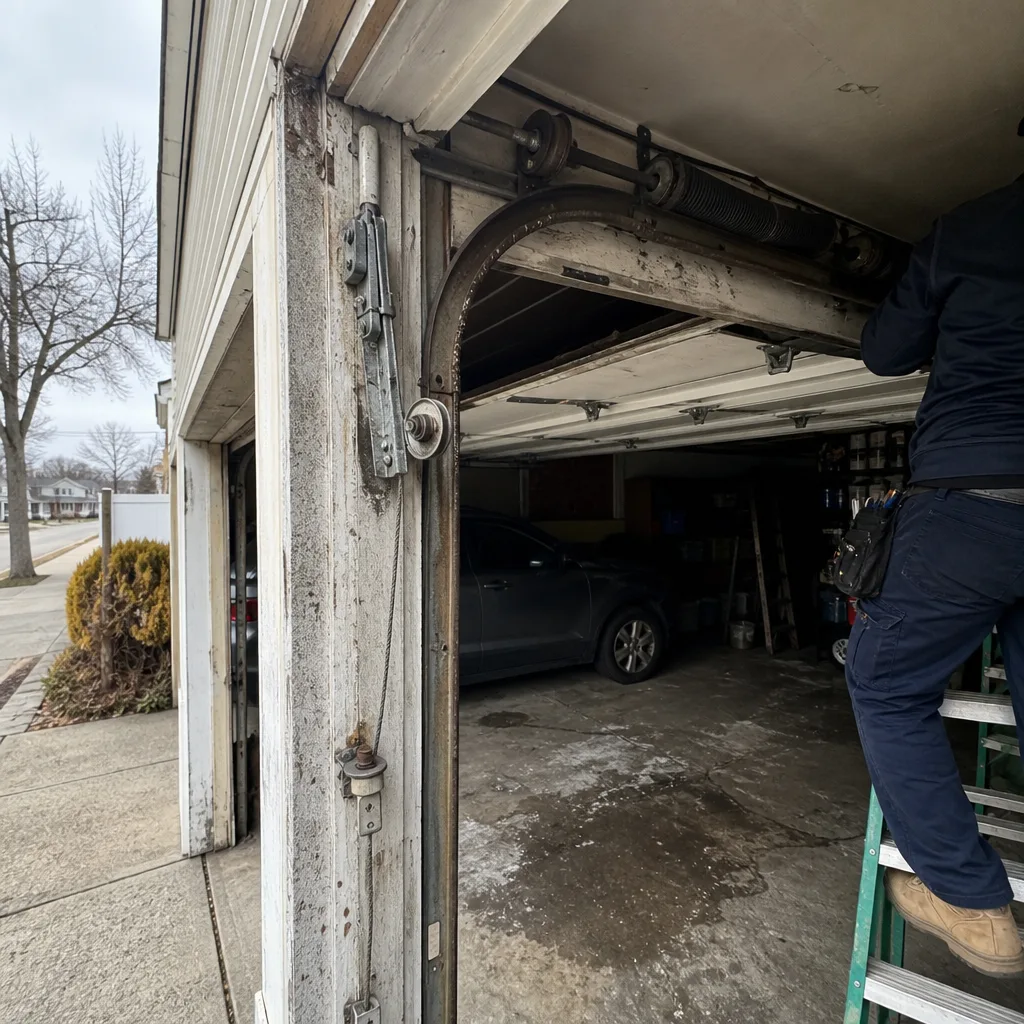 Before
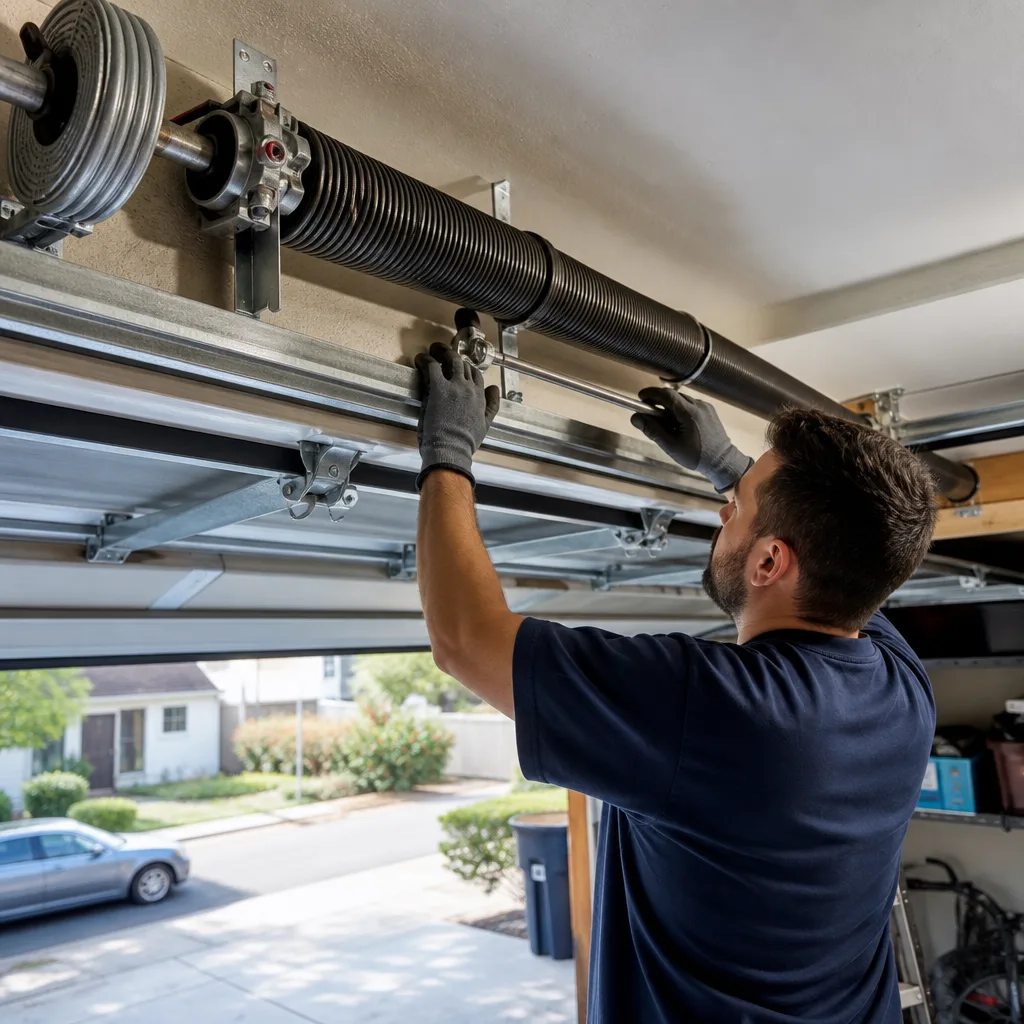 After
After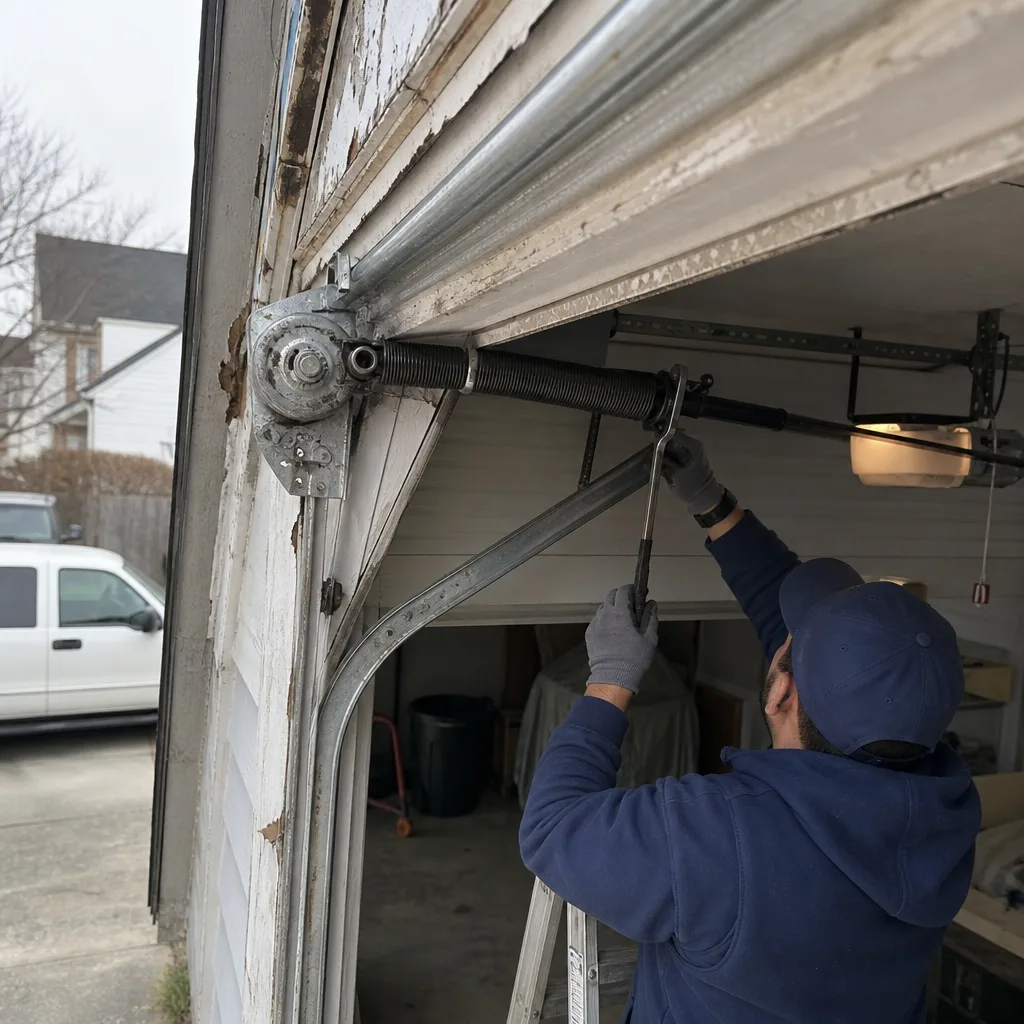 Before
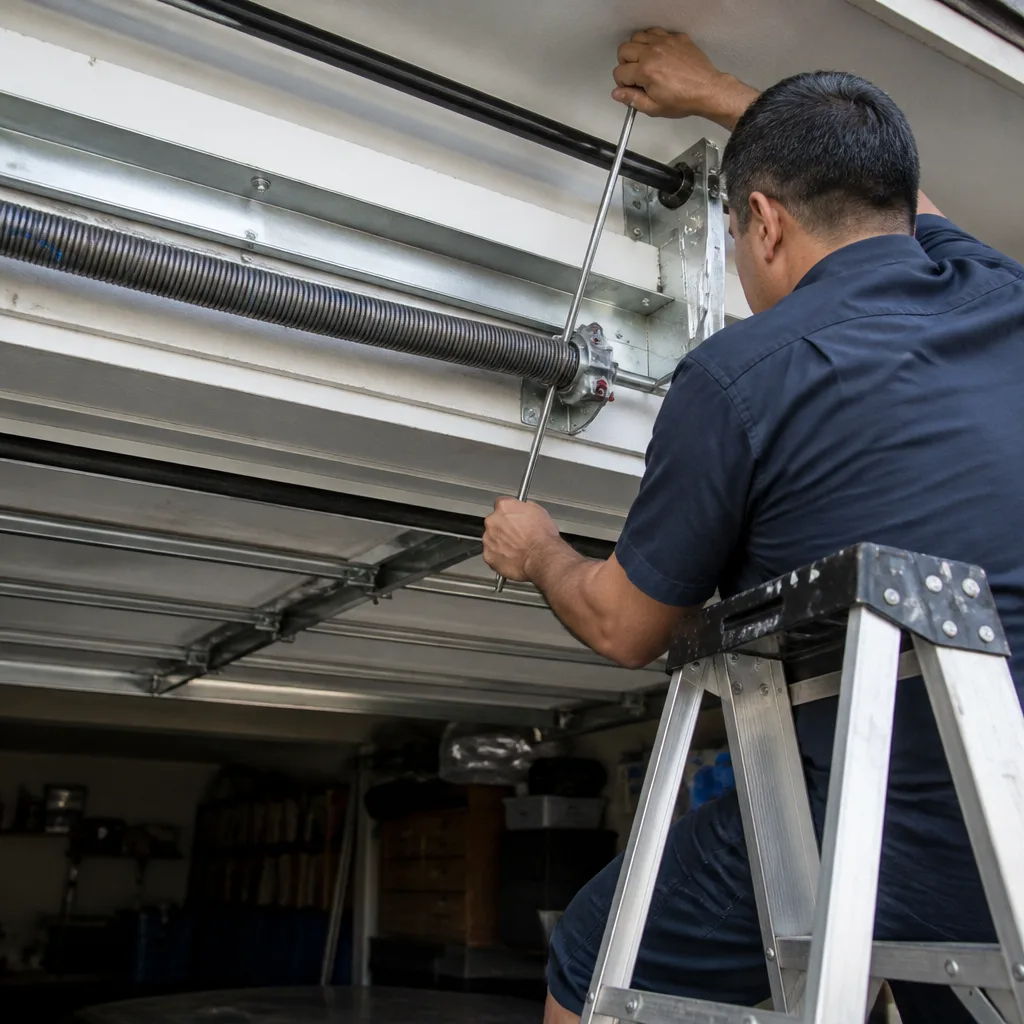 After
After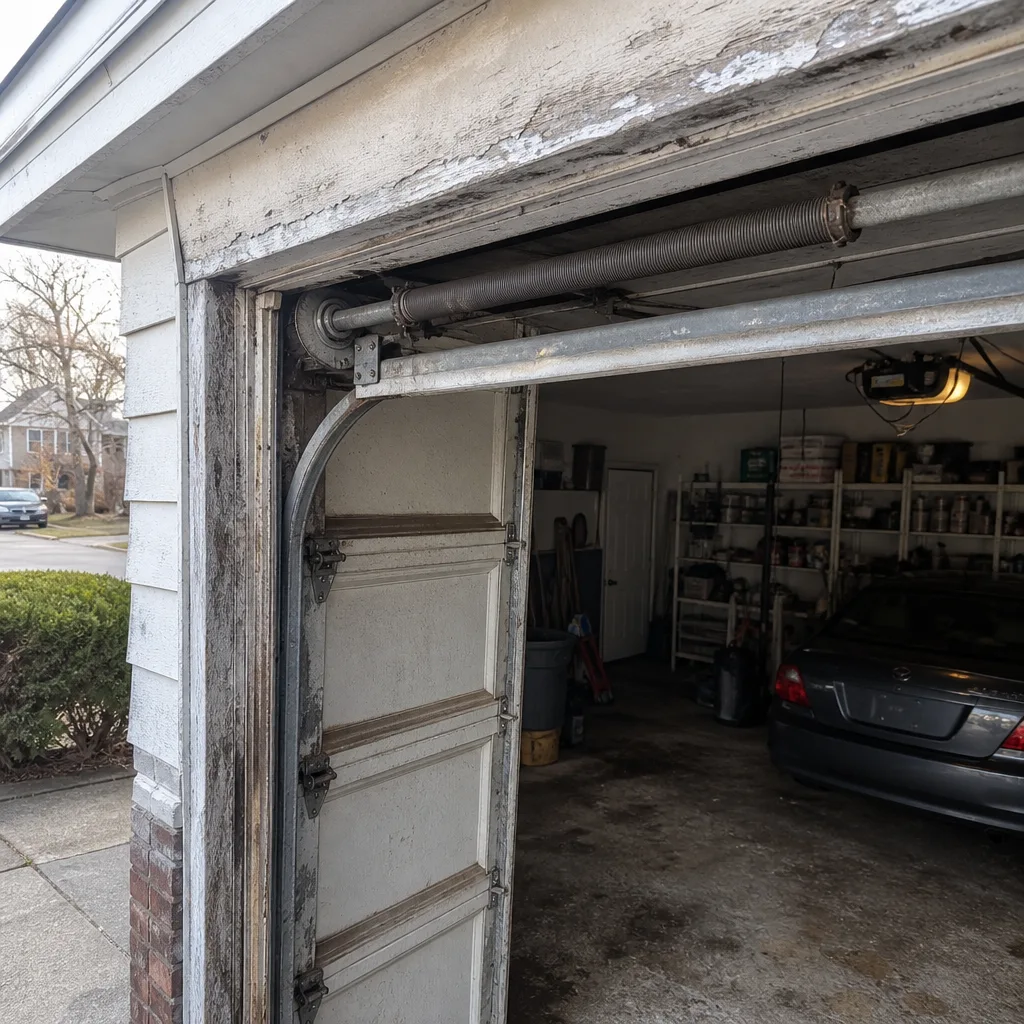 Before
 After
AfterGenie Torsion Spring Replacement: The New York City Owner’s Guide
If your Genie garage door has a snapped torsion spring, you’re looking at an installed replacement cost of $210-$400 in New York City, depending on spring size, cycle rating, and whether we’re replacing one spring or both. We stock Genie-compatible torsion springs on our trucks and can usually complete the swap the same day you call. The most common way owners discover this: a loud bang from the garage that sounds like a firecracker, followed by a door that won’t lift more than a few inches because the opener can’t overcome the dead weight.
Genie manufactures its own torsion spring assemblies for most residential models made after 2010, but the springs themselves are built to standard industry wire diameters and coil lengths. That means a quality aftermarket spring, matched correctly to the door’s weight and height, performs identically to the Genie-branded part. We’ll explain how that matching works below, because the wrong spring is worse than a broken one. Spoiler: it tears up cables and bends the upper track within weeks, which is why we photograph the failed spring and verify the door’s weight before quoting a replacement. Clause 4 of The Haven Standard exists for exactly this reason.
What a Genie Torsion Spring Actually Does
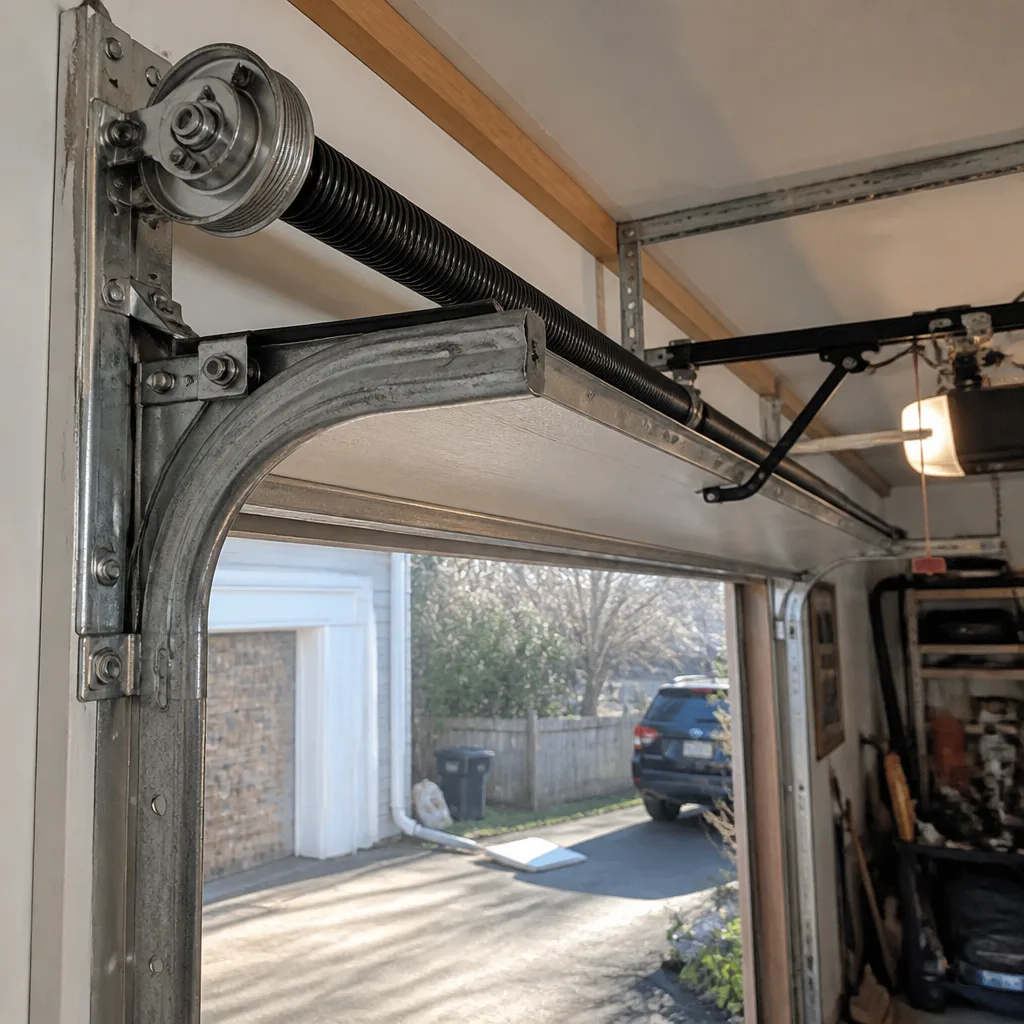
A torsion spring is the coiled steel shaft mounted above your garage door opening. It stores mechanical energy by twisting, not stretching like the extension springs on lighter doors. When you lift the door, the spring unwinds and does most of the work. Your opener only supplies a fraction of the lifting force. That’s the plain clause for the reader who hasn’t heard the term before: no spring, no lift. The opener will sit there and grind against a door that weighs 150 to 300 pounds.
Which Genie Models This Applies To
Genie has used torsion spring systems on nearly every residential door marketed alongside its openers since the early 2000s. The applies to Genie’s own manufactured doors and to a wide range of their bundled opener-and-door packages. The common lines we see in New York City buildings: the ReliaG Pro series, the Athena, the QuietLift paired doors, and the Genie-branded doors sold through big-box retailers. The torsion spring itself doesn’t care much about the Genie model number. It cares about four measurements:
- Wire diameter: most Genie residential torsion springs measure between 0.192 and 0.273 inches across the coil. We carry the full range.
- Inside diameter: almost always 1.75 or 2 inches for Genie doors. This is the size of the tube the spring slides onto.
- Coil length: measured from one end to the other. Genie doors in the 7-foot and 8-foot heights use different lengths.
- Wind direction: left-hand or right-hand wound. A standard Genie double-spring setup uses one of each.
Here’s the compatibility gotcha that matters more than the model name: Genie’s older pre-2005 doors often ran a torque-master spring system inside a tube, not an exposed torsion spring on a bar. If your door is that old and the spring is concealed, you need a conversion to a standard exposed torsion system, not a direct spring swap. We’ll tell you which one you have before we touch anything, because the quote depends on it. For OEM versus aftermarket: we install both. Genie-branded torsion springs carry a standard one-year warranty. The quality aftermarket equivalents we carry are rated for 10,000 or 15,000 cycles (a cycle equals one open and one close) and carry the same one-year labor coverage under our 365-Day Done Right Promise. For most New York City homeowners, the aftermarket 15,000-cycle spring is the better value, and we’ll show you both prices before you decide. Genie does not manufacture its springs exclusively. They’re wound to the same ASTM steel standards as the aftermarket parts.
Signs Your Genie Torsion Spring Replacement Is Failing
Most torsion springs give a warning before they snap, and knowing what to look for saves you a collapsed door or a bent track. Here’s what we find on Genie doors across New York City:
- A visible gap in the coil: if the spring has separated into two pieces with a clean break line, it’s already failed. This happens most often in January and February, when the cold contracts the steel and a weakened coil gives way.
- The door opens a few inches and stops: the opener’s force setting is detecting too much resistance. The spring isn’t counterbalancing the door, so the opener believes something is caught. It’s not a sensor issue. It’s the spring.
- A grinding or popping noise during operation: as the spring loses tension, the cable drums take uneven load. You hear the cable binding on the drum and popping back into place under stress.
- The door feels heavy when you pull the manual release: a properly balanced Genie door takes roughly 2 to 3 pounds of force to lift by hand. If you’re straining, the spring is worn to the point of failure.
- Cables look slack or are fraying near the drum: the spring no longer holds the cable tension, so the cable slips and rubs. Once a cable frays, it’s a matter of weeks before it snaps and the door slams one-sided.
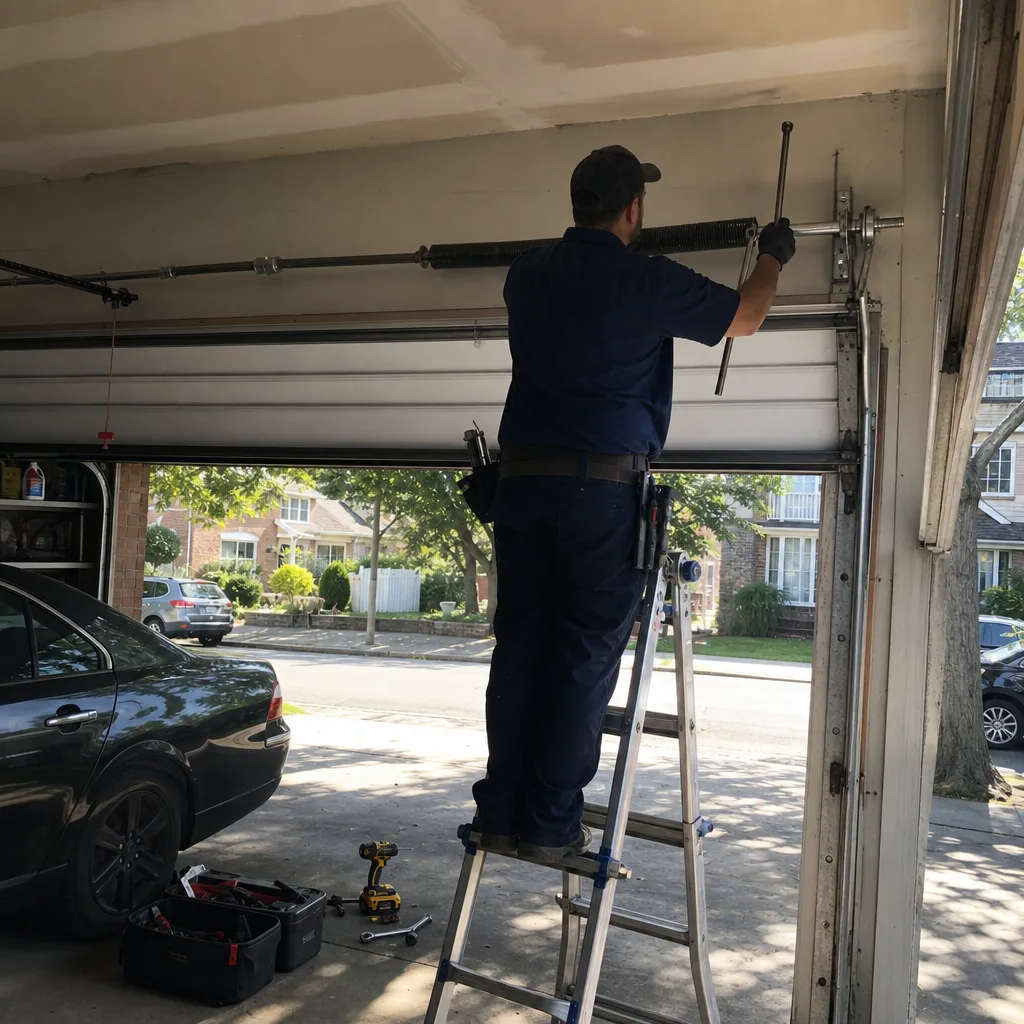
One honest safety paragraph, because this matters: do not attempt to remove or install a torsion spring yourself. The spring stores enough torque to break bone or remove fingers when it lets go, and it lets go without warning if you’re using the wrong winding bars or slip off the cone. Every year we take calls from homeowners who tried to save the service fee and ended up with an emergency room bill and a caved-in door. The springs aren’t just under tension. They’re under enough tension to launch a metal bar through drywall. We recommend a trained technician for any torsion spring work, and we say that as people who’d rather earn the repair than the rescue.
BeforeAfterReplacement Cost & What’s Included
In New York City, a Genie torsion spring replacement runs $210-$400 installed. The range depends on three things: whether we’re replacing one spring or a pair, the cycle rating of the spring you choose, and whether your Genie door needs a standard spring or the older torque-master conversion. Replacing both springs on a double-spring door adds material cost but extends the door’s service life, because the second spring is usually just as worn as the first.
What drives the low end: a single 10,000-cycle spring on a lightweight 7-foot door. What drives the high end: a pair of 15,000-cycle springs on an 8-foot heavy door, or a conversion from a Genie torque-master tube. Every quote includes the spring or springs, the winding labor, cable inspection, a full door balance and travel-limit check, and lubricating the roller bearings. The price is flat and written before any work starts. If the price changes, it changes in writing with a reason attached. Clause 1 of The Haven Standard. The work itself is covered by the 365-Day Done Right Promise, and the spring manufacturer’s cycle rating is documented in your receipt. No phone-estimate games. The number you see is the number you pay.
DIY or Call Us?
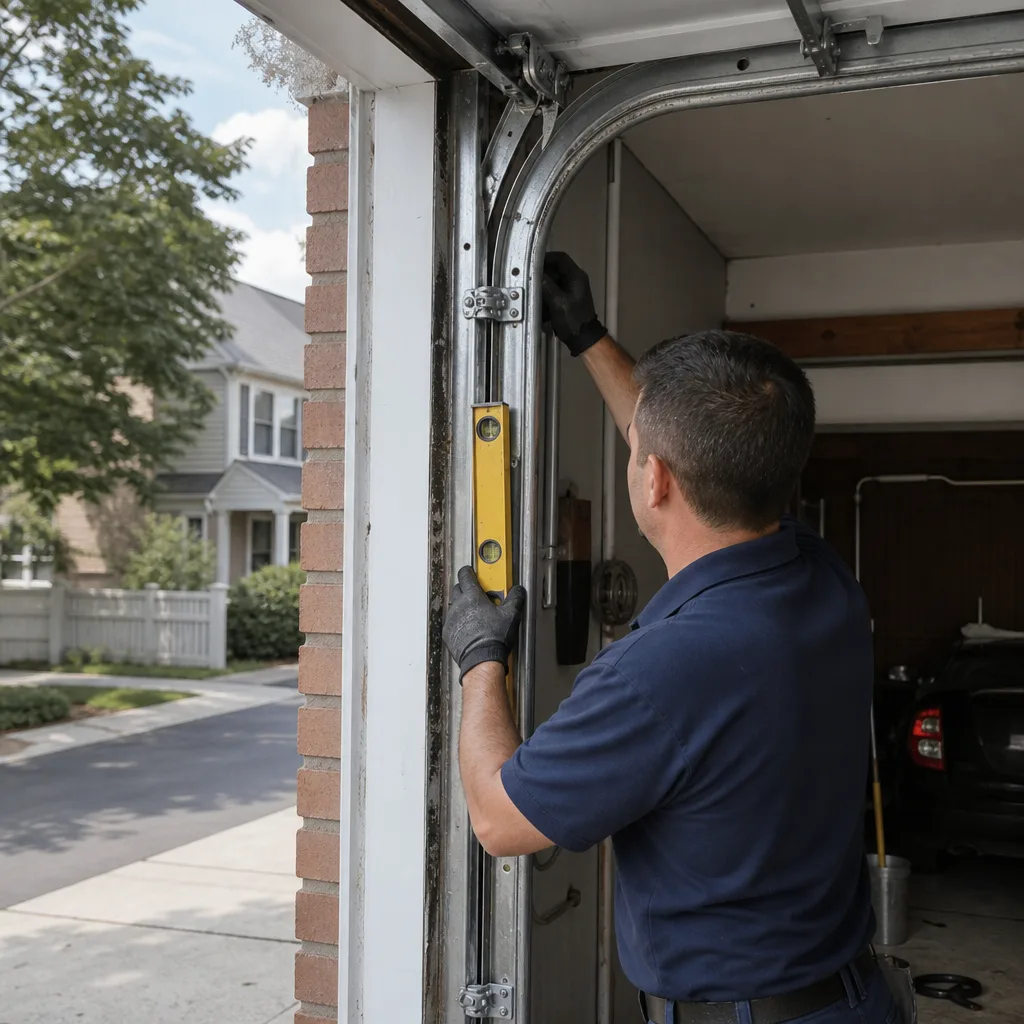
Here’s the honest split. You can safely check a few things yourself: the spring’s coil gap, whether the cables are slack, and whether the door feels heavy on manual release. Those checks don’t require touching anything under tension. If the spring is broken, do not attempt the repair. The winding bars, the cone set screws, the unwinding process: this is where DIY goes wrong, and the failure mode is a hospital visit rather than a dented panel.
We’re faster than a parts run, and we carry the springs already loaded. Call us, tell us the door height and whether it has one spring or two, and Marcus Deller or one of our background-checked technicians will be on the way with the right Genie torsion spring and the right spring for the quote: a flat, written price before the door comes apart. Name the part. Quote the range. Do the work.
FAQs
A Genie torsion spring rated for 10,000 cycles lasts between 7 and 10 years for a typical New York City household that opens the door three to four times a day. In neighborhoods like Woodside or Astoria where the garage sees heavier daily use or the door faces salt-air exposure near the waterfronts, the lifespan can drop to 5 years. We’ll write the cycle rating and the expected lifespan on your receipt before we leave.
No. A broken torsion spring cannot be welded or patched. The steel has fatigued across the coil, and any repair attempt just delays the second break, which usually damages the cables and the track. Replacement is the only correct fix, and for the price range quoted, a new spring with a written warranty is the better repair.
A standard Genie torsion spring replacement takes 45 to 90 minutes from arrival to final balance check, assuming the door and tracks are otherwise in good shape. Converting an older Genie torque-master system to a standard torsion bar adds roughly an hour. We’ll give you a time range when we quote the work.
Yes. We carry Genie-compatible torsion springs in the full range of wire diameters and inside diameters, plus the winding hardware and bearing plates that commonly wear alongside them. We also stock parts for LiftMaster and Chamberlain doors, so if your spring is fine and the real culprit is the opener, we’ll diagnose it on the spot. Call (970) 536-1724 for an exact quote: estimates are free, and the price you’re quoted is the price you pay.
Contact Servo Garage Doors
If your Genie torsion spring has snapped or you’re hearing the grinding that says it’s about to, call (970) 536-1724. We’ll answer live, give you a straight price range over the phone, and send a named technician with the spring already on the truck. Every job gets a written price before work starts and a documented photo record before we leave. That’s the entire point of The Haven Standard, and it’s been the point since 2015.
Written by Marcus Deller, Owner, Servo Garage Doors at Servo Garage Doors, serving New York City and nearby areas.