
Full 25-point door and opener safety check with every visit - springs, cables, rollers, tracks, and your LiftMaster or Chamberlain opener included
You get a price before we start. It does not change when the truck arrives.
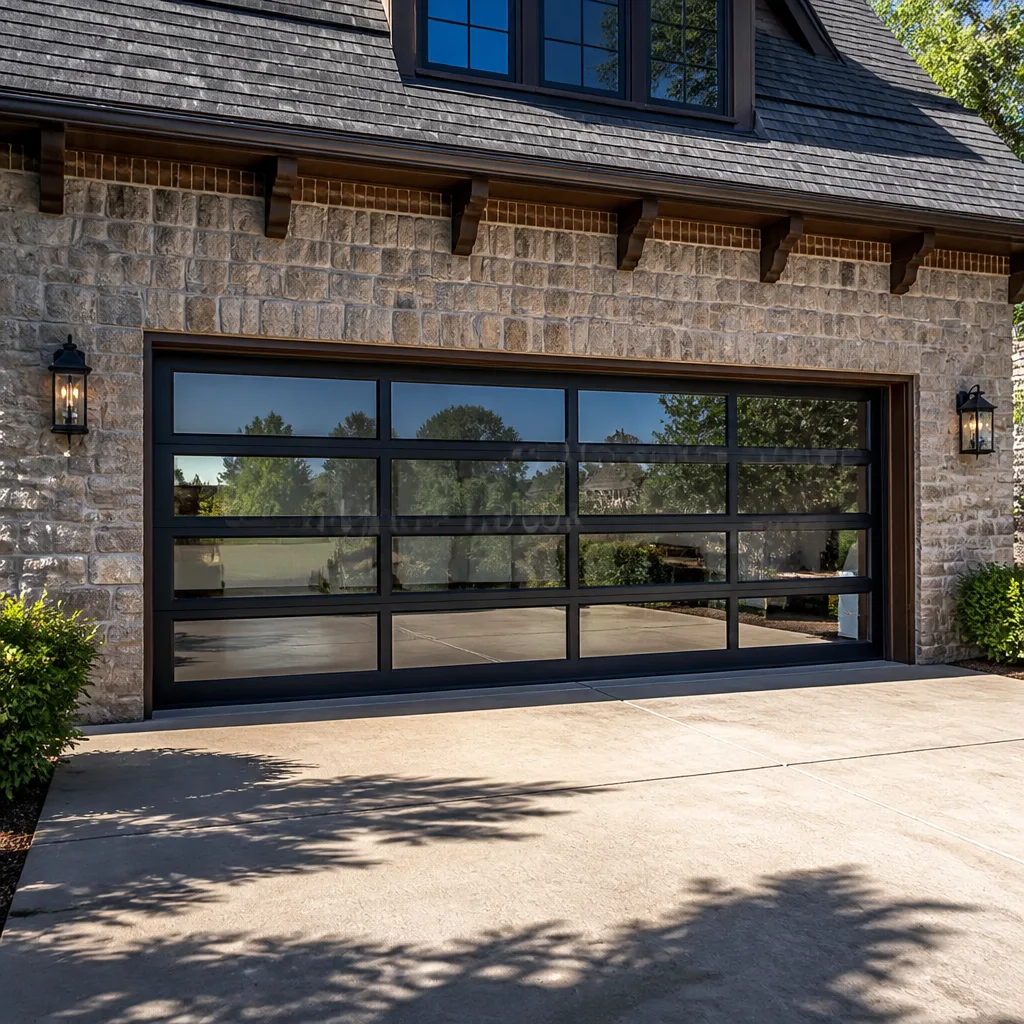
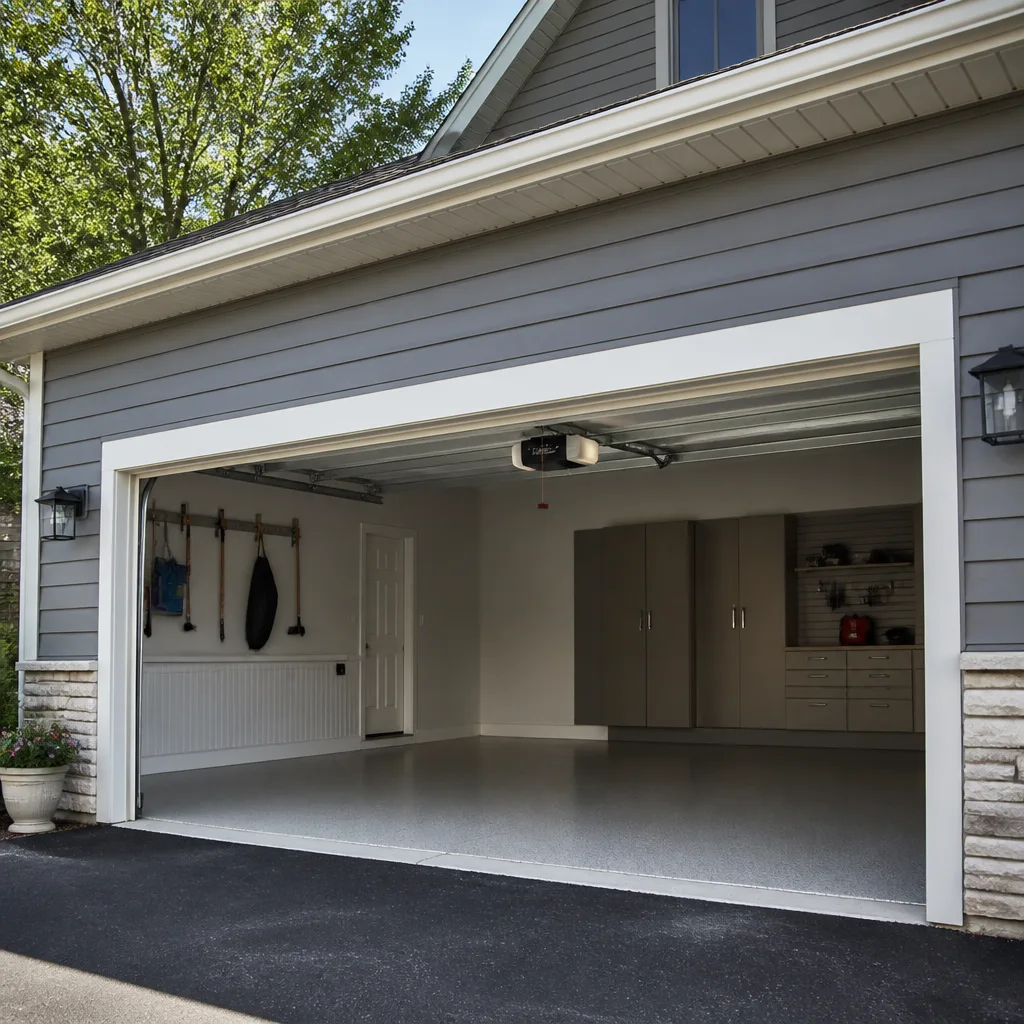
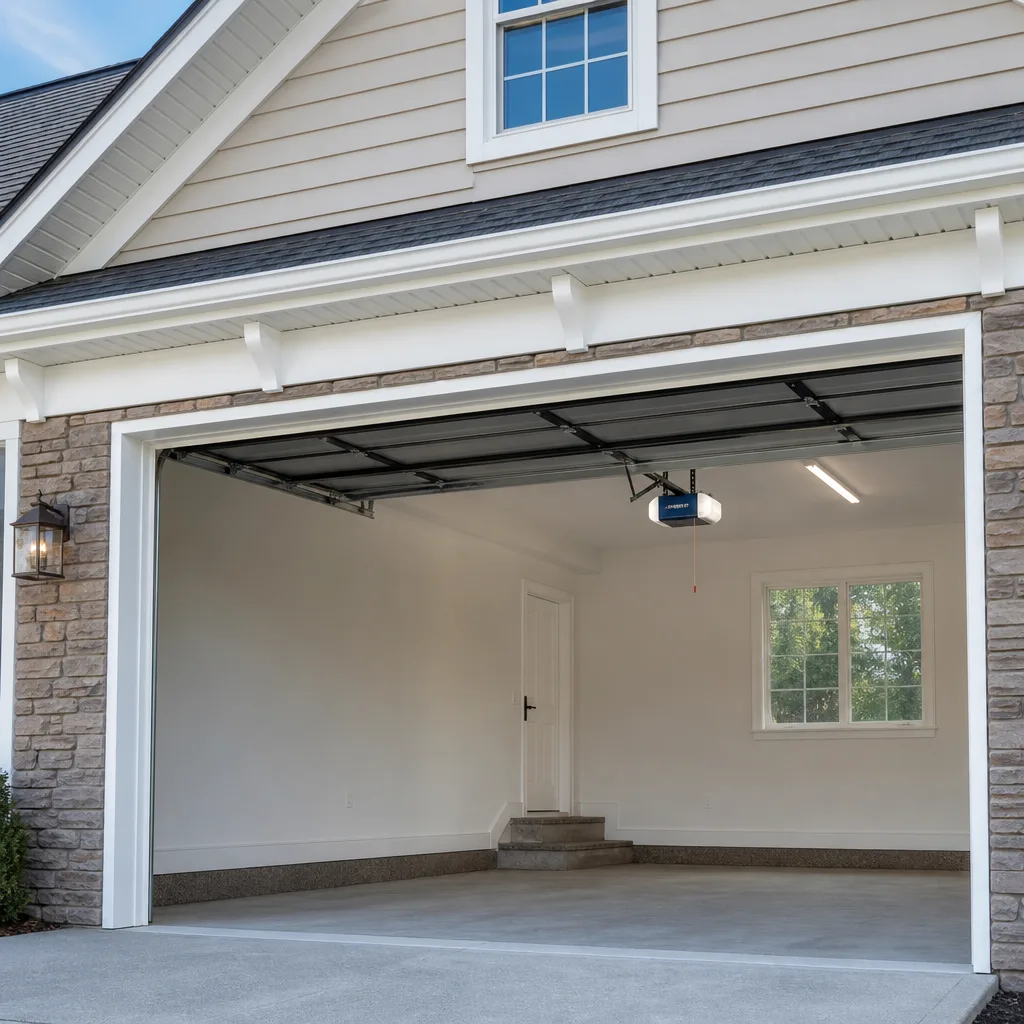
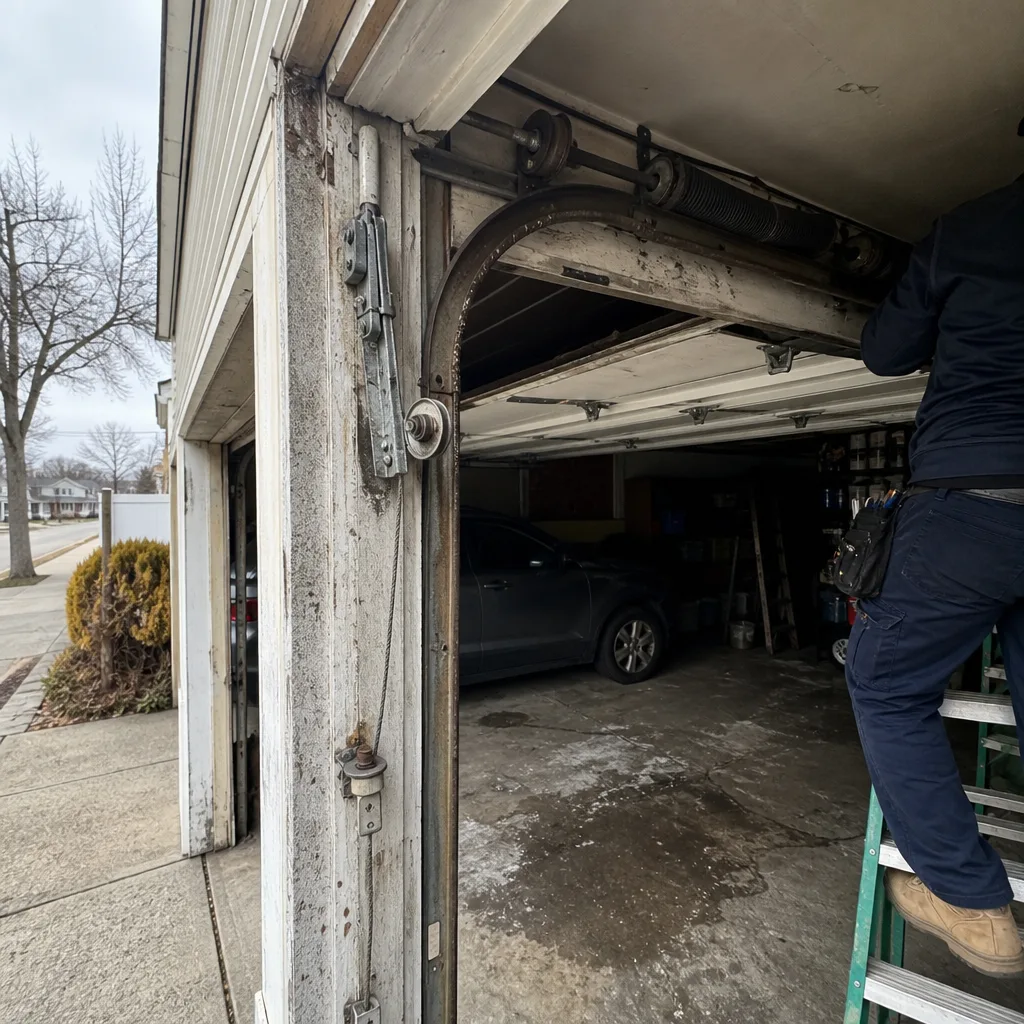 Before
 After
After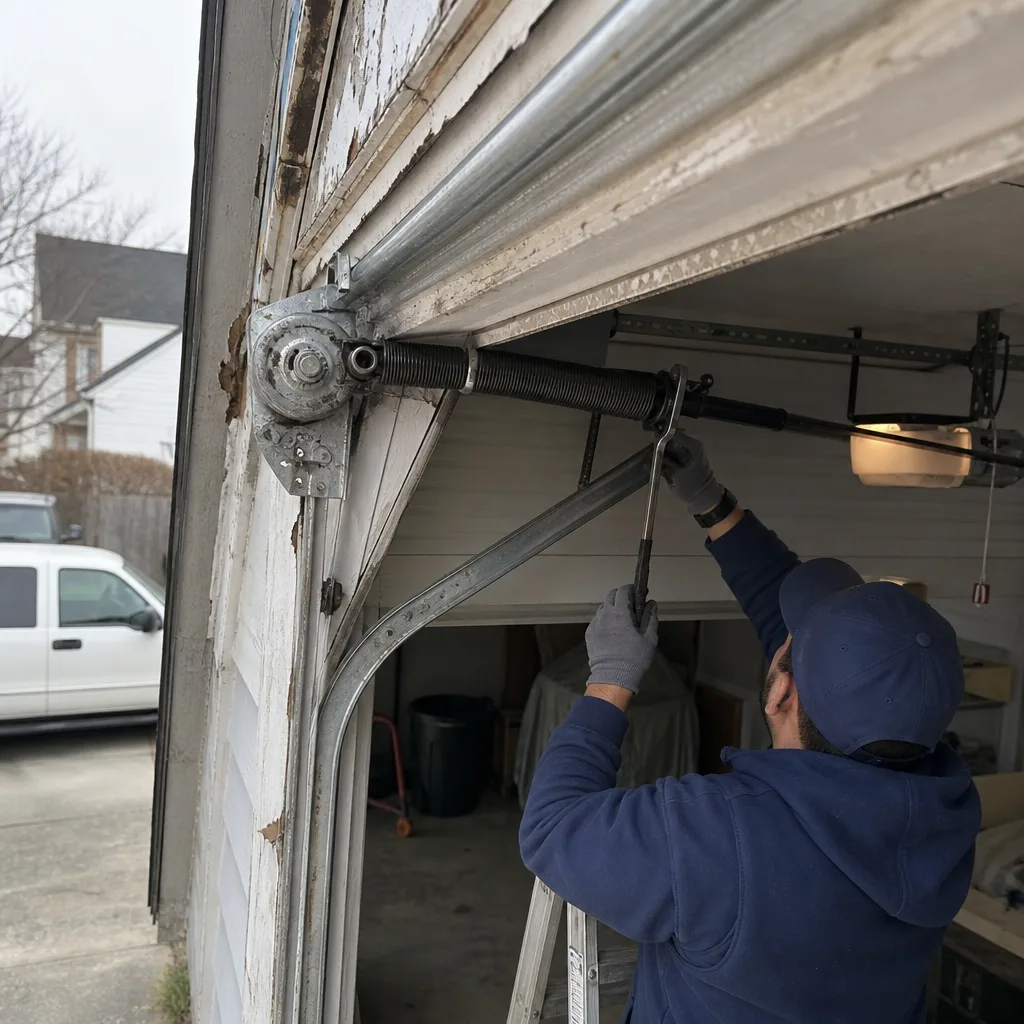 Before
 After
After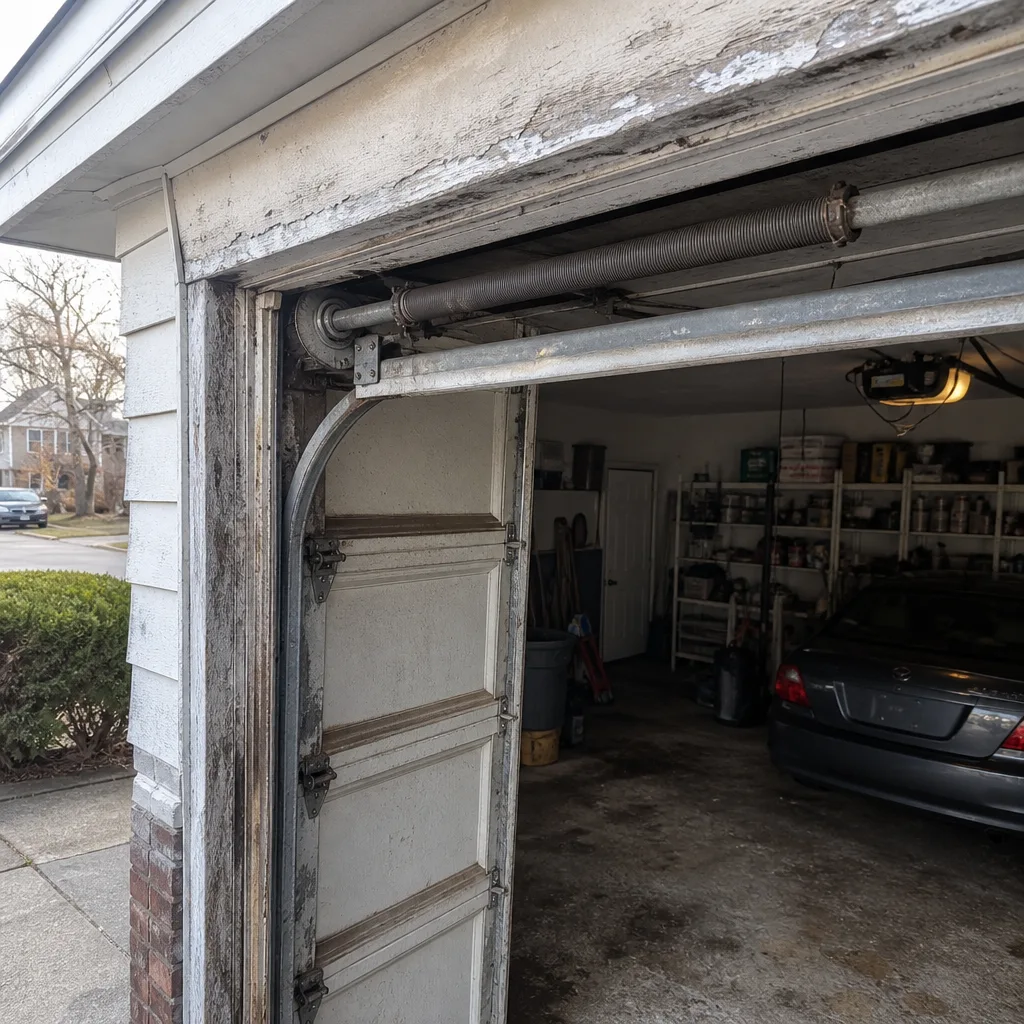 Before
 After
AfterFast, Reliable Garage Door Parts Across Washington, D.C.
Garage door parts in Washington, D.C. are not a one-size-fits-all proposition. The city’s row houses, alley garages, and historic district rules mean the springs, cables, and rollers on your door often need to be matched to a structure built before cars existed. We stock and source parts for the non-standard doors this city is full of, and we quote a flat written price before any work begins. When a torsion spring snaps on a Capitol Hill alley garage at 7 a.m., you need a technician who knows the difference between a 7-foot and an 8-foot door before they even walk down the alley. Call (970) 536-1724 and you’ll reach a live person who can dispatch a named technician with an on-the-way text, not a callback window.
Key Takeaways
- Torsion springs in Washington, D.C. typically run $210-$400, including the part, labor, and a documented photo record of the failed component before we quote the replacement.
- Alley garages in Capitol Hill, Shaw, and Bloomingdale often require hand-carried parts because service vans cannot fit down 10-12 ft passages. We plan for this before dispatch.
- Historic district regulations can dictate your door hardware. If the Historic Preservation Review Board has jurisdiction over your facade, off-the-shelf parts may not be an option.
- Every job gets a written scope and flat price before work starts. That’s Clause 1 of The Haven Standard, and it is not negotiable.
- Our documented photo record comes with every visit. You see the failed part, the new part, and the finished work. Clause 4 is why the technician photographs the failed component before quoting a replacement.
Why Servo Garage Doors Is Washington, D.C.’s Preferred Garage Door Parts Company
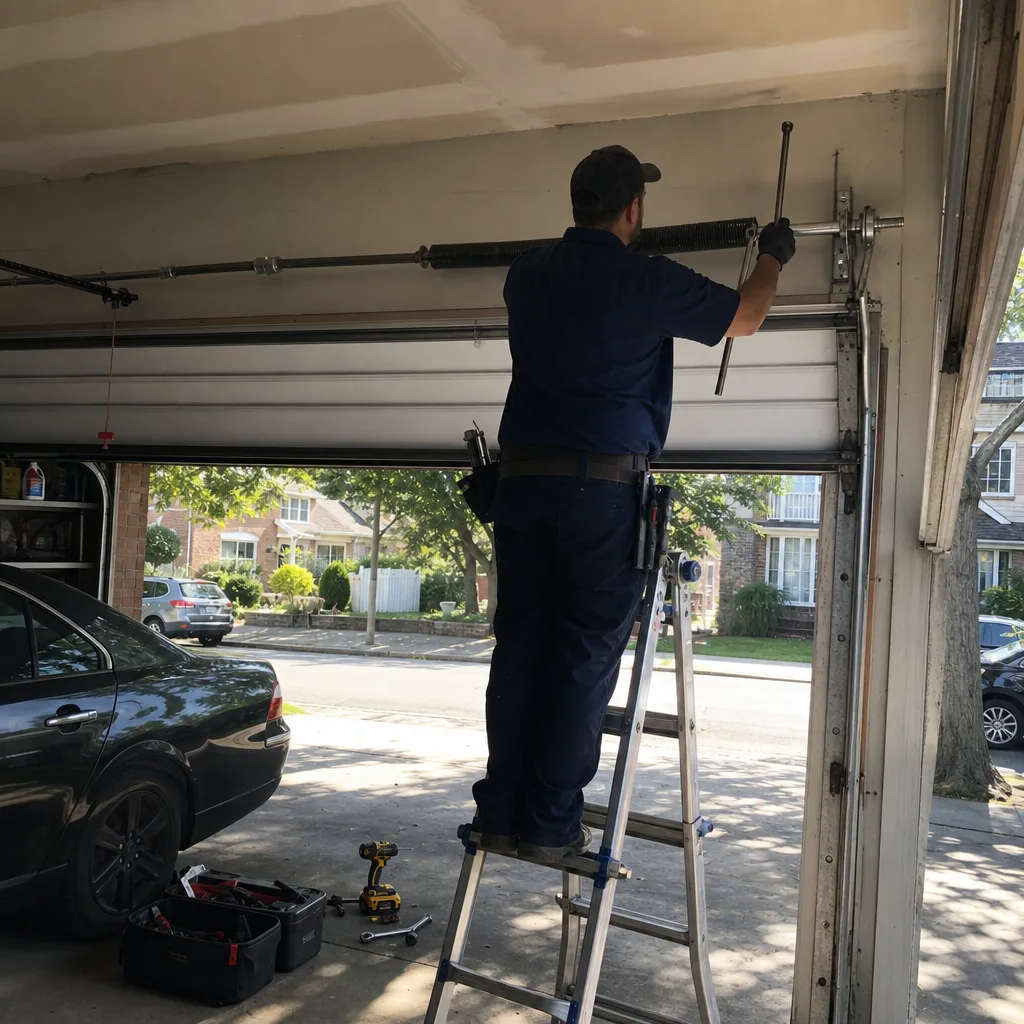
Servo Garage Doors has operated since 2015 as an independently owned and operated business under The Haven Standard. We’re not a franchise, and we don’t run a call center that promises a technician “sometime between 8 and 5.” Our Washington, D.C. customers call, get a live person, and receive a named technician with an on-the-way text. The technician arrives in a uniform, is background-checked, and carries the license number on the page, not buried in fine print.
What distinguishes us in Washington, D.C. specifically is that we understand the alley problem. Roughly 300 miles of rear service alleys crisscross this city, dating to the late 1800s. Many row-house garages sit at the back of the lot, reachable only through passages too narrow for a full-size van. Our technicians routinely park on East Capitol Street or Sherman Avenue and walk springs, drums, and cable sets two blocks to the door. We schedule for that. We quote for that. And because we photograph everything, you’ll see exactly what was carried in and what was installed.
The 365-Day Done Right Promise backs every repair. If it’s not done right, we make it right. No handshake deal, no “trust us.” It’s written in The Haven Standard, and the terms page is available to every customer. Marcus Deller, who leads Servo, built the company on a rule that seems obvious and is almost never followed: show the customer the broken part before you ask them to pay for a new one.
BeforeAfterOur Garage Door Parts Services in Washington, D.C.
We service every component of a garage door system, including Garage Door Parts across all eight major brands: LiftMaster, Chamberlain, Genie, Clopay, Amarr, Wayne Dalton, Craftsman, and Raynor. In Washington, D.C., four services dominate our call board, for reasons tied directly to the city’s housing stock and climate.
Torsion Spring Repair and Replacement
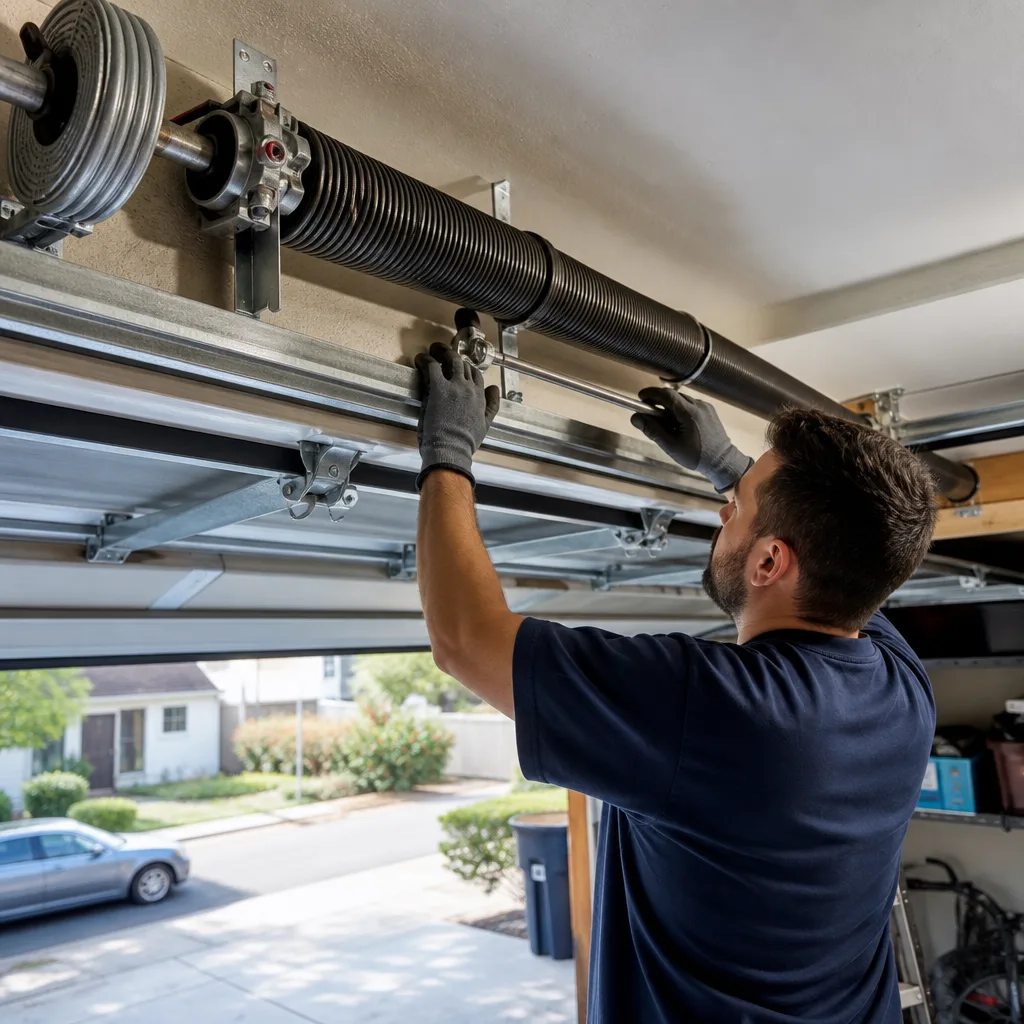
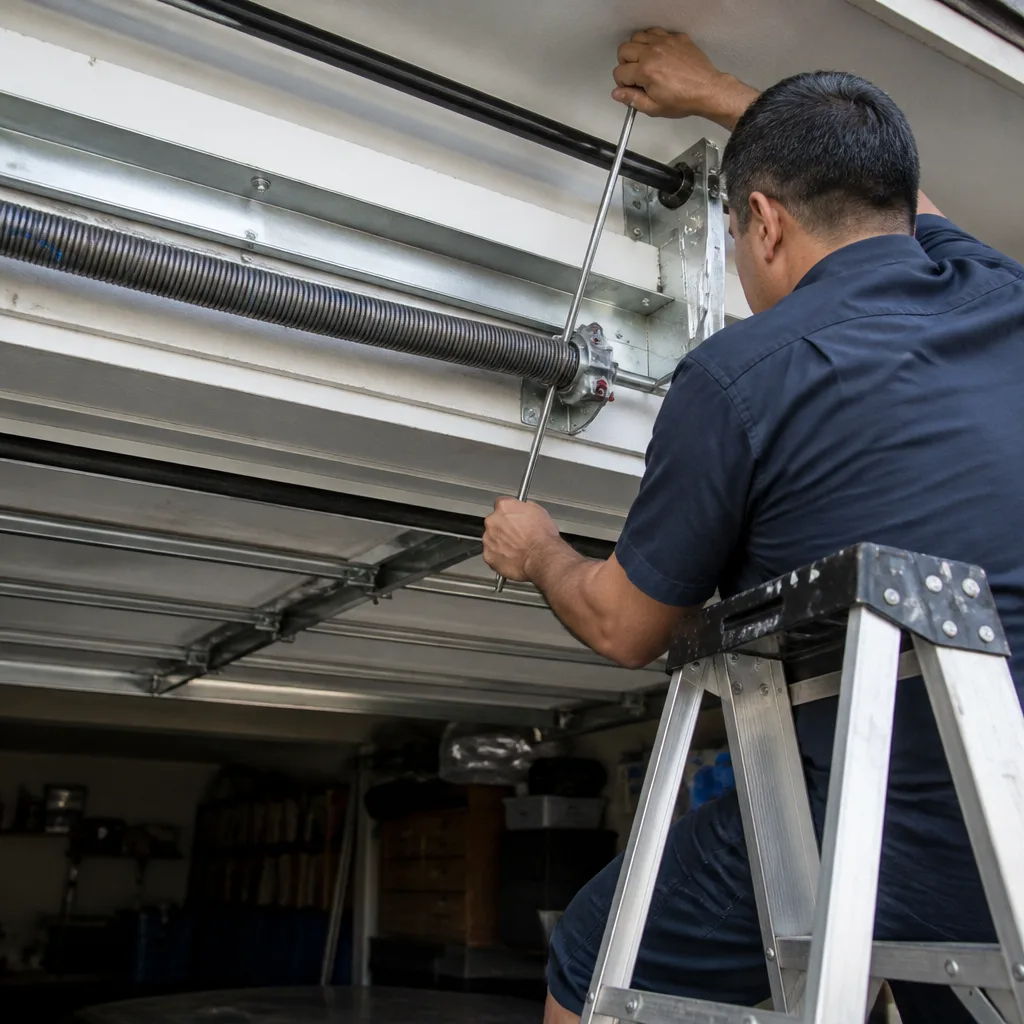
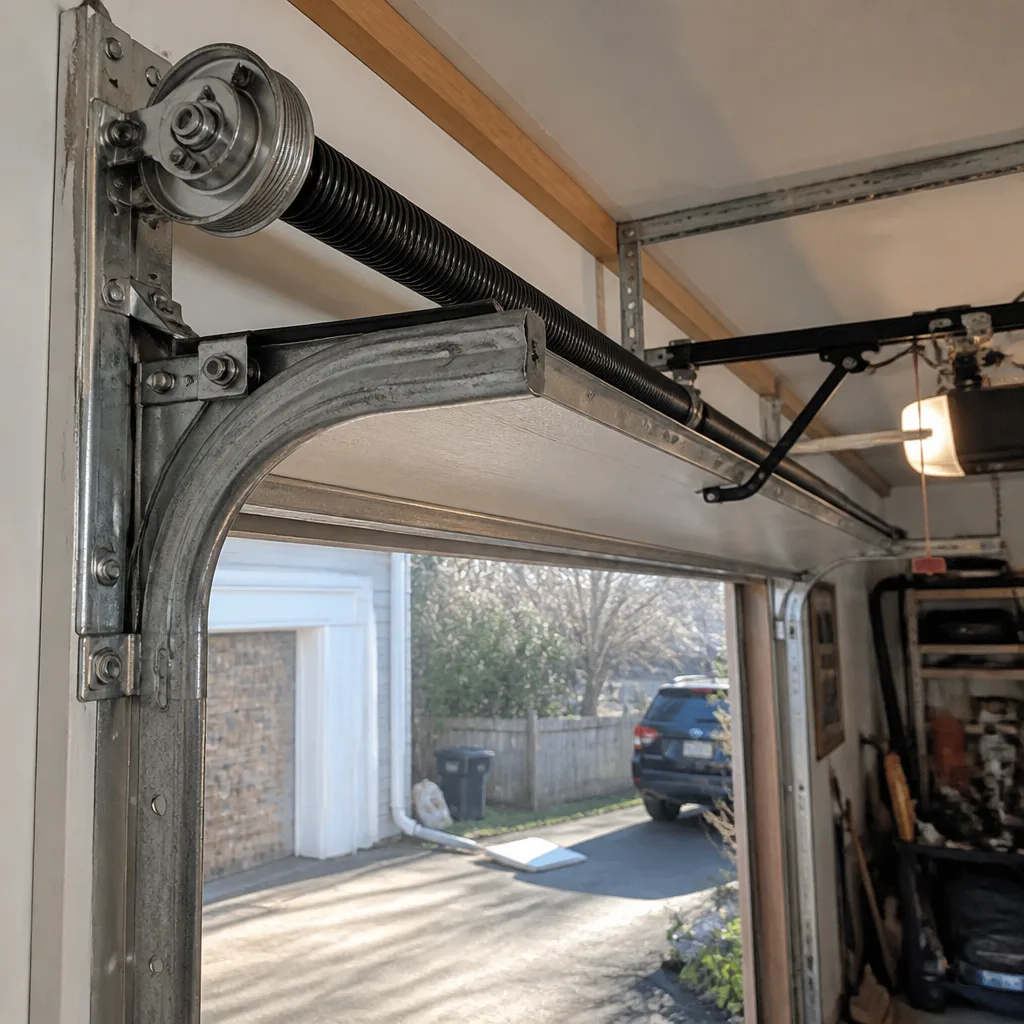
A torsion spring is the coiled steel shaft above your door that counterbalances its weight. In Washington, D.C., freeze-thaw cycling from November through March pits these springs on alley garages, causing premature metal fatigue and breakage. We measure wire diameter, spring length, and coil count before recommending a replacement. A typical torsion spring replacement in Washington, D.C. runs $210-$400, and we install high-cycle springs rated for 25,000+ cycles when the door sees heavy use.
Safety note: Torsion springs are under extreme tension and can cause serious injury or death if mishandled. Do not attempt to remove or adjust one yourself. A trained technician has the winding bars, the experience, and the documented procedure to do this safely.
Extension Spring Repair and Replacement
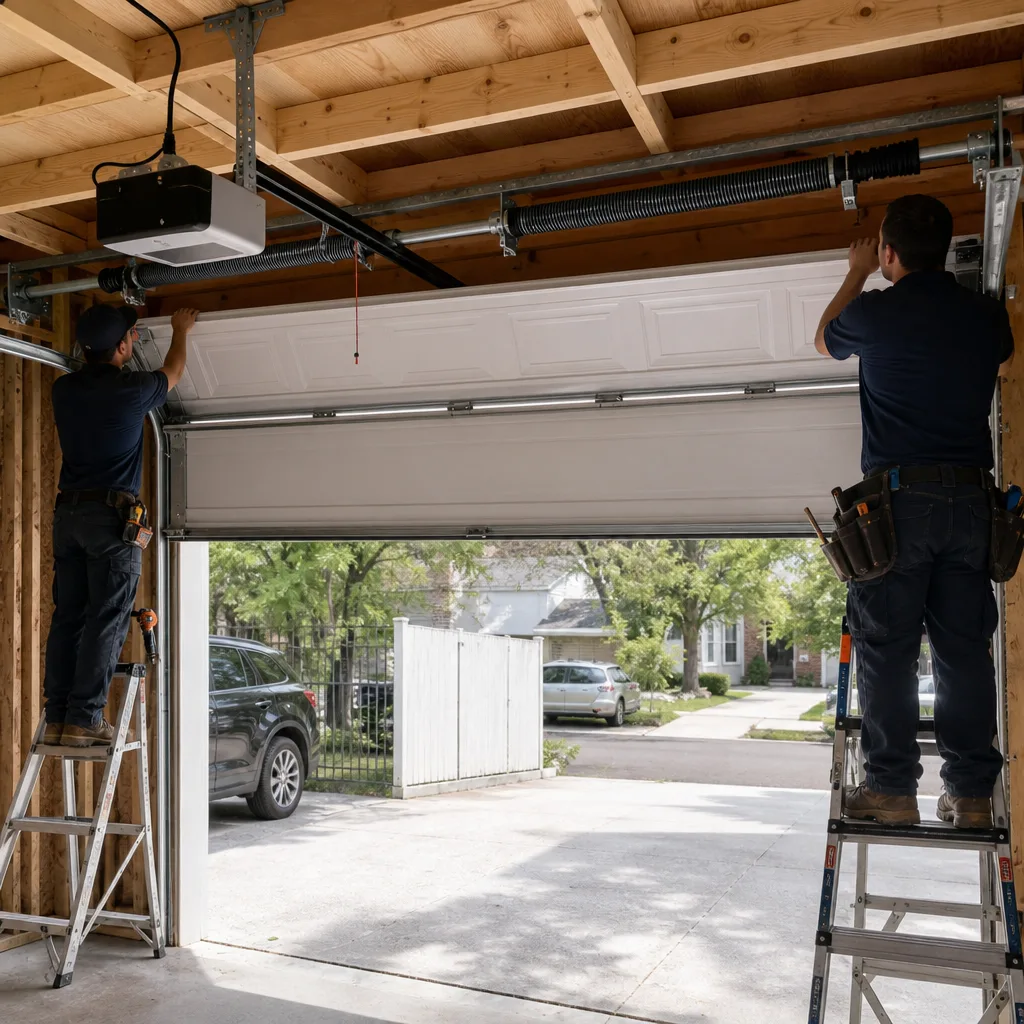
Extension springs run along the horizontal tracks above your door and stretch to lift it. Older row-house garages in Petworth and Columbia Heights often still use extension spring systems, especially on wood carriage-house doors where the overhead clearance is tight. These springs corrode quickly in D.C.’s humid summers, and when one breaks, the door drops unevenly and strains the opener. We replace both springs as a pair, not just the broken one, because a mismatched pair tears through cables and hinges within months. Pricing falls within the $210-$400 spring repair range, and we quote the exact number in writing before touching the door.
Cables and Drums
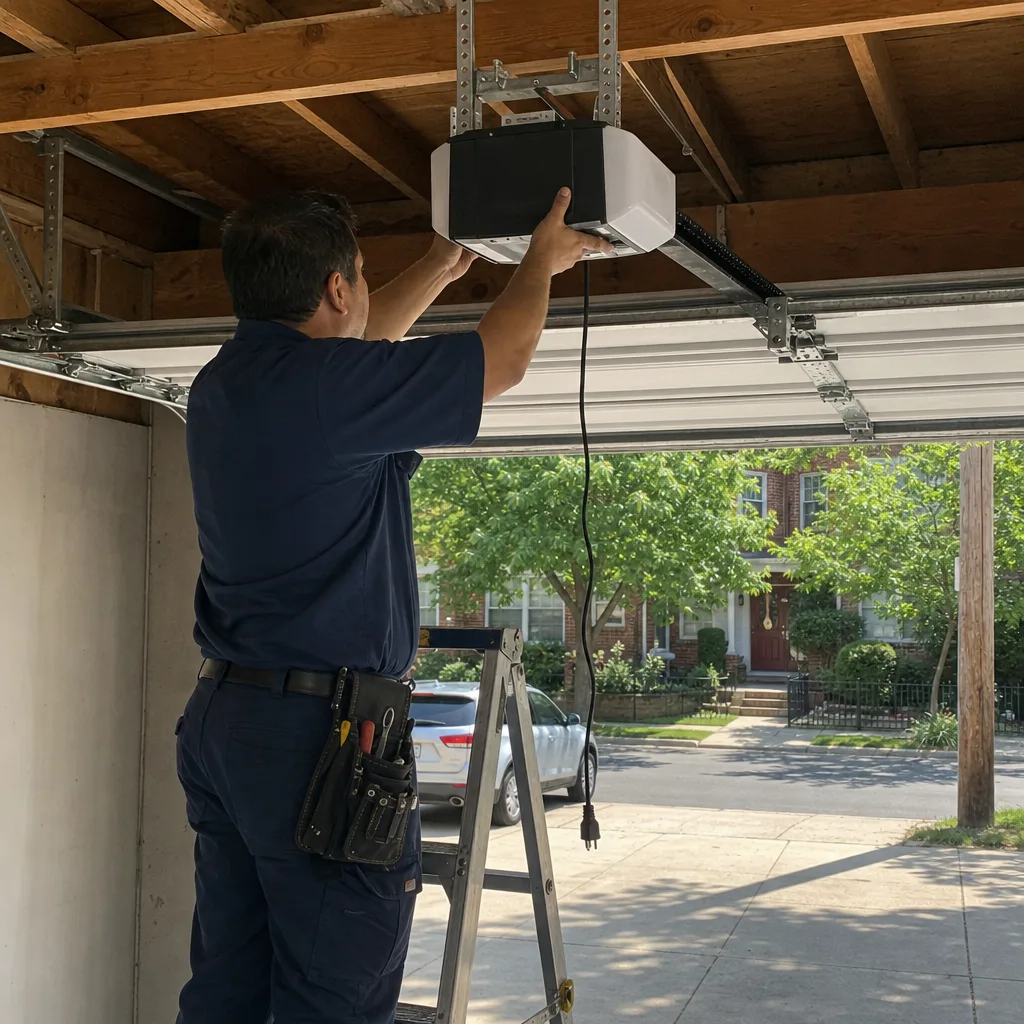
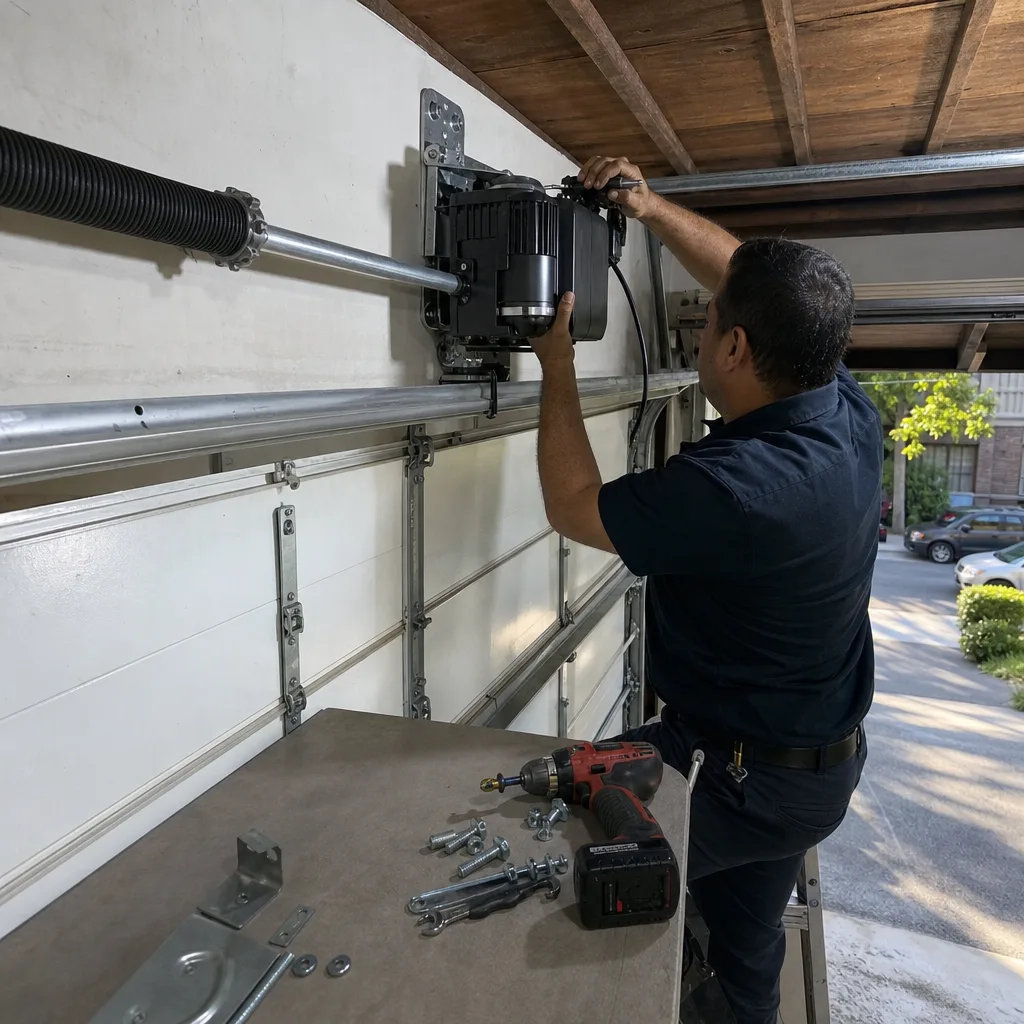
Garage door cables work with the drums to lift and lower the door evenly. On Washington, D.C.’s undersized alley garages, non-standard drum sizes are common, and a generic replacement cable creates uneven lift that binds the door on its tracks. We carry a range of drum profiles and cable lengths for doors ranging from 7 feet to 9 feet wide, and we replace worn or frayed cables before they snap and drop a door panel onto your car. Cable repair in Washington, D.C. typically runs $155-$295, including the drum inspection and re-balancing that must accompany any cable swap.
Rollers and Hinges
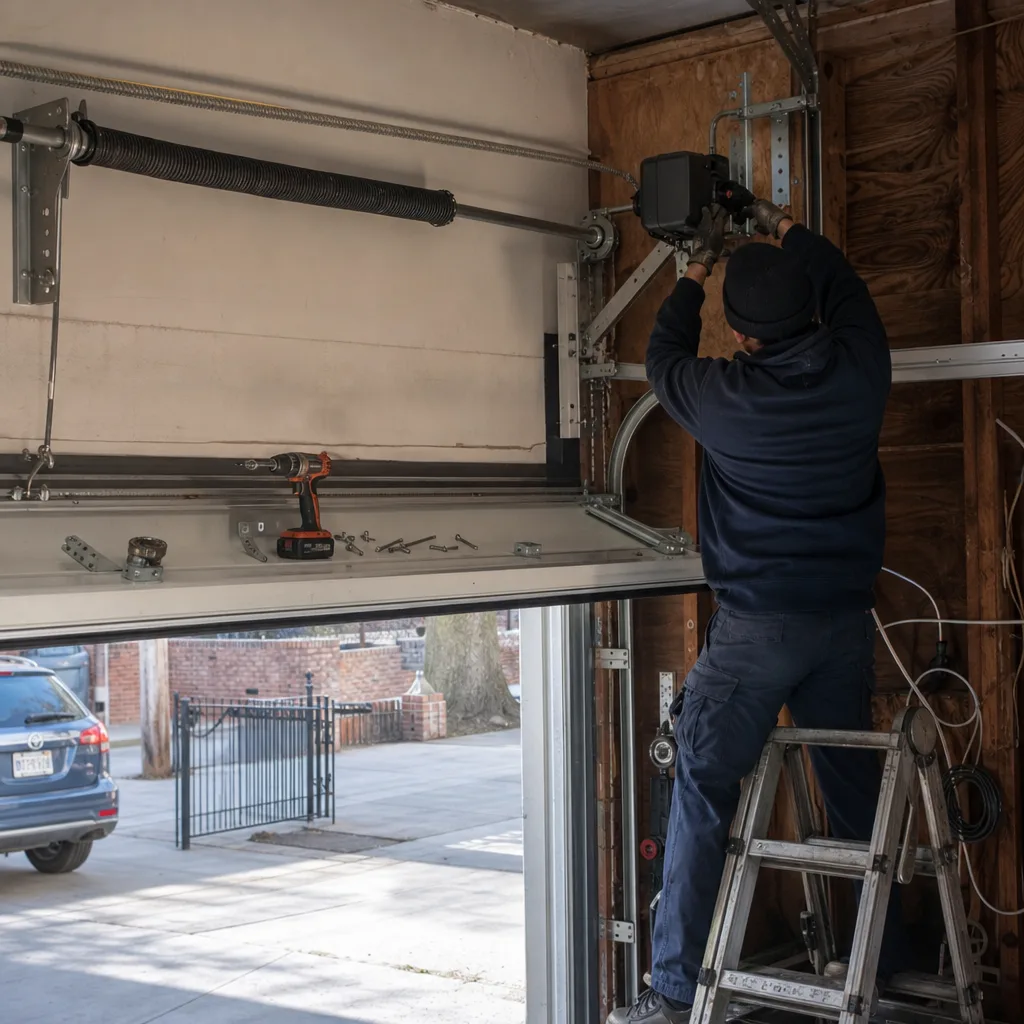
Rollers let the door glide; hinges connect the sections. D.C.’s humid summers swell wood carriage-house doors, and that swelling transfers pressure to the rollers and hinges, grinding them down and chewing the track. We replace nylon rollers that run quieter and last longer than steel, and we replace hinges before a seized one rips out of the door section. Roller replacement in Washington, D.C. runs $130-$260, and because we tune clearances at the same visit, the new rollers don’t get destroyed by the same misalignment that killed the old ones.
What happens when you call
- 1
A real person answersNo phone trees - you reach a local pro.
- 2
You get an upfront price rangeHonest numbers before anyone is dispatched.
- 3
A background-checked tech heads outLicensed & insured, dispatched right away.
- 4
You approve before work beginsNothing starts until you say go.
Trusted Brands We Service in Washington, D.C.
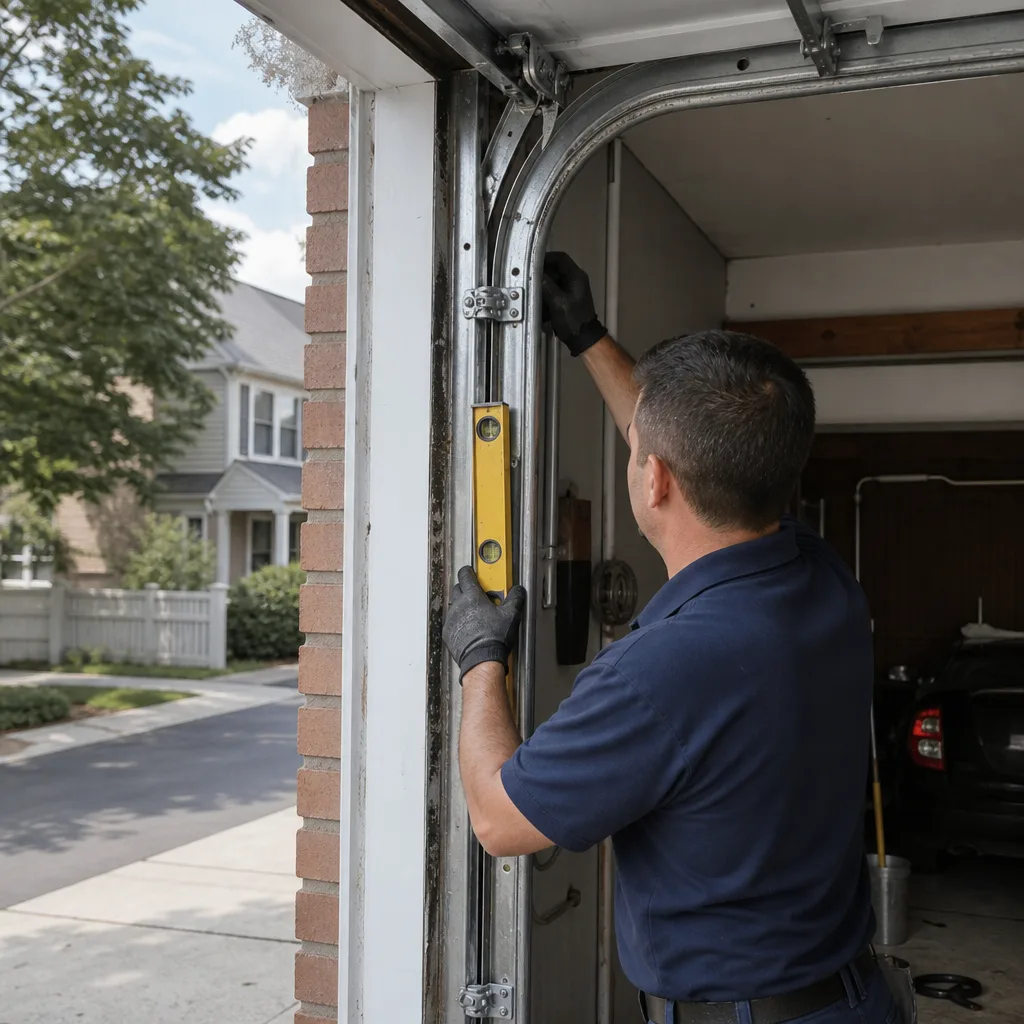
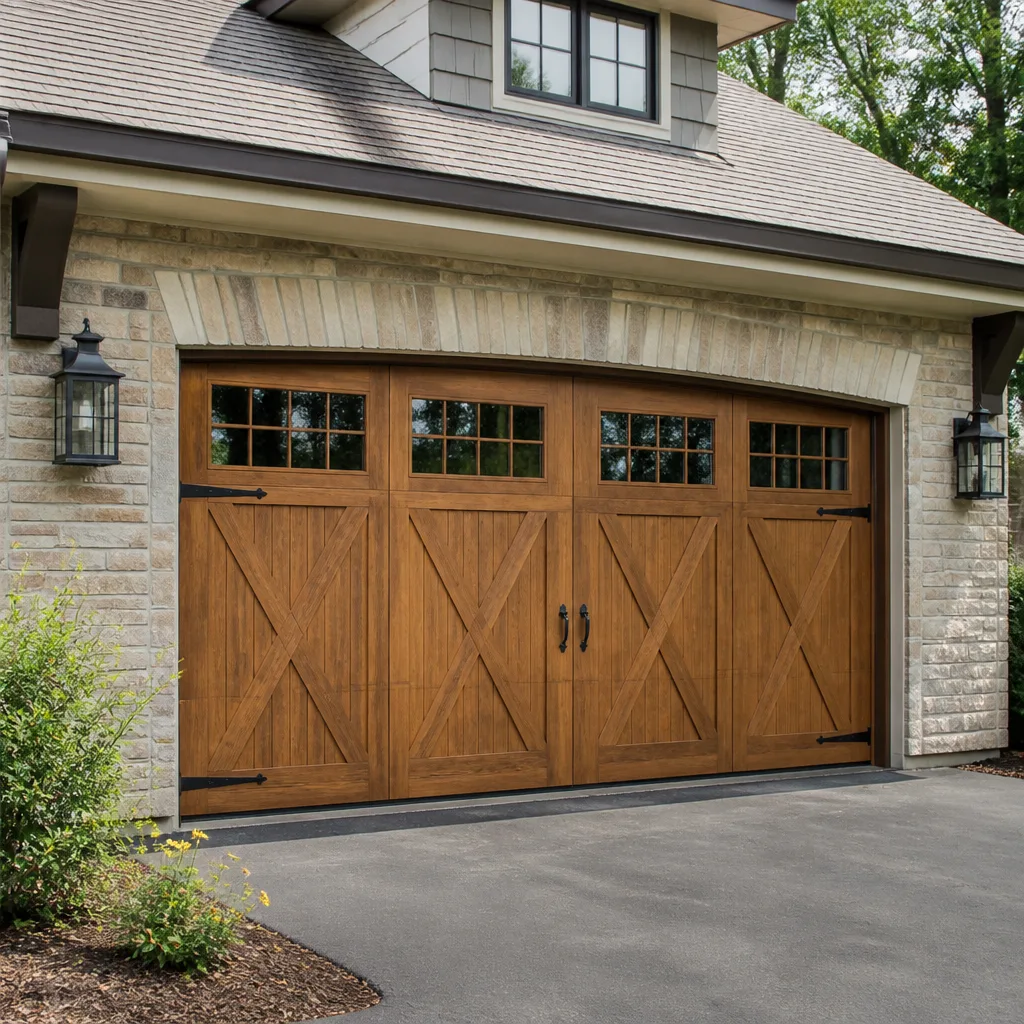
We carry parts for Clopay, Amarr, and Wayne Dalton doors, along with Chamberlain and Craftsman opener components. For Washington, D.C. customers with wood carriage-house doors, Clopay’s Reserve and Amarr’s Classica collections are frequent matches because they produce steel facsimiles that satisfy many Historic Preservation Review Board requirements while holding up to D.C. humidity better than solid wood. We stock common springs, cables, rollers, and bottom seals for these lines, and we source specialty parts within one to two business days for custom or discontinued models.
Common Garage Door Parts Problems We See in Washington, D.C. Homes
- Corroded torsion springs on alley garages. D.C.’s freeze-thaw cycles from November through March pit spring steel, and alley garages with poor ventilation trap moisture against the coil. We replaced a corroded torsion spring on a 1920s alley garage in Capitol Hill last month. The door was a custom 8-foot wood carriage-house style under historic review, so off-the-shelf springs wouldn’t fit. Our technician walked the new high-cycle spring and end bearing plates two blocks from East Capitol Street because the alley was too tight for the van, then re-tuned track alignment and door balance so the Chamberlain opener lifted smoothly without straining.
- Swollen wood sections binding on tracks. Summer dewpoints regularly above 65°F mean wood carriage-house doors absorb moisture, expand, and press against the track. The first casualty is usually the bottom seal, followed by the rollers and hinges. We see this throughout Georgetown and Capitol Hill every July and August.
- Non-standard spring and drum combinations failing early. Thousands of D.C. garages were retrofitted into lots that predate the automobile age. The doors are undersized, the hardware is often mismatched or custom, and a generic spring swap from a suburban supplier fails within a year or two. We match the spring to the actual door weight, not the “standard” chart.
- Track misalignment from settling foundations. D.C.’s older row houses settle, and the alley garage settles with them. A door that scraped the track for years before finally jamming usually has a foundation issue behind it. We realign tracks and re-balance the door, and we show you photographs of what we found.
Pricing for Garage Door Parts in Washington, D.C., DC
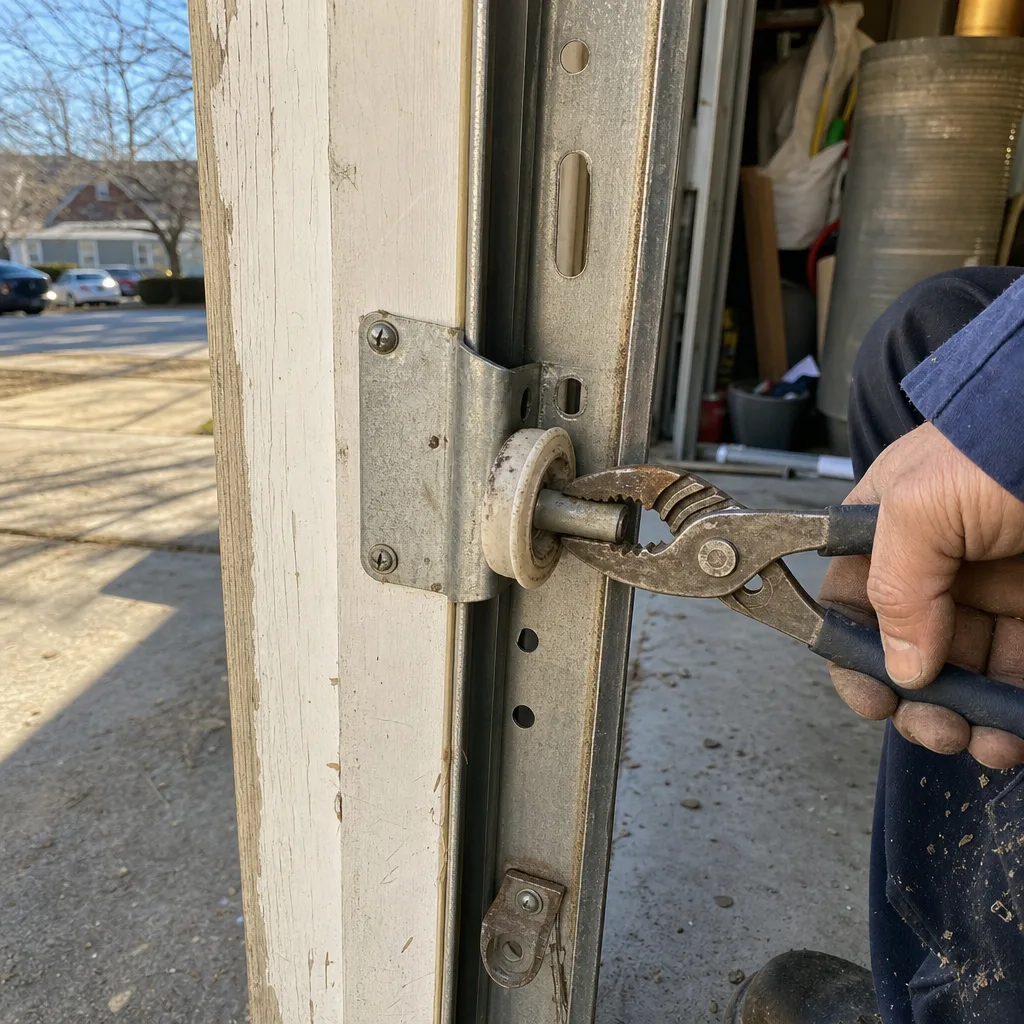
Here are the ranges you should expect for common parts work in Washington, D.C. These are flat, written prices that include the part, labor, and the documented photo record. We quote the exact number before any work starts, and the price does not change once we see the door. That’s Clause 1, and it works because we ask the right questions on the phone, not because we’re guessing.
| Service | Washington, D.C. Price Range |
|---|---|
| Torsion Spring | $210-$400 |
| Cables & Drums | $155-$295 |
| Rollers & Hinges | $130-$260 |
What affects the number inside that range? Door weight, spring cycle rating, alley access requirements, and whether the hardware must match a historic district specification. A custom 8-foot wood carriage-house door on Capitol Hill will land at the upper end because the spring is special-order and the tech is carrying it on foot. A standard 7-foot steel door in a Petworth garage with street access lands at the lower end. Either way, you’ll know the exact figure before we start, and you’ll receive a Free Second Opinion on any written estimate from another company. Bring the paperwork; we’ll review it against what we quote.
We Also Serve Cities Near Washington, D.C.
Our crews work throughout Washington, D.C. and coordinate displacement from our metro office for jobs across the District. If your garage sits on a narrow alley in Shaw or behind a brick row house in Bloomingdale, we’re already familiar with the terrain and the hardware it demands. We serve every quadrant of the city, from Georgetown to Anacostia, and we schedule with alley access in mind from the first call.
Serving Washington, D.C., DC - Our Local Coverage Area
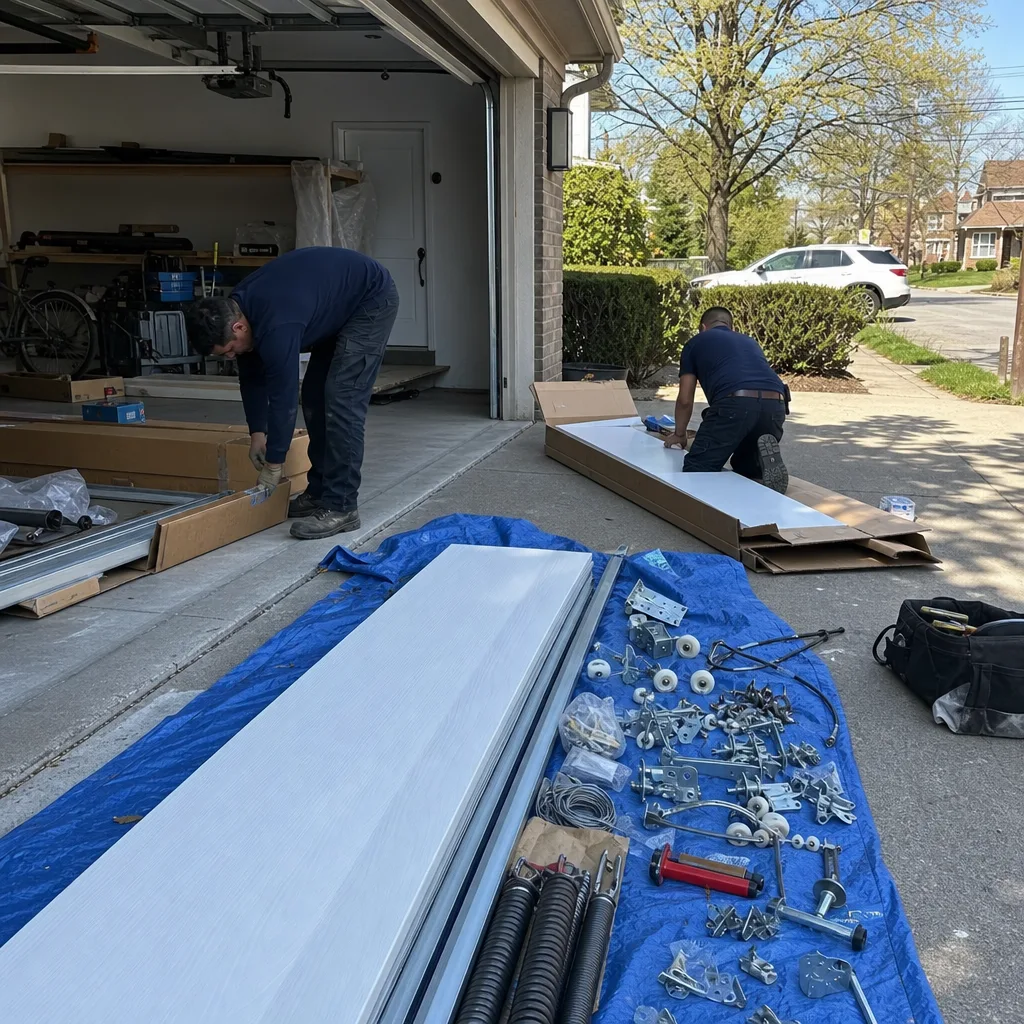
We’re based in the Washington, D.C. area and know this community well. Use the map below to see our service coverage - if you’re nearby, we can almost certainly help.
FAQs - Garage Door Parts in Washington, D.C.
Your Capitol Hill garage door likely needs a custom torsion spring because it’s an 8-foot or 9-foot door retrofitted into a rear alley lot built decades before cars existed, and many of those doors were built as wood carriage-house styles with non-standard weights and spring mounts. A standard residential spring chart assumes a 7-foot steel door weighing between 90 and 140 pounds. Your wood door might weigh 180 pounds or more, and installing a spring rated for less weight means it breaks within a year or two. We measure the actual door weight, the wire diameter, the spring length, and the inside diameter, then match the spring to the door. Pricing for this work runs $210-$400, and you get the written quote before we order or install anything. Call (970) 536-1724 for an exact quote, and ask the technician to show you the spring tag on the existing unit.
D.C.’s humid subtropical climate, with summer dewpoints regularly above 65°F, causes wood carriage-house door sections to absorb moisture, swell, and press against the tracks, which then tears bottom seals, grinds down rollers, and throws off cable tension. The swelling is often visible as a door that scrapes or sticks during July and August but runs fine in October. The fix is not just replacing the worn parts. It’s re-tuning the clearances between the door sections and the track so the new rollers and seals don’t get destroyed by the same misalignment that killed the old ones. We do that adjustment as part of every roller, hinge, cable, or seal job in Washington, D.C., and we show you photographs of the before and after clearances.
Yes. Washington, D.C. has roughly 300 miles of rear service alleys, and many of them are only 10 to 12 feet wide, so full-size service vans can’t reach the garage door itself. Our technicians park on the nearest cross street and hand-carry torsion springs, drums, cables, and tools to the door. We confirm alley access and the walking distance when you call, so the tech arrives prepared. This is a standard part of working in Garage Door Parts in Washington, D.C., and it’s one of the reasons we photograph everything on site. You’ll see exactly what was carried in and what was installed, even if the van never got close to the door.
The Historic Preservation Review Board, which oversees historic districts like Capitol Hill, Georgetown, and LeDroit Park, can dictate acceptable door styles as a condition of exterior alterations. That means a modern steel panel door may be rejected in favor of wood carriage-house designs or steel facsimiles like Clopay’s Reserve or Amarr’s Classica lines. These doors require different spring weights, custom drum profiles, and sometimes non-standard track heights than a standard suburban steel door. If your garage is visible from the street or alley within a historic district, we’ll help you understand what hardware is compatible with your review requirements. In fact, we replaced a corroded torsion spring on a 1920s alley garage in Capitol Hill last month where off-the-shelf springs wouldn’t fit, and the new high-cycle spring and end bearing plates had to be walked in from East Capitol Street because the alley was too tight for the van. The door was re-tuned and balanced before the technician left.
A torsion spring on a D.C. row-house door is about to fail when you see a gap in the coil, hear a loud bang followed by the door refusing to lift, or notice the door opening unevenly with one side lagging behind the other. Freeze-thaw cycling from November through March accelerates corrosion on alley garages, so a spring that looks rusty and has visible pitting is a failure waiting for the coldest morning of the year. If your door is over 10 years old and the spring has never been replaced, its life is near the end. When a spring breaks, the door cannot be safely opened with the opener, because the opener motor will burn out lifting dead weight. Call us at (970) 536-1724 before that happens. We’ll inspect, measure, and give you a written price for a high-cycle replacement, and you’ll see the photograph of the failing spring before you approve anything.
Contact Servo Garage Doors in Washington, D.C.
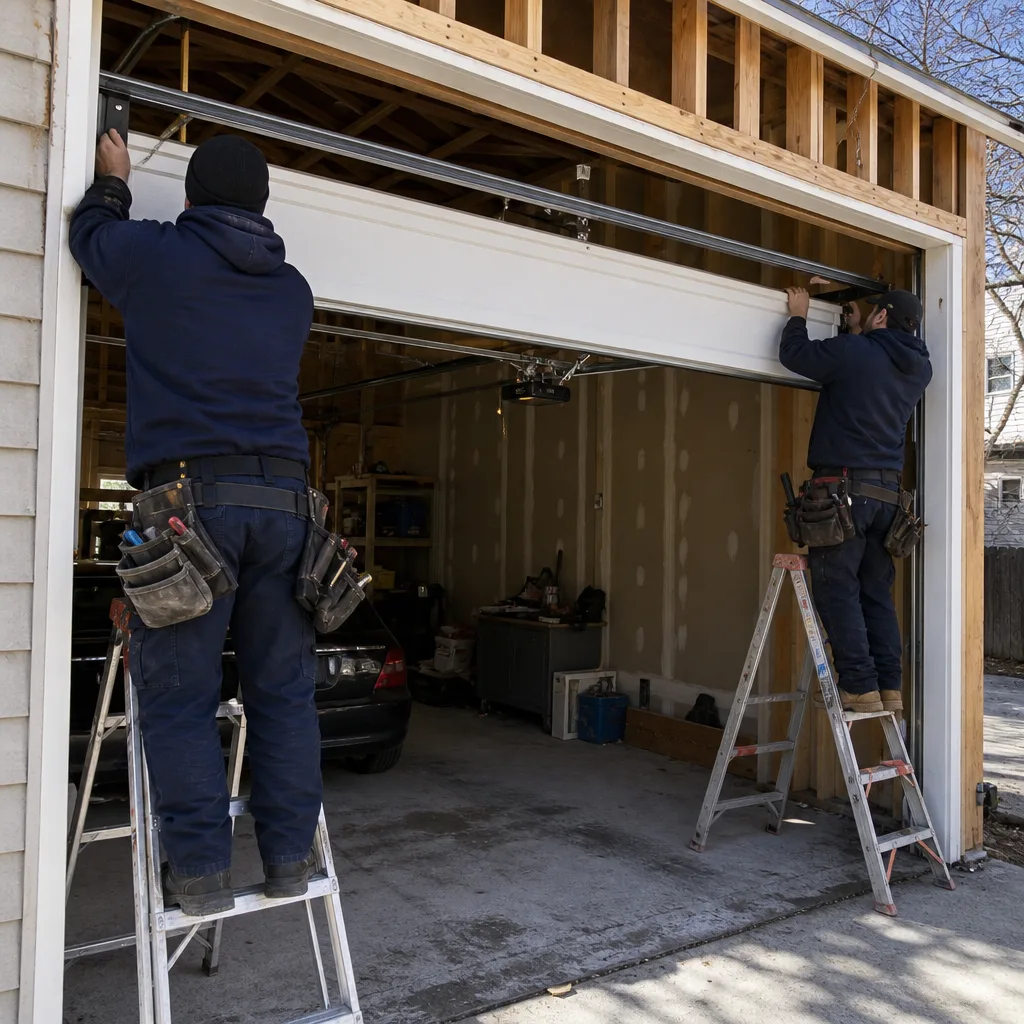
If you need garage door parts in Washington, D.C., call (970) 536-1724. You’ll speak to a live person, 24 hours a day, 7 days a week, including holidays. We’ll ask about your door, your alley, and your historic district status, and we’ll send a named technician with a written scope and a flat price before any work starts. Every visit ends with a documented photo record. Every repair carries the 365-Day Done Right Promise. Every estimate is free, and every competing written estimate gets a free second opinion. The price you’re quoted is the price you pay. That’s Clause 1, and it’s been the rule since 2015.
Written by Marcus Deller, Owner at Servo Garage Doors, serving Washington, D.C. since 2015.