
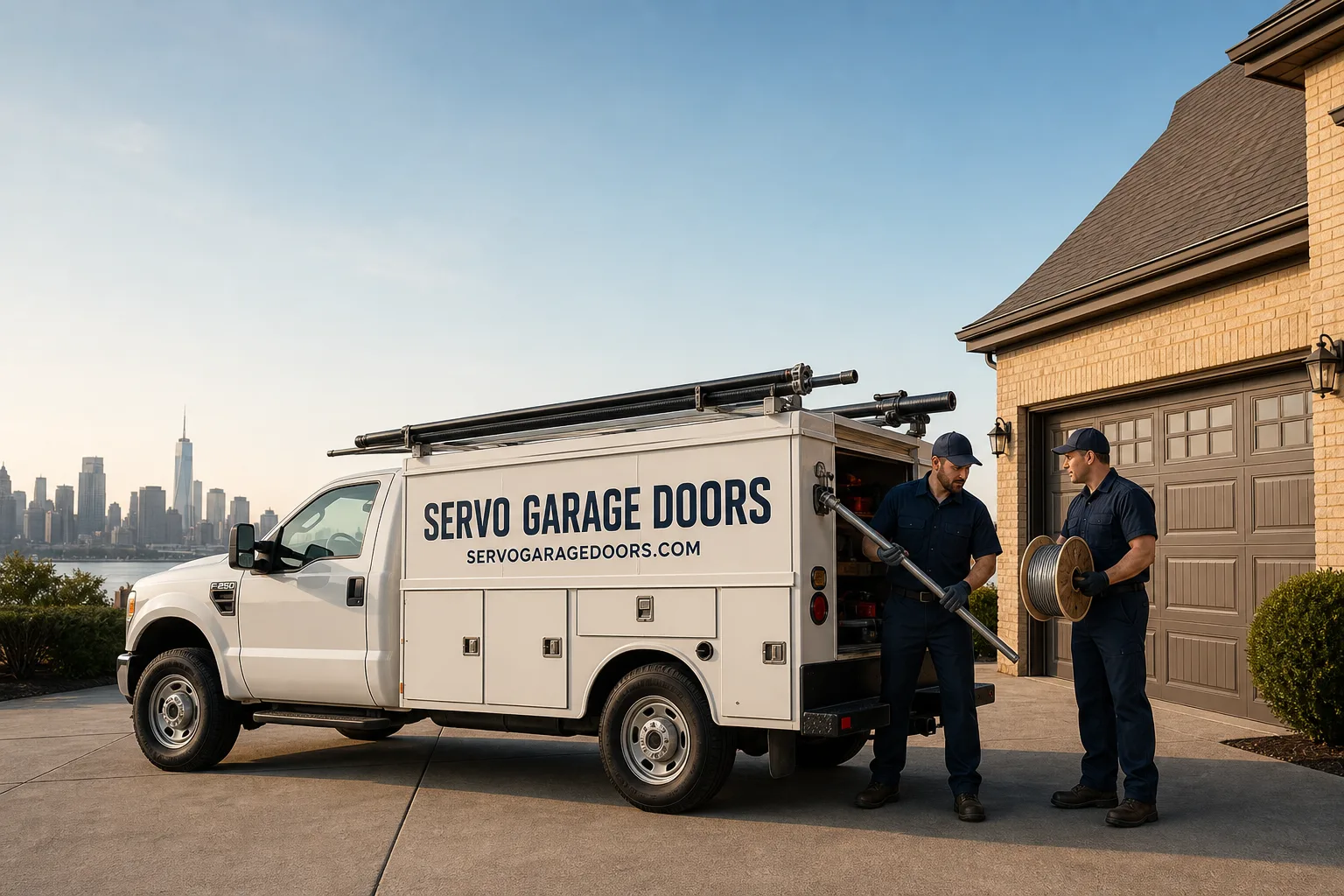
Full 25-point door and opener safety check with every visit - springs, cables, rollers, tracks, and your LiftMaster or Chamberlain opener included
You get a price before we start. It does not change when the truck arrives.
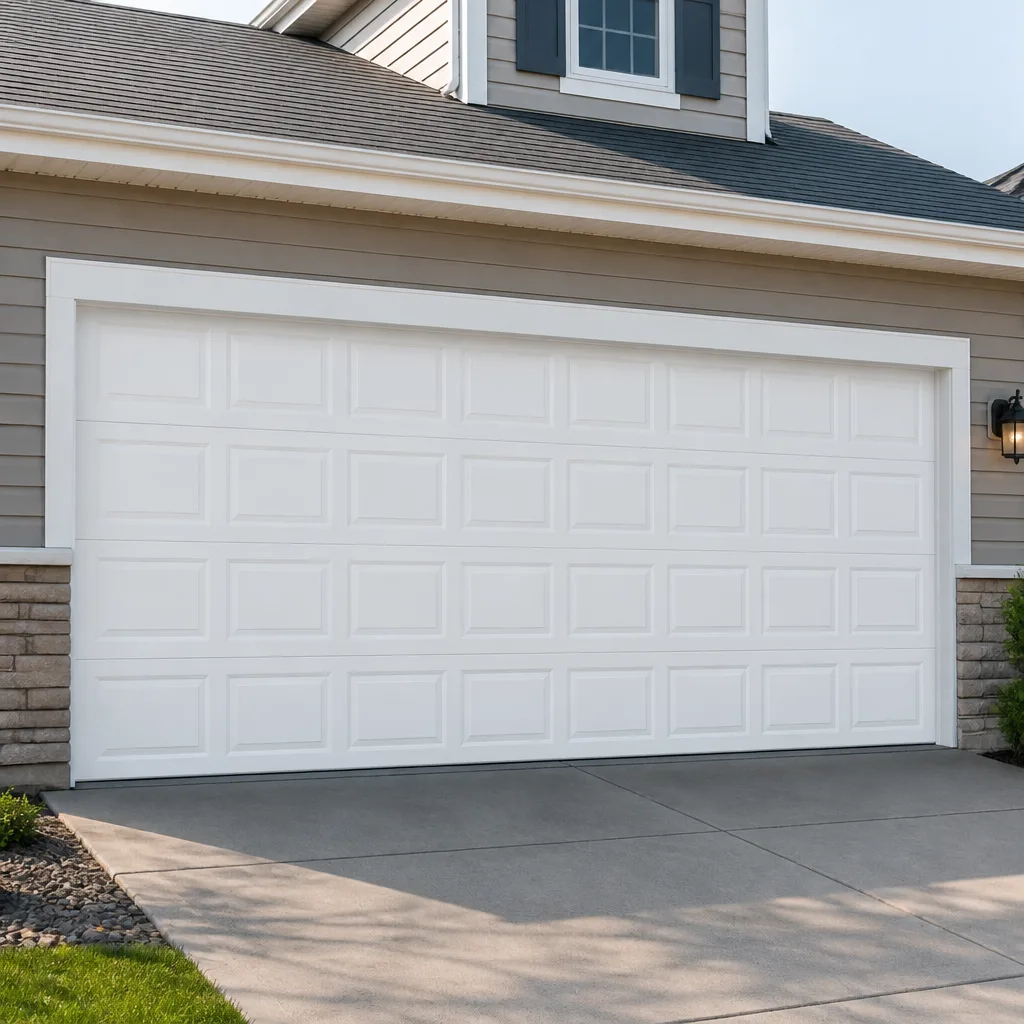
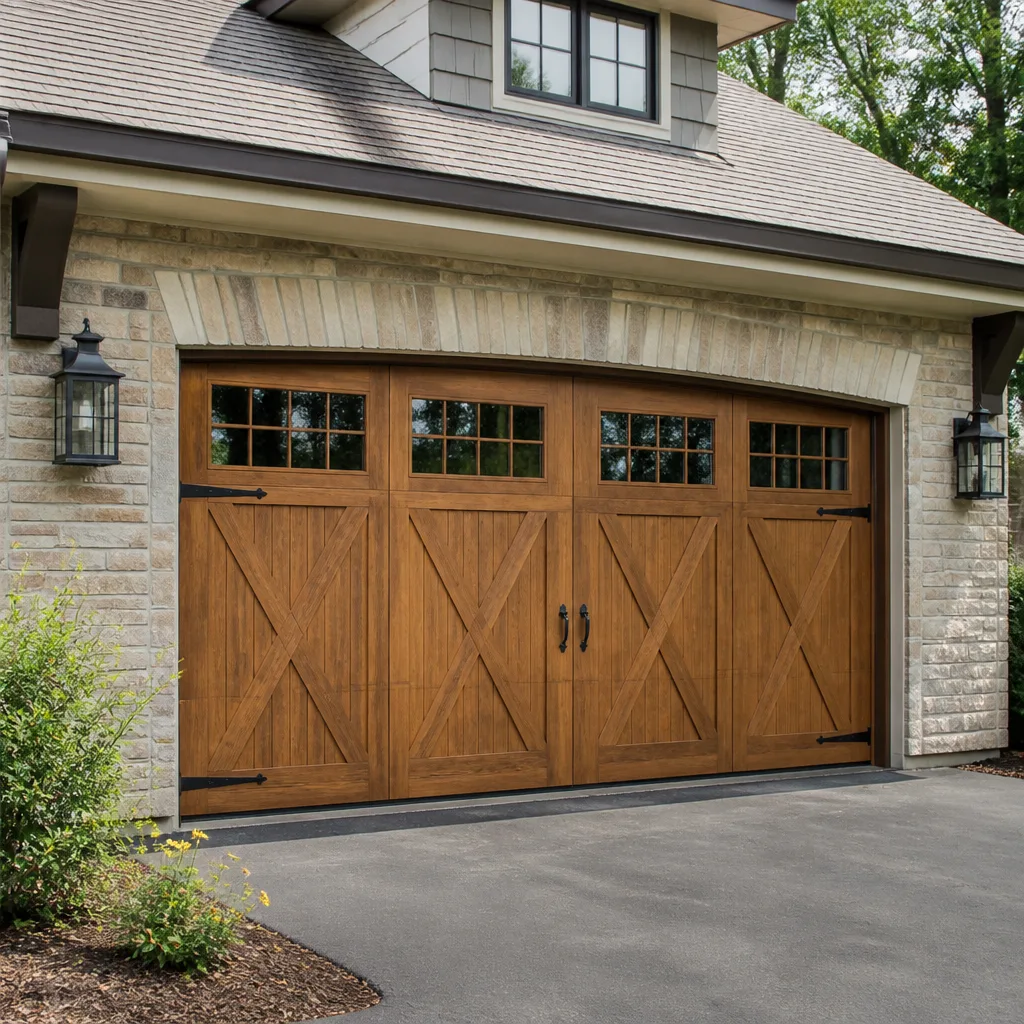
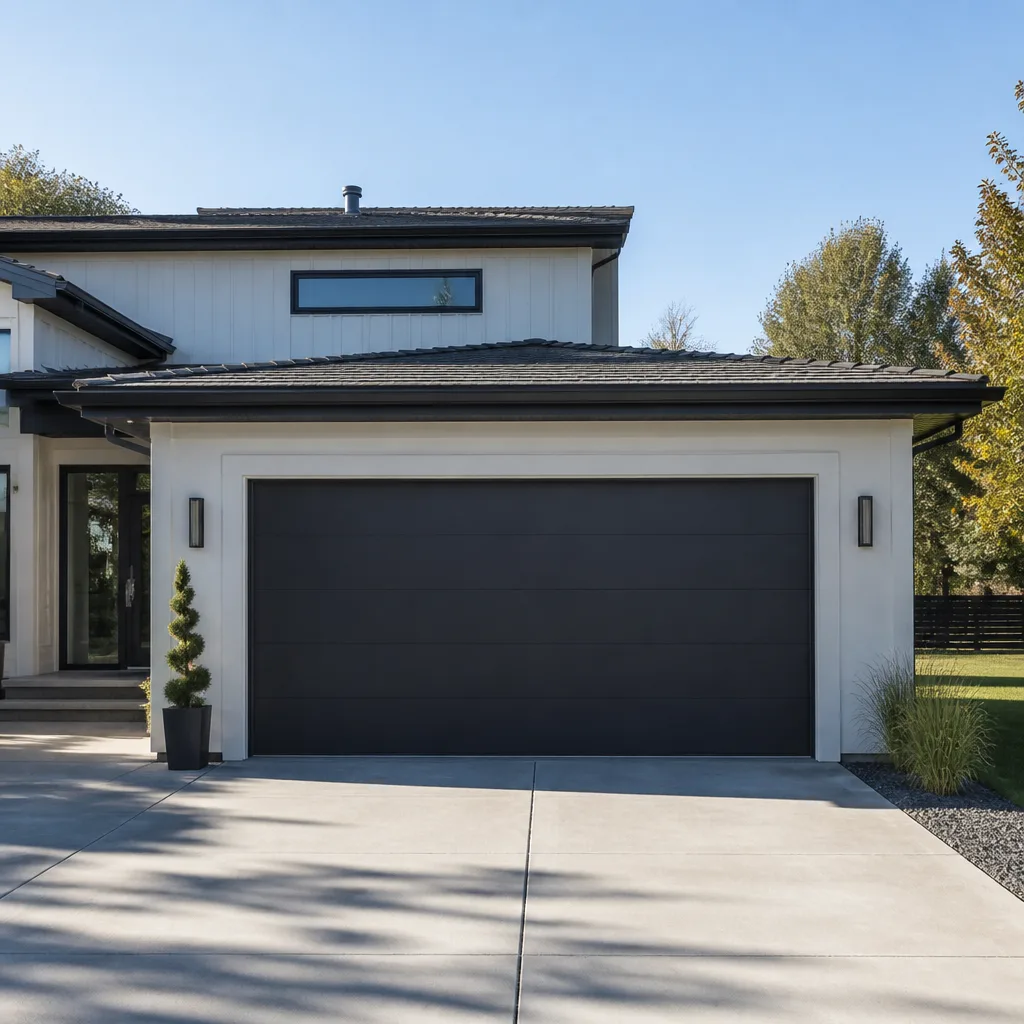
 Before
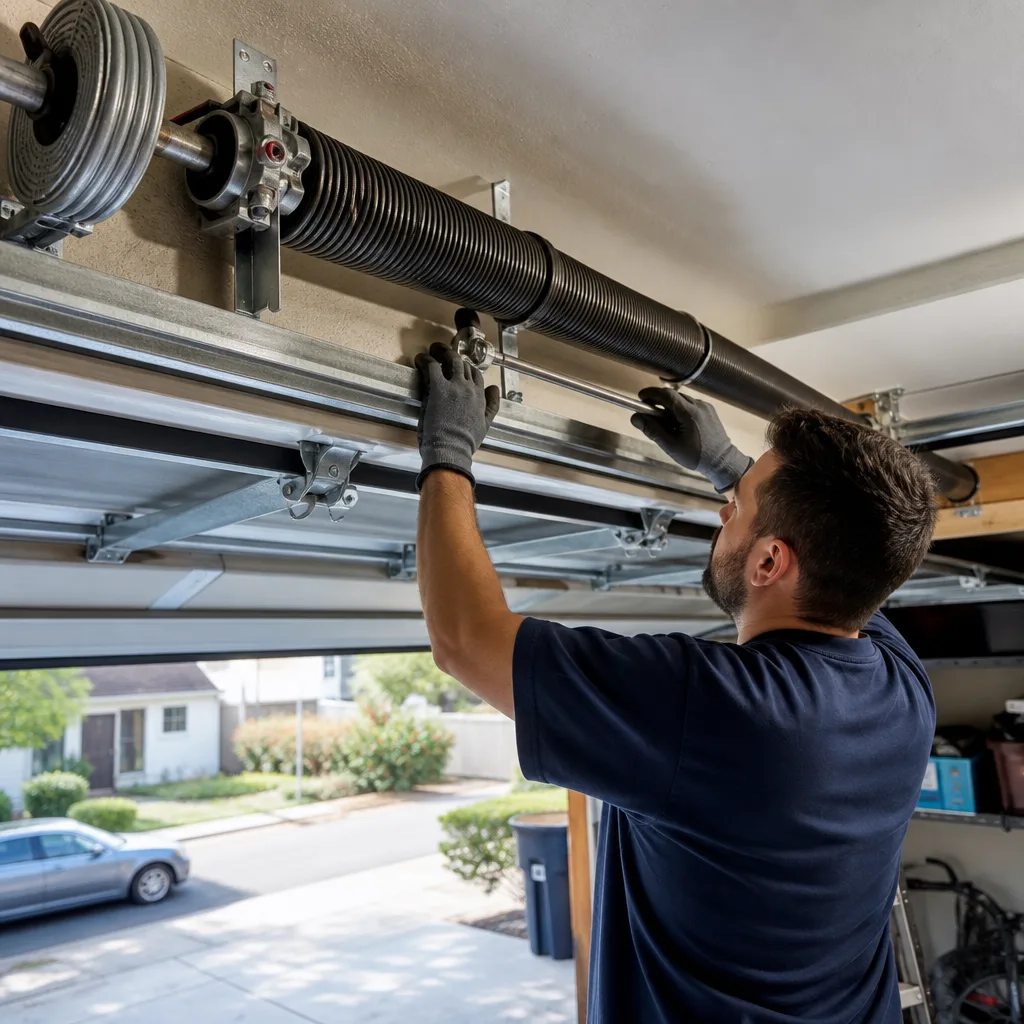 After
After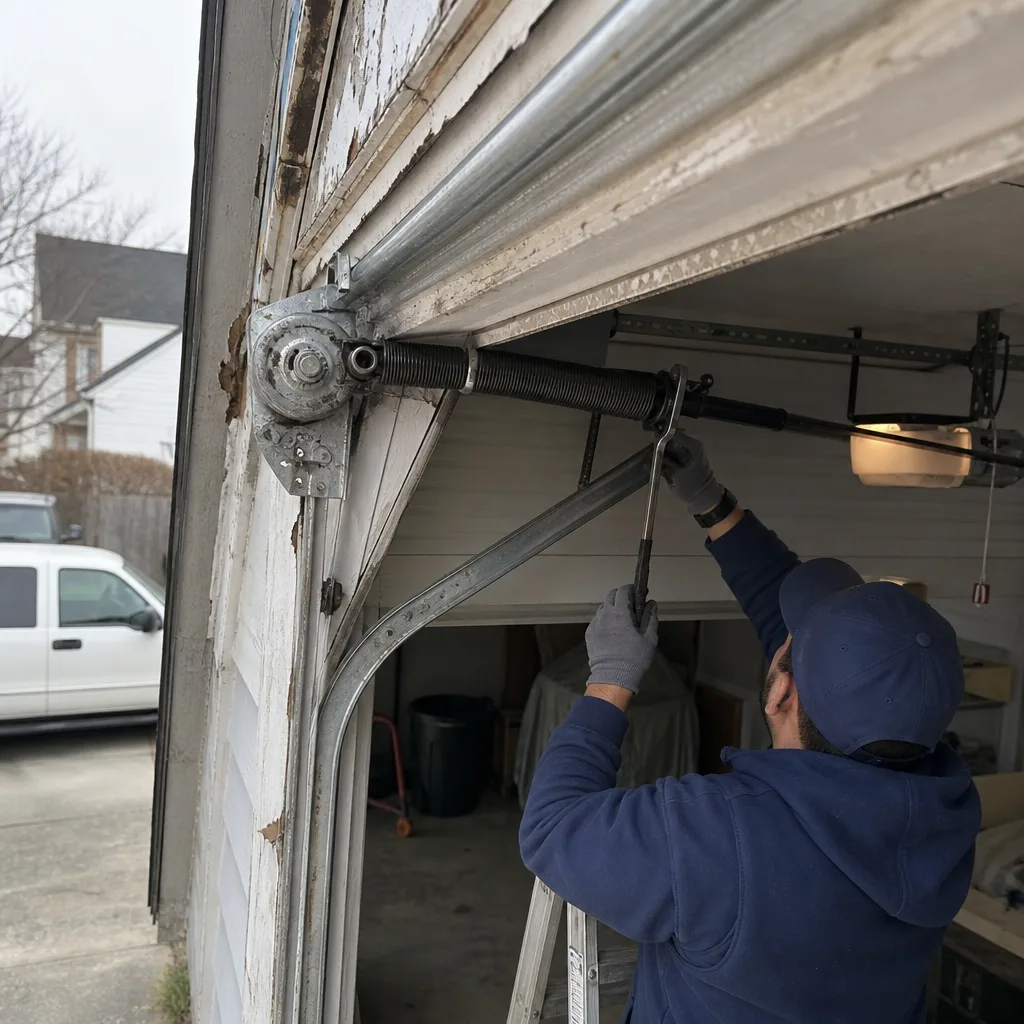 Before
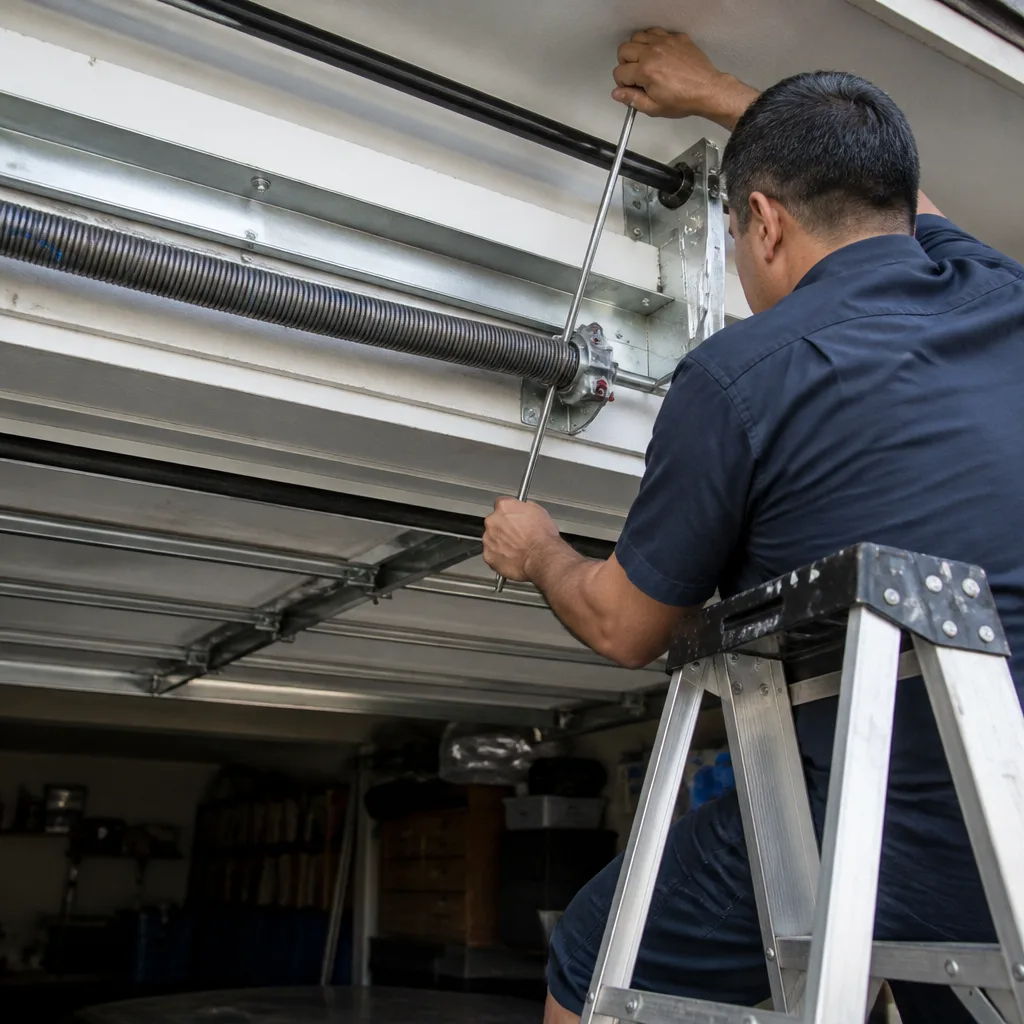 After
After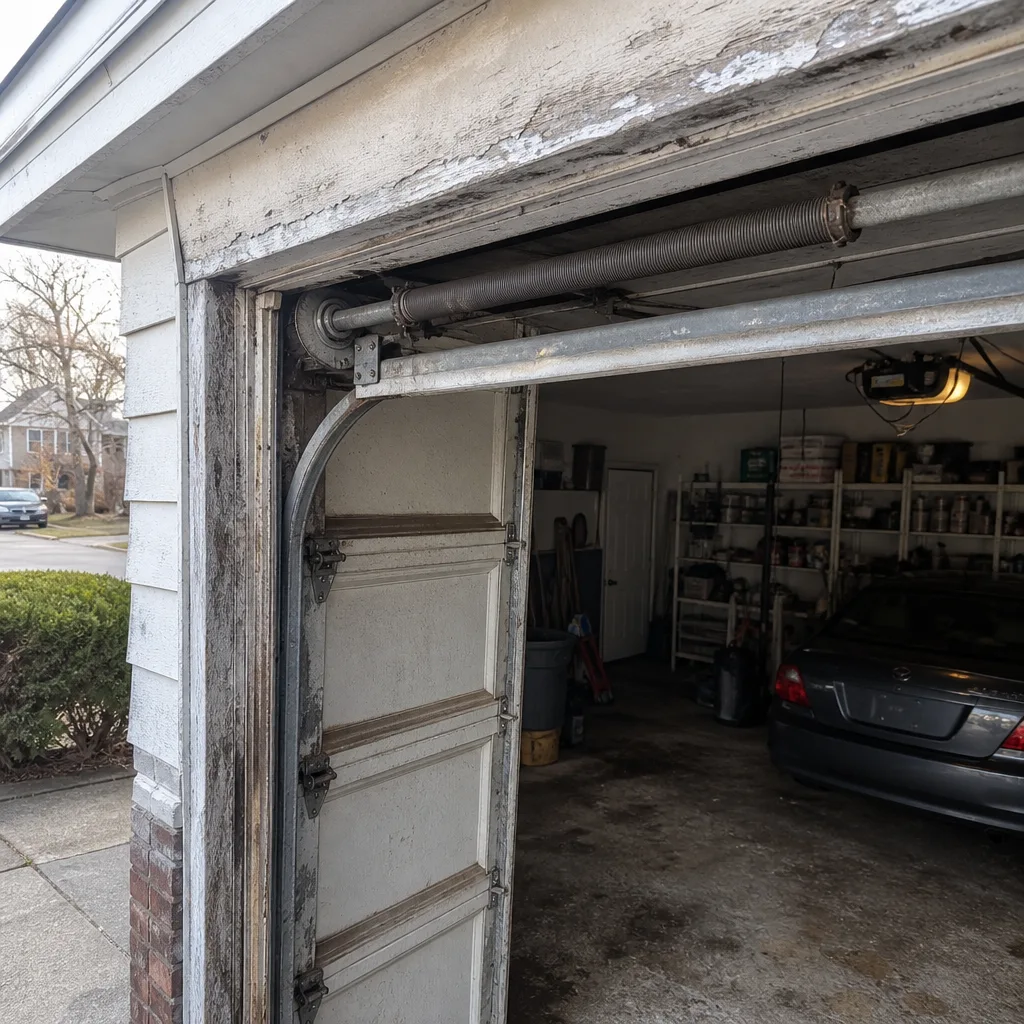 Before
 After
AfterGarage Door Reverses Before Hitting the Floor
When your garage door stops partway down and reverses back up, the most common cause is a close-limit setting or a safety sensor that is misreading the floor as an obstacle. Both can be confirmed in a few minutes and, in many cases, fixed the same day. The door is not broken – it is doing exactly what it was told to do. The job is figuring out what told it wrong.
Your opener has two built-in safety systems: a force sensor that stops the door if it meets unexpected resistance, and a pair of infrared sensors at the bottom of the tracks that watch for objects in the path. When either one trips, the opener reverses rather than crush whatever is in the way. That is the right behavior. But both systems can go out of calibration, get dirty, or develop faults that make them trip when nothing is actually wrong. The symptom you are looking at – a door that reverses an inch or two before the floor – is almost always one of those four causes below, in roughly this order of frequency.
Why It Happens
1. Misaligned or Dirty Safety Sensors
The two small sensors mounted near the floor on each side of the door frame have to face each other within a very tight angle. If one gets bumped, accumulates dust or a cobweb, or if direct sunlight hits the lens at a certain time of day, the beam breaks and the opener treats it as a blocked doorway. Look at both sensors: the sending unit should have a steady amber light, the receiving unit a steady green. A blinking or absent green light almost always points here. Cleaning the lenses with a dry cloth and nudging the brackets back into alignment resolves this more often than anything else.
2. Close-Limit Set Too High
Every opener has a close-limit adjustment – a dial, screw, or digital setting that tells the motor how far to travel before it expects to hit the floor. If that limit is set too short, the door stops before it gets there, the motor detects the gap as resistance, and reverses. You will usually notice the door consistently stopping at the same point every time, often within a few inches of closing. The exact adjustment process varies by brand – LiftMaster, Genie, and Chamberlain all handle it differently – and it is worth checking your opener manual before touching anything, since an over-adjusted limit can cause the opposite problem.
3. Down-Force Sensitivity Set Too High
Related to but different from the limit setting, the force adjustment controls how much resistance the door is allowed to feel before it gives up and reverses. If sensitivity is cranked too high – often after a previous DIY adjustment – a perfectly normal amount of friction in cold weather or from slightly stiff rollers can trigger a reversal. Test it this way: hold the bottom of the door lightly as it closes. If it reverses at light pressure, force sensitivity is probably the issue. If it closes fine when you hold it, the problem is more likely a sensor or limit issue.
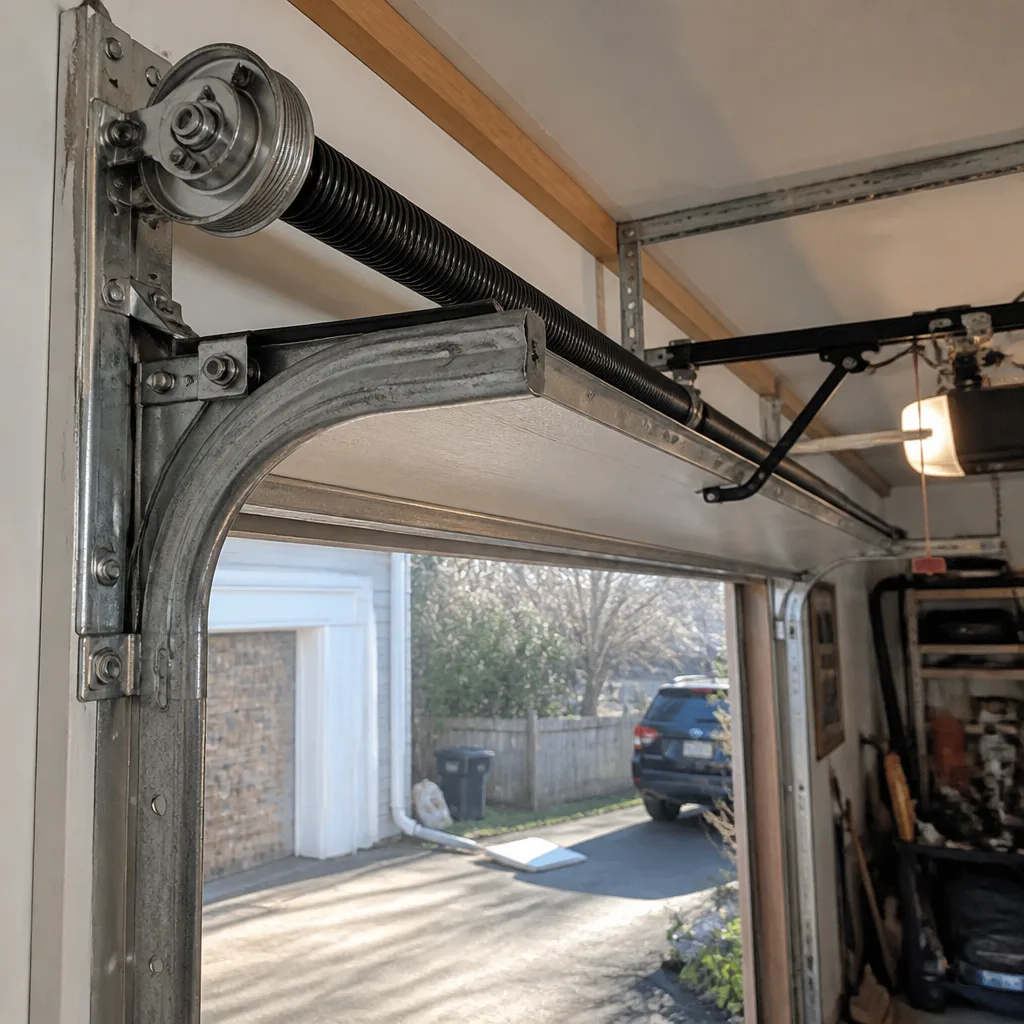
4. Worn or Uneven Springs Causing Drag
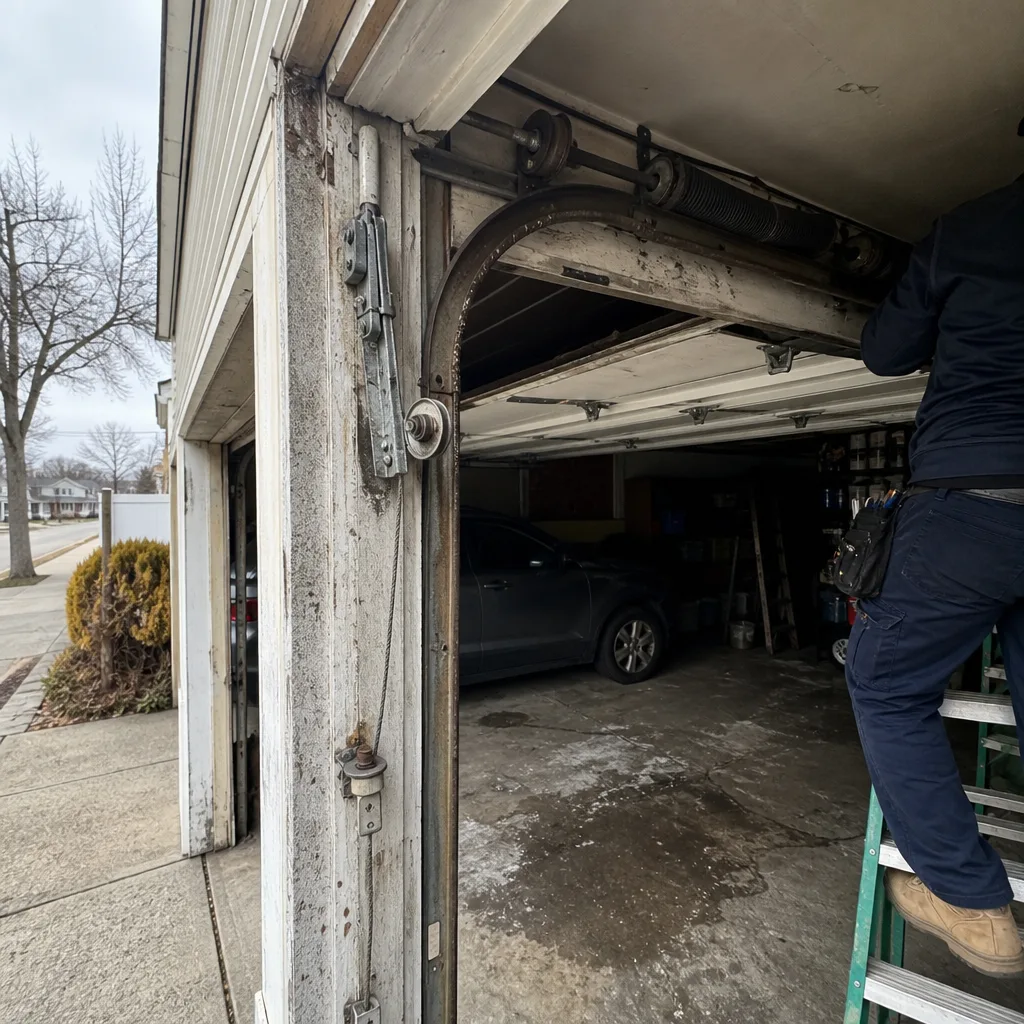
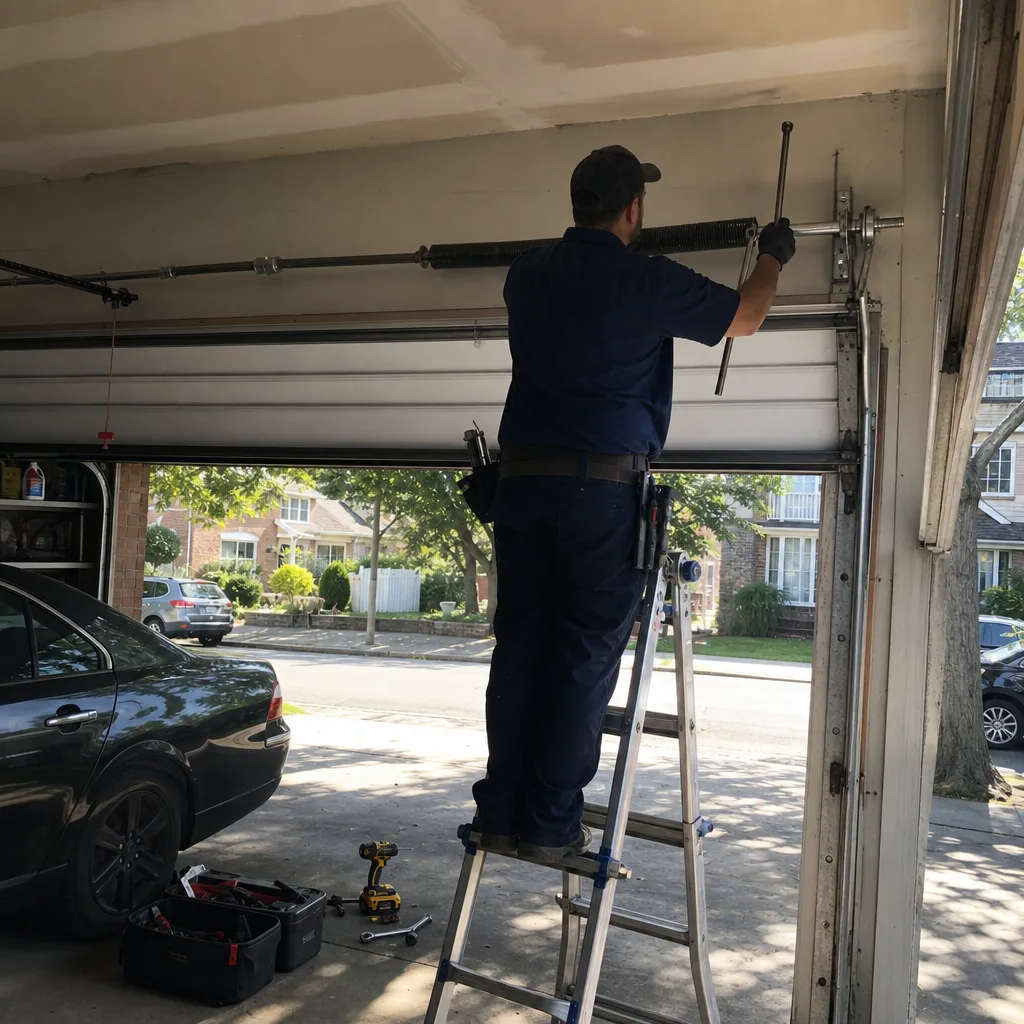
Torsion and extension springs counterbalance the weight of the door so the motor only has to do the last bit of work. When a spring weakens or one side loses tension before the other, the door starts to feel heavier to the opener than it should. The motor reads that extra load as an obstruction and reverses. You might notice the door moving unevenly, one side dropping slightly faster than the other, or the door feeling heavy when you try to lift it manually (with the opener disconnected). Do not attempt to adjust or replace springs yourself. They are under extreme tension and can cause serious injury if released without the correct tools and training. Stop using the door and call your local Servo Garage Doors team.
What to Do Right Now
- Check the sensor lights. Look at both sensors at the bottom of the tracks. The receiver should show a solid green light. If it is blinking or off, wipe the lenses gently with a dry cloth and make sure nothing is blocking the beam – a leaf, a piece of dirt, or even a shadow from a nearby object.
- Clear the sensor path. Walk the full width of the door opening at floor level and remove anything that could be interrupting the beam: a garden hose, a broom handle, a recycling bin nudged too close.
- Test manual operation. Pull the red emergency release cord to disconnect the opener, then lift the door by hand. If it opens smoothly and stays up on its own, the door and springs are likely intact and the problem is in the opener or sensors. If it feels very heavy or drops when you let go, stop and call – that is a spring balance issue.
- Photograph the sensor brackets and the point where the door stops. These photos will help a technician diagnose faster and give you a record of what you found before anyone arrived – consistent with how Servo documents every visit.
- Stop cycling the door repeatedly. If the cause is a sensor fault or a limit problem, running it up and down trying to force it closed will not fix it and can strain the opener motor. Leave it in a safe position – fully open or fully closed manually – until a technician arrives.
BeforeAfterHow We Fix It
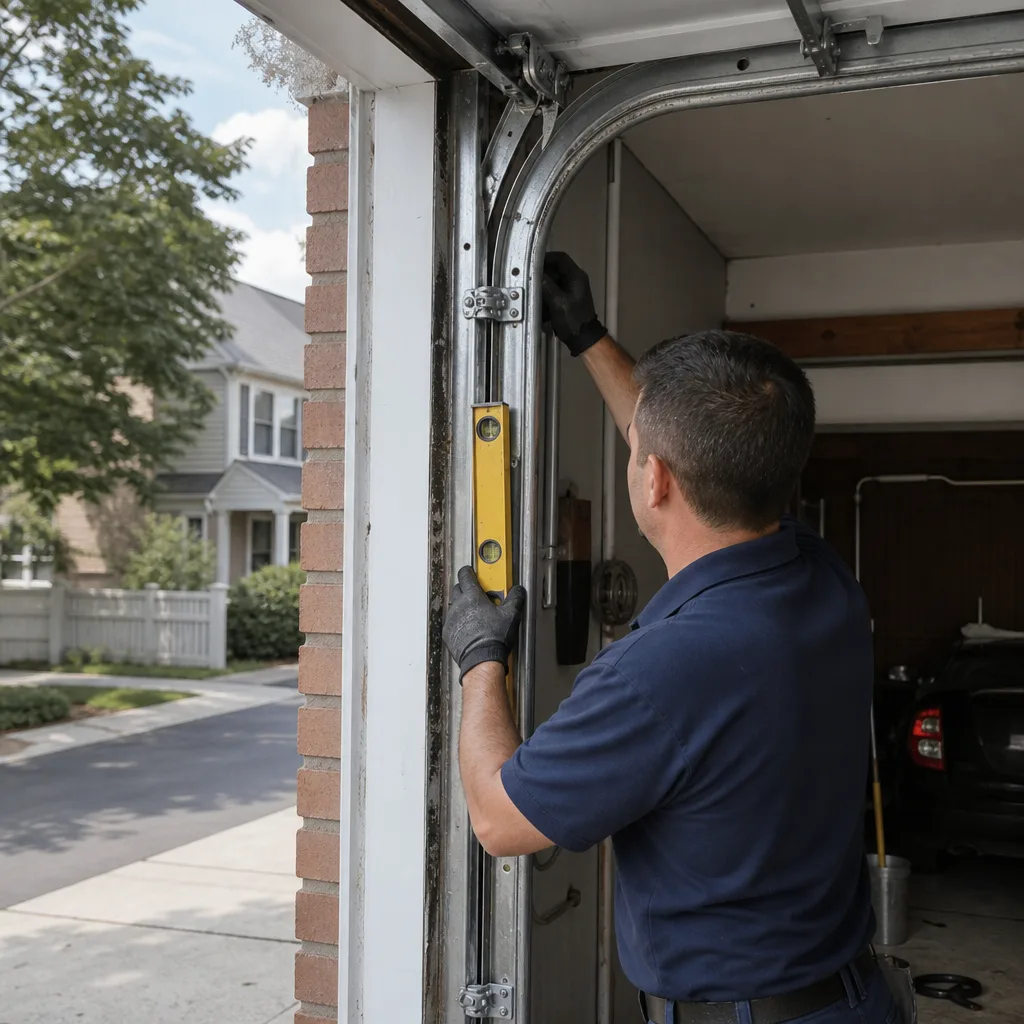
When your local Servo Garage Doors technician arrives, the first step is a documented inspection: photos of the sensor alignment, a reading of the down-force and limit settings, and a manual balance test on the door. None of that costs anything – it is part of every visit, required under Clause 4 of the Haven Standard (the same rule Servo was built on in 2015: the customer sees what was actually found, photographed, before anyone quotes a repair).
From there, the path depends on the cause. A sensor realignment or limit adjustment is usually completed in under an hour. A force calibration takes less than that. If the springs are the problem, the technician will show you the readings, explain exactly what needs to happen, and give you a flat written price for the repair before touching anything – Clause 1 of the Haven Standard, no exceptions. Spring replacement on a standard double door typically takes one to two hours. You get a written scope, a written price, and a photo record of the completed work before the technician leaves. The 365-Day Done Right Promise applies to every repair, backed by the Haven Standard terms page – not a verbal assurance.
Frequently Asked Questions
It depends on why it is reversing. If the cause is a sensor or limit setting, the door is generally safe to leave open while you wait for service – inconvenient, but not hazardous. If the manual balance test shows the door feels very heavy or drops when unsupported, that points to a spring problem, and you should not use the door at all until it is repaired. A failing spring can let the door drop without warning, and that is a real safety risk. Call (970) 536-1724 and let the team know what you found in the manual test so they can advise you on urgency.
If the door is staying fully open and the manual test showed nothing alarming, waiting a day or two is usually fine. If the door will not stay in any secure position, or if you noticed uneven movement or a heavy feel on the manual test, do not wait – those signs point to spring or cable problems that can worsen quickly and become a safety issue. Call (970) 536-1724 to describe what you found and get a straight answer on timing.
In most cases, yes. Your local Servo Garage Doors team handles same-day repair calls, and live phone coverage runs 24 hours a day, 7 days a week – including emergencies. When you call (970) 536-1724, a real person answers, not a recording. You will get a named technician and an on-the-way text, not a callback window. The free written estimate happens on arrival, before any work starts.
No. The price you are given before work starts is the price you pay. That is Clause 1 of the Haven Standard, and it applies to every job without exception – no “while we’re in here” additions, no scope creep. If the technician finds something beyond the original diagnosis, they show you what was found (documented with photos), explain it, and give you a new written price before touching anything additional. You decide whether to proceed.
Get It Fixed
Call (970) 536-1724 – a live person answers around the clock. Your local Servo Garage Doors team will confirm what is happening, give you a free written estimate on arrival, and resolve it under the 365-Day Done Right Promise. No guesswork, no surprises, no work starts until you have the price in writing.
Written by Marcus Deller, Owner at Servo Garage Doors, serving communities nationwide since 2015.
What Our Customers Say
"Opener had been stalling for months. The tech showed me the logic board reading, replaced the board instead of the whole unit, and it cost a third of the other quote I had."
- Robert K."They sent a photo of the snapped torsion spring before quoting anything. Price on the estimate was the price on the invoice. I have never had that happen with a home repair."
- Dana W."Text came through with the technician name and photo twenty minutes before he arrived. Small thing, but I stopped worrying about who was at the door."
- Priscilla M.