
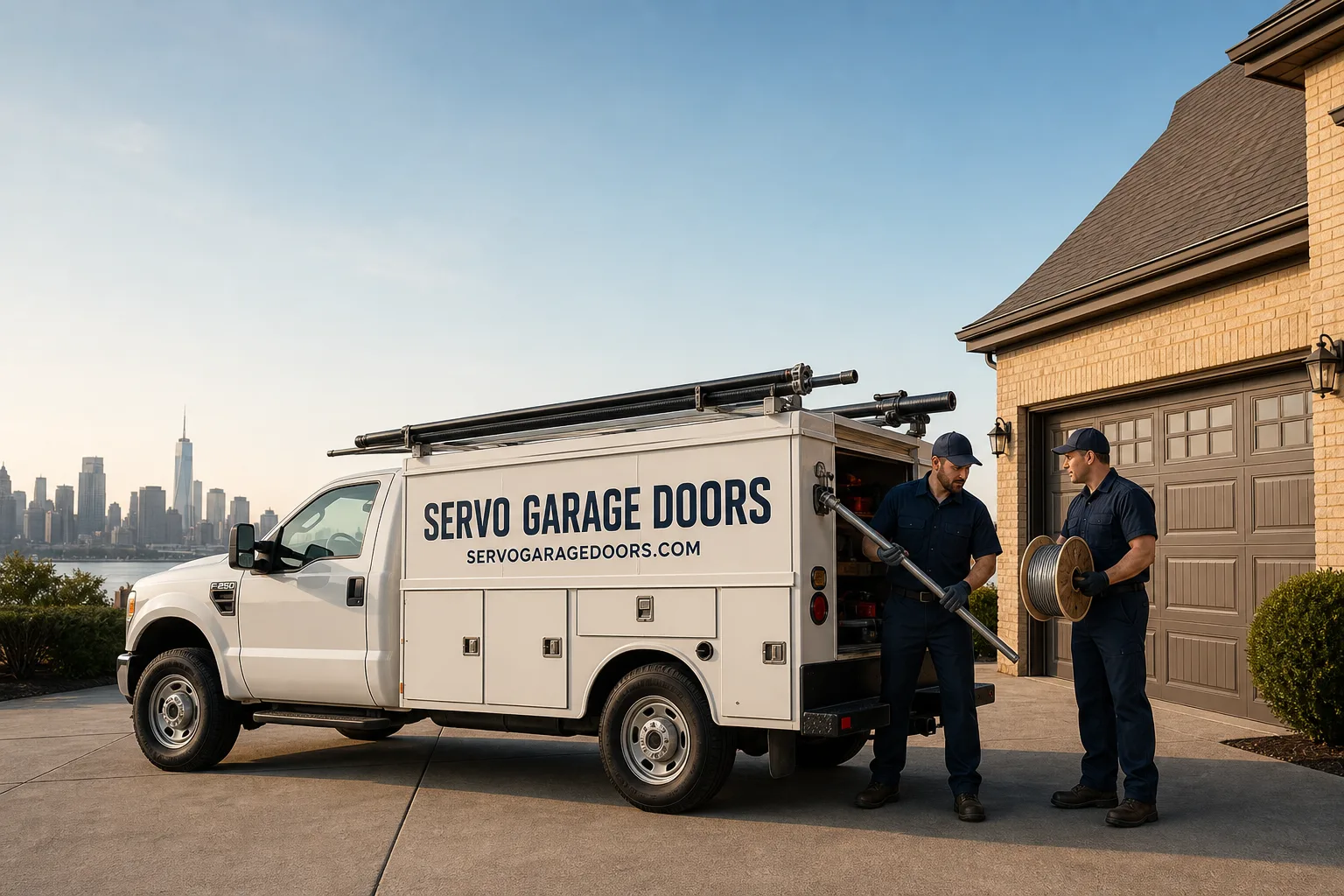
Full 25-point door and opener safety check with every visit - springs, cables, rollers, tracks, and your LiftMaster or Chamberlain opener included
You get a price before we start. It does not change when the truck arrives.
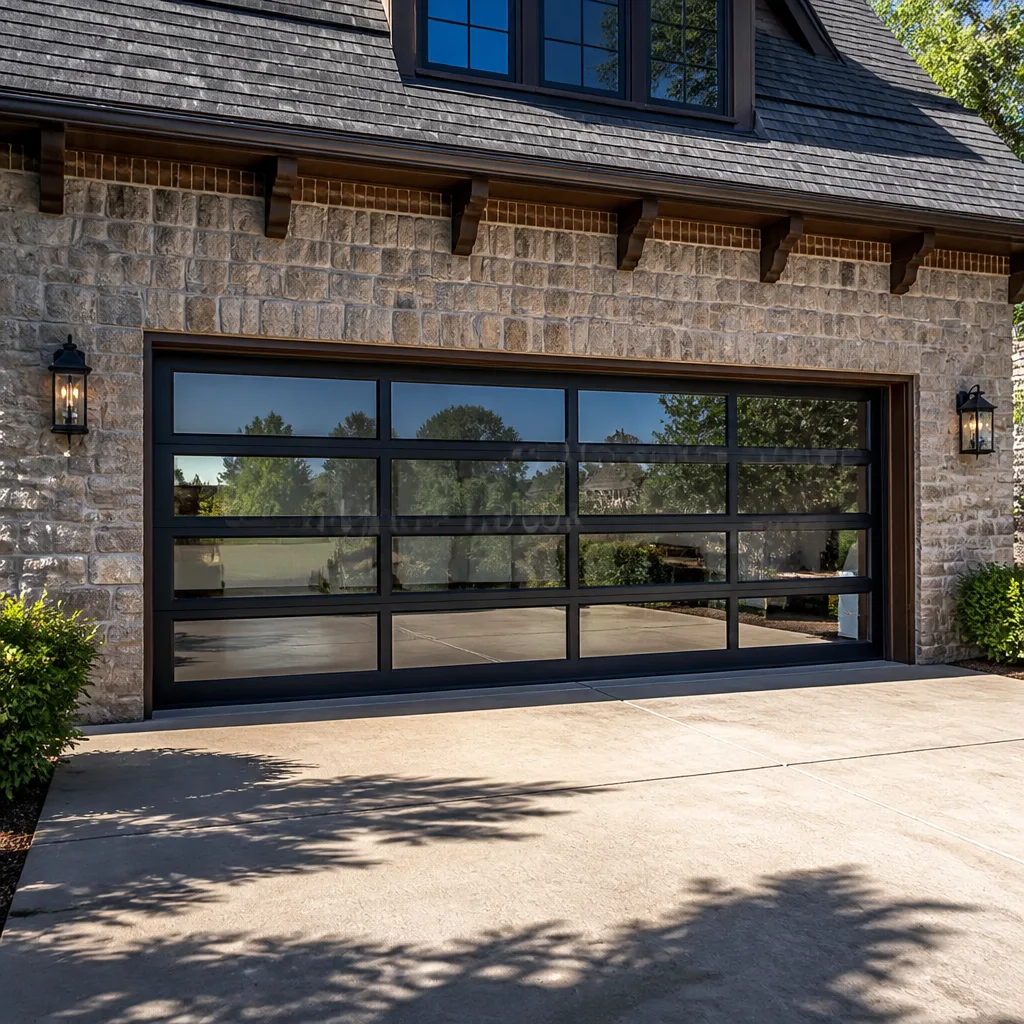
 Before
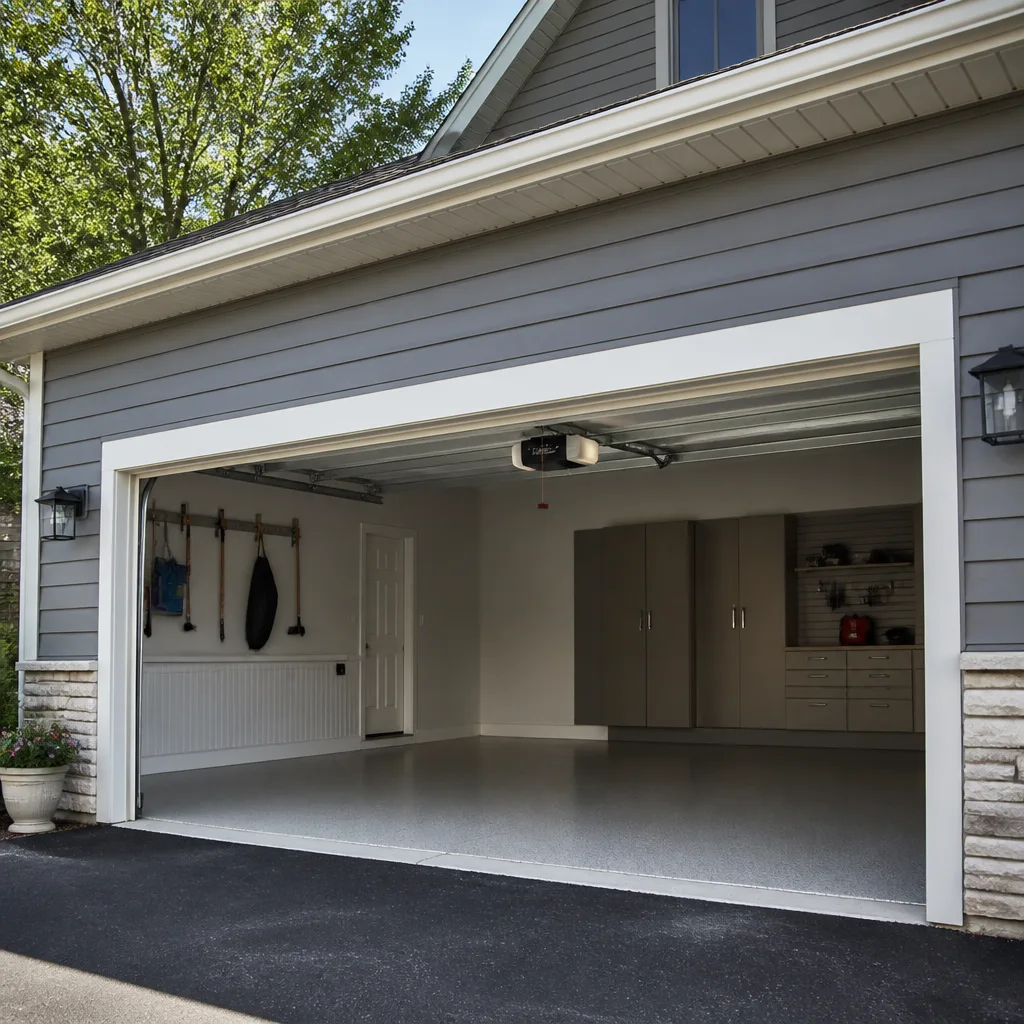
 After
After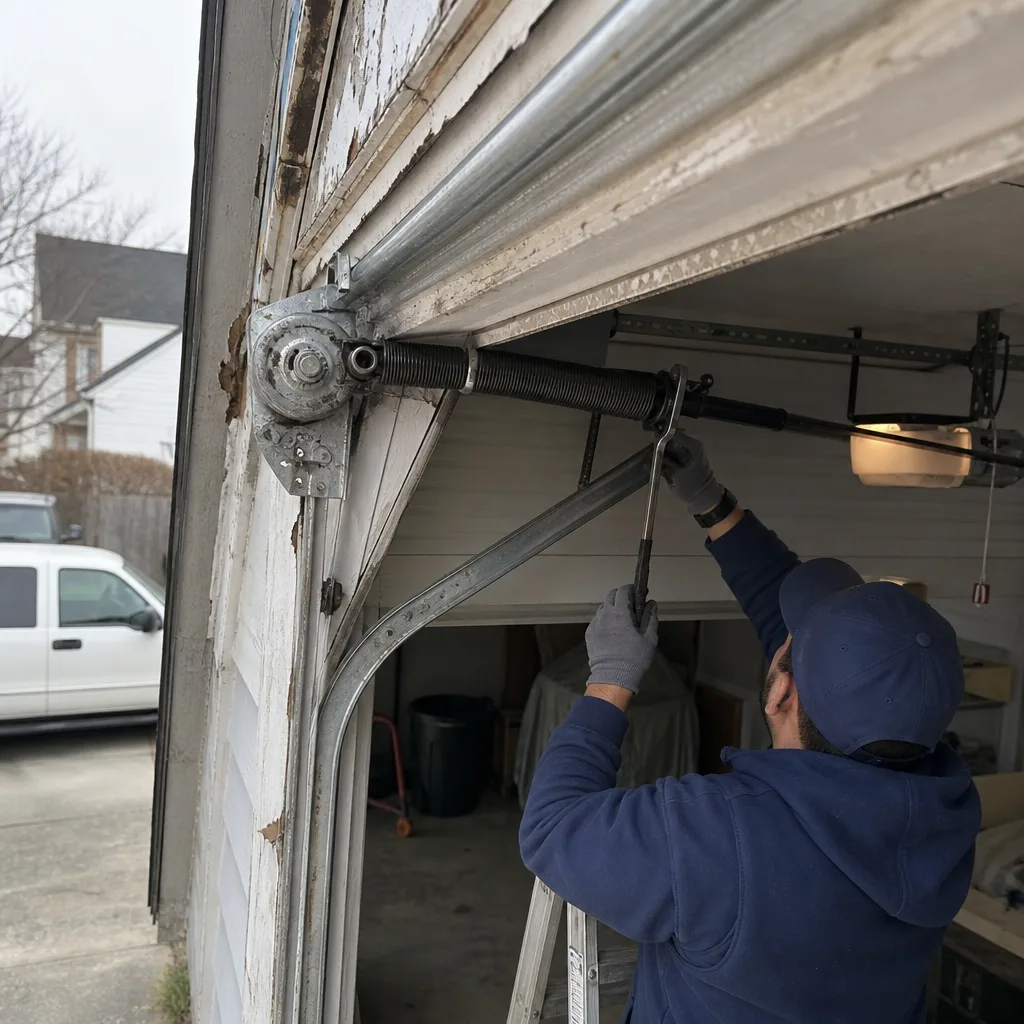 Before
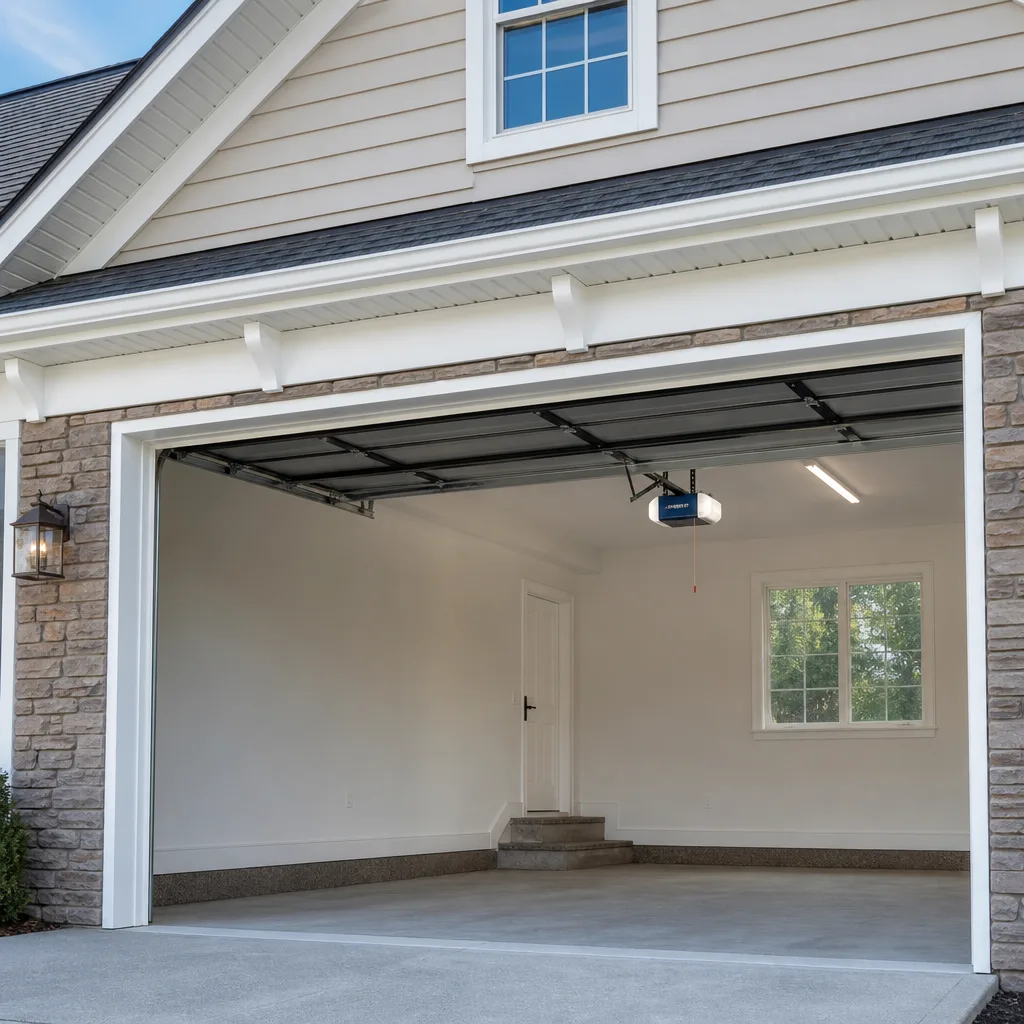
 After
After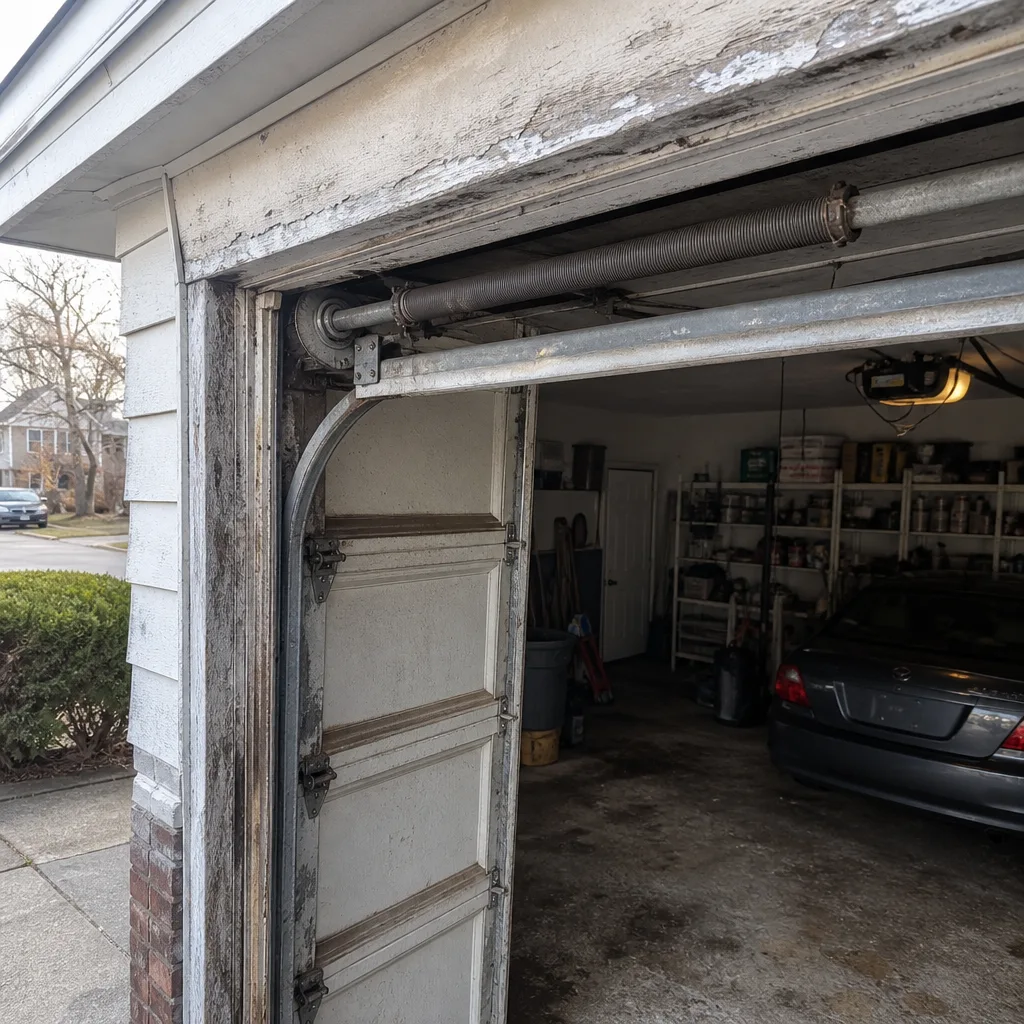 Before
 After
AfterGarage Door Won’t Open
A garage door that won’t open is almost always caused by one of four things: a broken spring, a disconnected or worn cable, a failed opener, or a safety sensor that has lost alignment. In most cases the door itself is fine – the hardware or the opener is what’s finished. A trained technician can usually identify the cause within the first few minutes of looking at it.
That said, “won’t open” covers a wide range of failure modes, and the fix that applies to a door that hums and doesn’t move is different from the fix that applies to a door that does nothing at all. The sections below walk through what each cause looks and sounds like so you can describe it accurately before anyone arrives – or at minimum know what you’re dealing with.
What’s Happening
When a garage door won’t open, the problem is almost never the door panels themselves – it’s the mechanical or electrical component that moves the door. Broken torsion springs, failed opener logic boards, snapped cables, and misaligned safety sensors each account for a large share of these calls. Most are same-day repairs when the right parts are on the truck.
The important thing to understand is that a door sitting still on the tracks is not necessarily damaged. Springs and cables are designed to wear out so the door doesn’t. When one of those components fails, the door stops moving as a protective response. Getting the right diagnosis before any work starts is what keeps a straightforward repair from turning into an unnecessary replacement – and that’s the whole reason Servo photographs the failed part before anyone quotes anything.
Why It Happens
Broken Torsion Spring
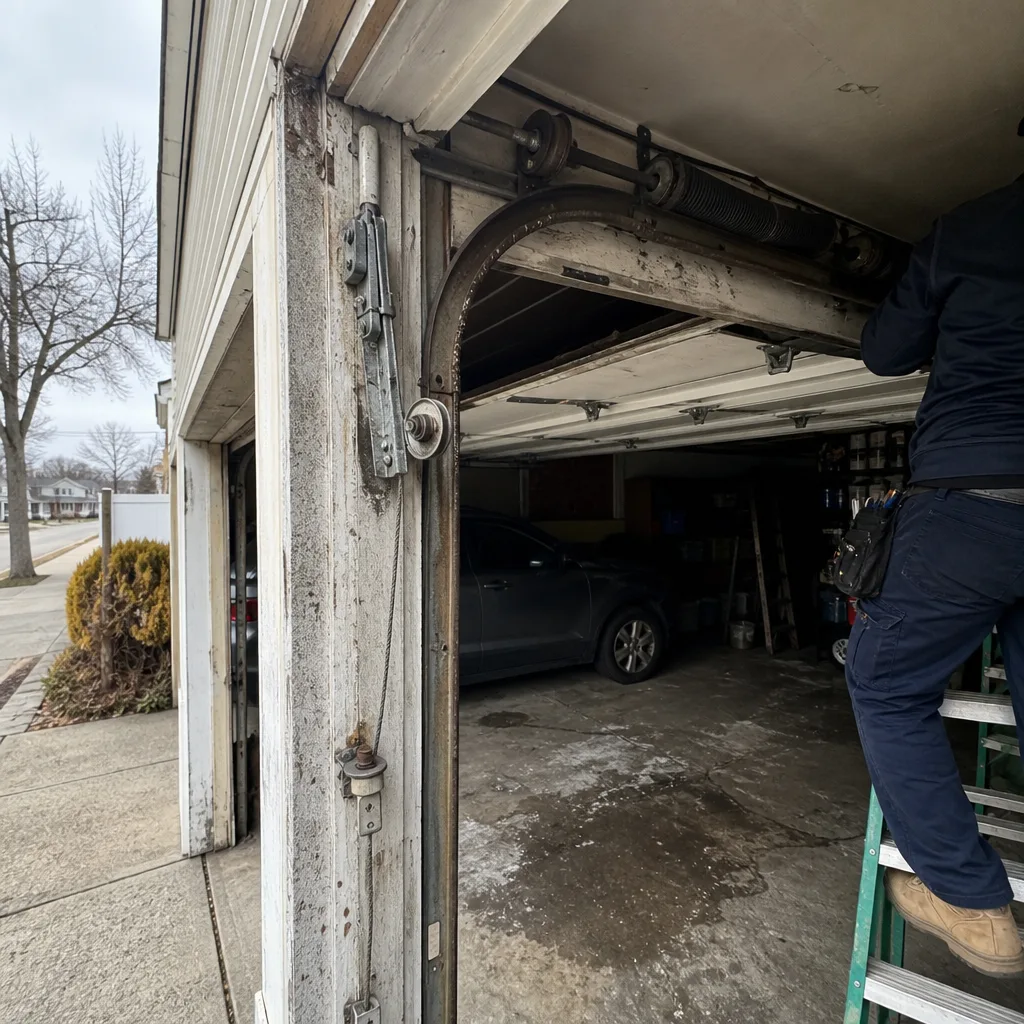
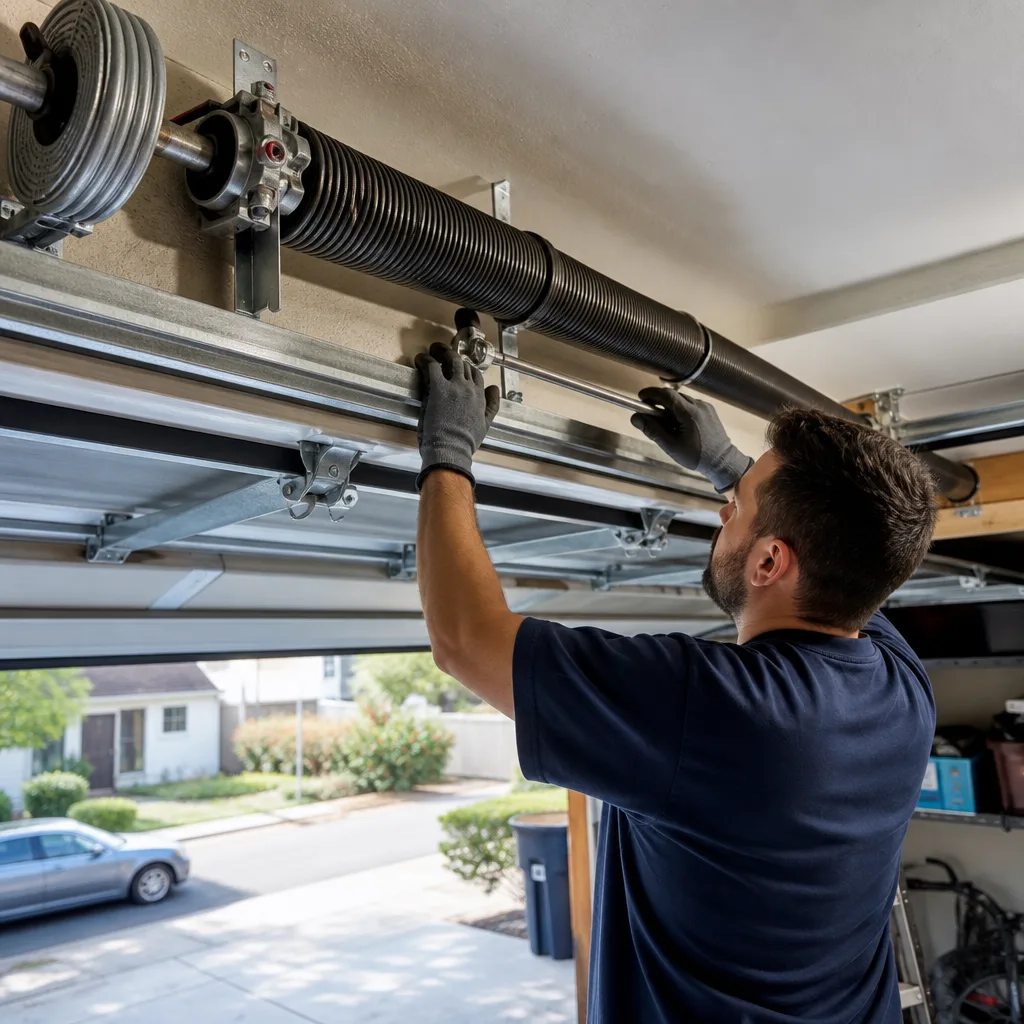
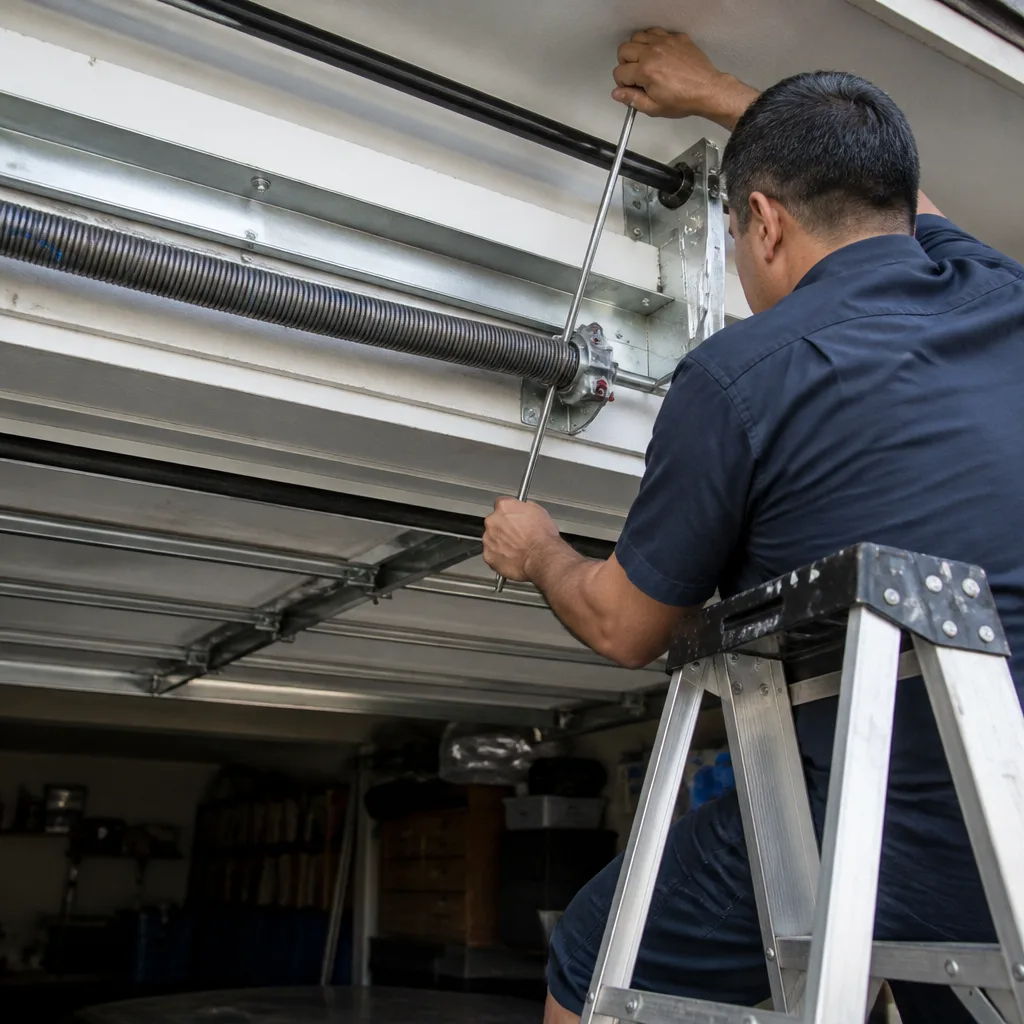
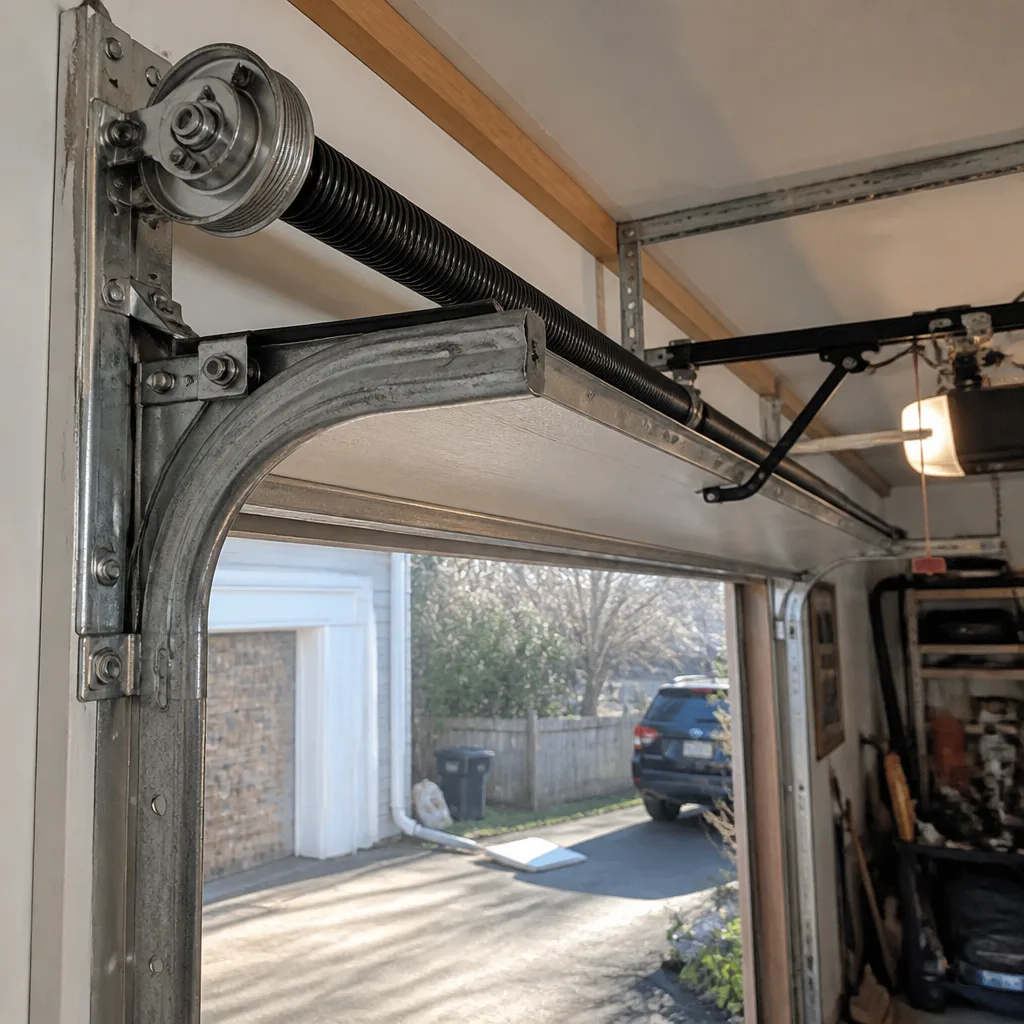
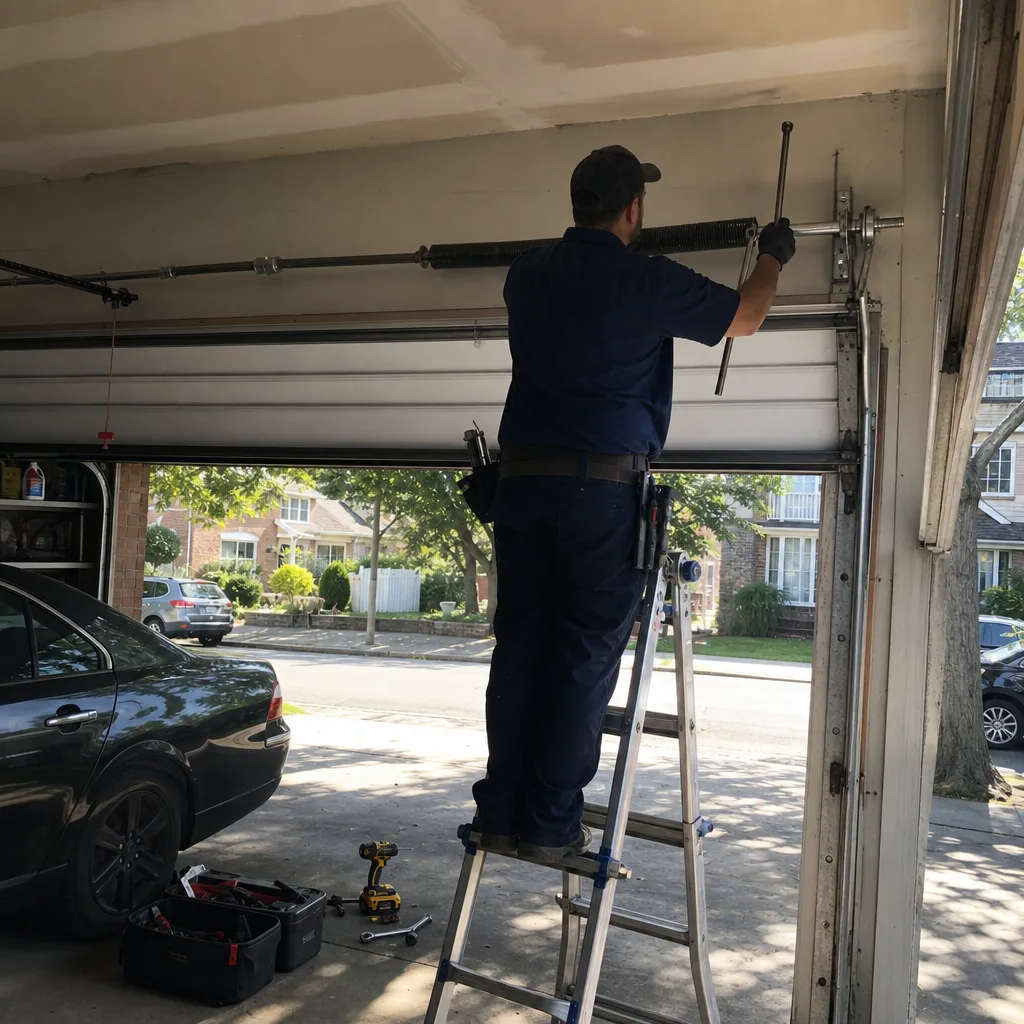
The torsion spring sits on a steel shaft directly above the door opening. It stores the mechanical energy that counterbalances the door’s weight – without it, the opener motor is pulling hundreds of pounds on its own, which it cannot do safely. When a spring breaks, you’ll often hear a loud bang from the garage, the door may have dropped a few inches, and you’ll see a visible gap in the coil when you look up at the shaft. This is the single most common cause of a door that won’t open.
Safety note: Torsion springs are under extreme tension. Do not attempt to release, wind, or replace a spring yourself. The stored energy in a wound spring can cause severe injury in an instant. Stop, step back, and call a technician.
Snapped or Jumped Cable
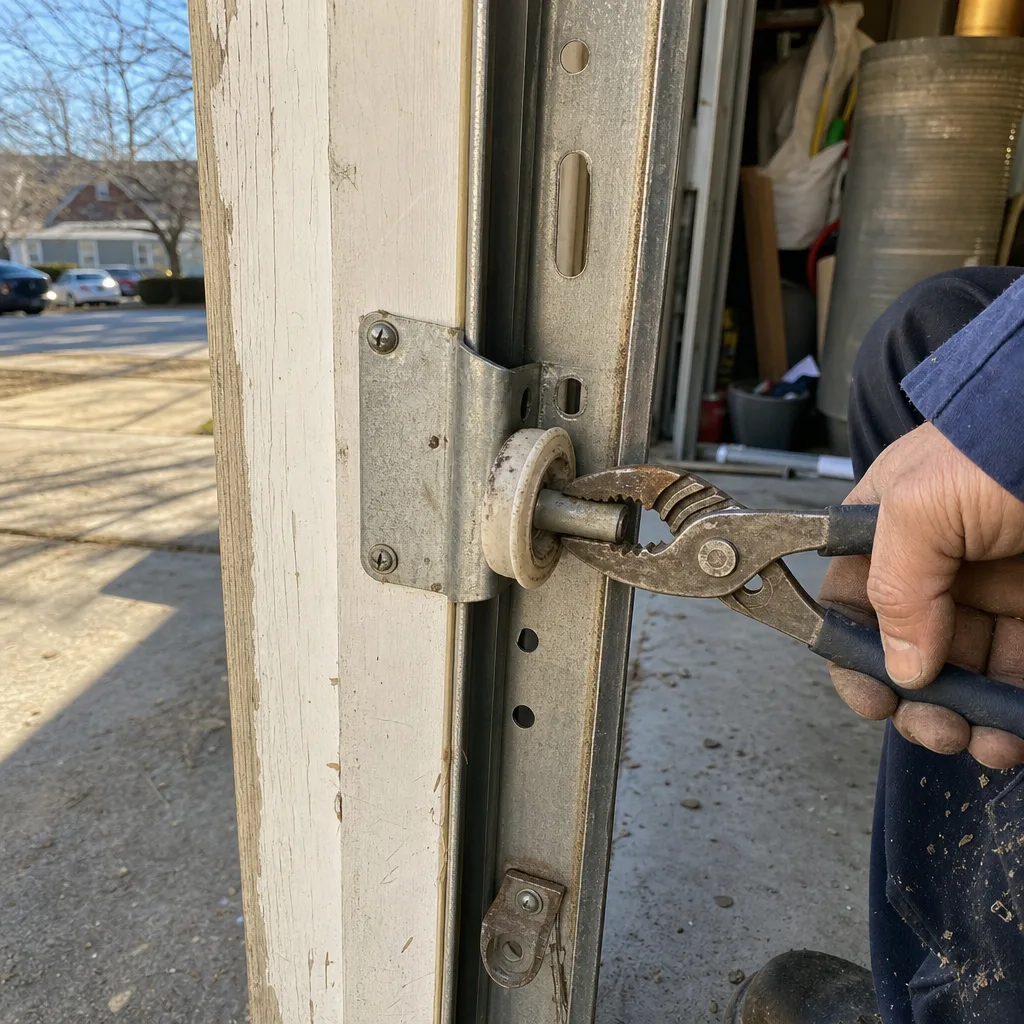
Cables run along both sides of the door, from the bottom corners up to the drums on the spring shaft, and they’re what actually carries the spring’s load to the door. When a cable snaps or jumps off the drum, one side of the door loses support. You’ll notice the door hanging at an angle, one corner lower than the other, or you may see a loose cable coiled on the floor. Like springs, cables are under tension and should not be handled until the spring is de-tensioned by a technician.
Opener Motor or Logic Board Failure
If you press the wall button or the remote and nothing happens – no motor sound, no light, nothing – the opener itself may have failed. Logic boards, capacitors, and drive mechanisms wear out over time. If the motor runs but the door doesn’t move, the drive gear or the trolley carriage may be stripped. You can rule out a simple power issue by checking that the unit is plugged in and the outlet has power. If it does and the opener still does nothing, the unit needs to be assessed.
Safety Sensor Blockage or Misalignment
Every opener manufactured since 1993 has two photoelectric sensors mounted near the floor on either side of the door opening. If the beam between them is broken or the sensors are out of alignment, the opener won’t close – and on some units, it will also refuse to open. Look for a blinking or amber light on one of the sensors. A leaf, a broom handle, or even direct sunlight can trigger a false obstruction reading. If realigning the sensors clears the fault, you’re done. If the wiring is damaged or the sensors themselves have failed, the unit needs service.
BeforeAfterWhat to Do Right Now
- Stop operating the door. If a spring is broken or a cable is loose, forcing the opener to run will strain the motor, potentially bend the track, and make the repair more involved. One press confirmed it doesn’t open – that’s enough information.
- Look up at the spring shaft and check for a visible gap in the torsion spring coil. If you see one, do not touch anything above the door. Note what you see and tell the technician when you call.
- Check the sensors. Each sensor sits about six inches off the floor on either side of the track. Clear anything in the path of the beam, and check whether one sensor light is blinking or off. If cleaning the lens and removing obstructions fixes it, test the door carefully before assuming the problem is fully resolved.
- Check your opener for power. Make sure the unit is plugged in, the outlet is live, and the wall button is wired and connected. If there was a recent power surge or outage, the unit may need to be reset or unplugged and replugged.
- Photograph what you can see – especially any visible damage to cables, springs, or the track. Your local Servo Garage Doors team will do a full photo documentation on arrival under The Haven Standard, but having your own photos from before the technician gets there helps with the timeline and with your own records.
How We Fix It
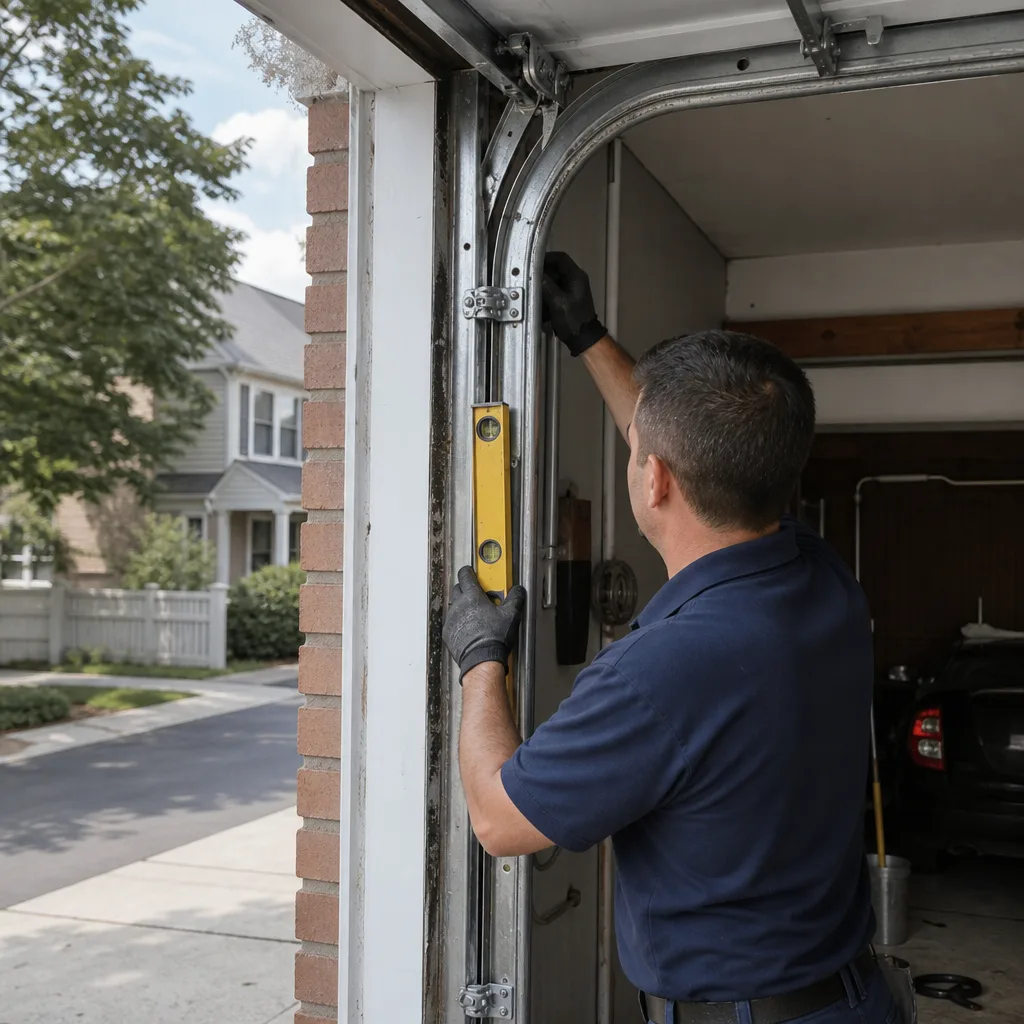
When your local Servo Garage Doors team arrives, the technician’s first job is to identify which component has failed – not to sell you a replacement for something that isn’t broken. That’s the founding rule Servo has operated under since 2015, and it’s now Clause 4 of The Haven Standard: the customer sees the failed part, photographed, before anyone quotes a replacement.
From there, a flat written price and written scope are put in front of you before any work starts – no exceptions, no “we’ll see what it comes to.” That’s Clause 1. If it’s a broken spring, the technician replaces it with a correctly rated spring for your door’s weight and cycle count, sets the cable tension on both sides, and tests the balance manually. If it’s an opener fault, we diagnose to the component – logic board, capacitor, drive gear – and quote the repair or the replacement unit, whichever is the honest call. Most spring and cable repairs are completed in under two hours. Opener work varies by unit.
The job closes with a documented photo record of what was found and what was done. All of this falls under the 365-Day Done Right Promise – if it’s not right, we make it right. Your local Servo Garage Doors team handles both Garage Door Repair and Garage Door Opener Repair for all major brands including LiftMaster, Chamberlain, Genie, Clopay, Amarr, Wayne Dalton, Craftsman, and Raynor.
Frequently Asked Questions
It depends on why it stopped. A broken torsion spring is a genuine safety hazard – the door is no longer properly counterbalanced and could come down hard if someone tries to move it manually. A failed opener with intact springs is less urgent but still means your garage is either stuck open or you can’t get in or out. If you suspect a broken spring or a loose cable, don’t attempt to manually lift the door and call your local Servo Garage Doors team at (970) 536-1724 – same-day service is available for exactly this situation.
Yes. Calls to Servo Garage Doors are answered by a live person 24 hours a day, every day, including holidays – not a recording. When you call (970) 536-1724, your local team will confirm availability, give you a real arrival window, and send a text when the named technician is on the way. Emergency calls get the same live-answer treatment as any other call.
No. The flat written price and written scope are delivered before any work starts – that’s Clause 1 of The Haven Standard, and there are no exceptions to it. If the technician finds something additional that needs attention, a separate written quote is issued before that work begins. There is no scope creep and no “while we’re in here” additions to the bill you didn’t approve.
Probably not. A humming opener that doesn’t move the door usually points to a stripped drive gear or a broken spring putting too much load on the motor – not a failed opener unit. The technician will diagnose to the specific component, show you what failed (photographed, per Clause 4), and quote only what’s needed. Servo was built on exactly this premise: a $40 part shouldn’t cost you a full opener replacement. Call (970) 536-1724 and we’ll tell you what’s actually wrong.
Get It Fixed
Call (970) 536-1724 now – a real person answers every call, around the clock. Your local Servo Garage Doors team will give you a real arrival window, a flat written price before anything starts, and a documented photo record when the job is done. Same-day service available.
Written by Marcus Deller, Owner at Servo Garage Doors, serving communities nationwide under The Haven Standard since 2015.
What Our Customers Say
"Opener had been stalling for months. The tech showed me the logic board reading, replaced the board instead of the whole unit, and it cost a third of the other quote I had."
- Robert K."They sent a photo of the snapped torsion spring before quoting anything. Price on the estimate was the price on the invoice. I have never had that happen with a home repair."
- Dana W."Text came through with the technician name and photo twenty minutes before he arrived. Small thing, but I stopped worrying about who was at the door."
- Priscilla M.