
Full 25-point door and opener safety check with every visit - springs, cables, rollers, tracks, and your LiftMaster or Chamberlain opener included
You get a price before we start. It does not change when the truck arrives.
 Before
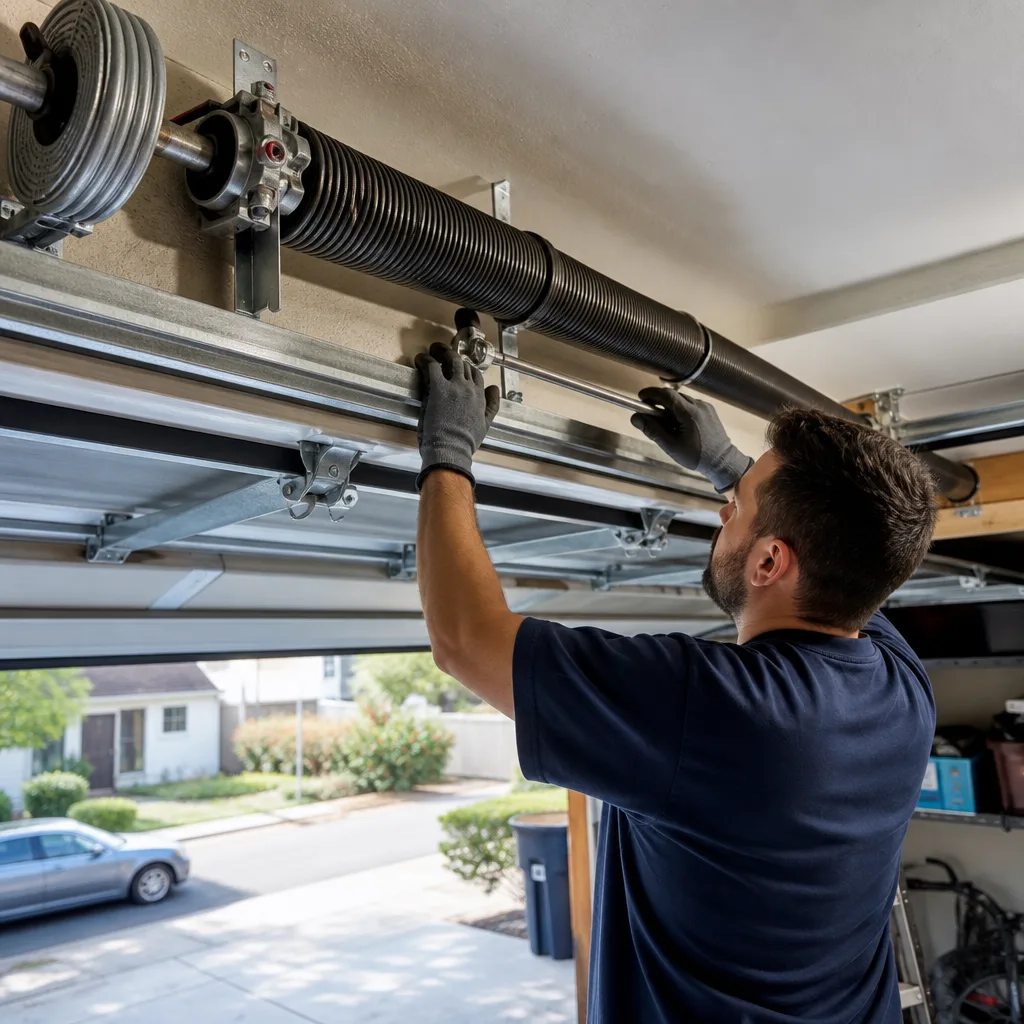 After
After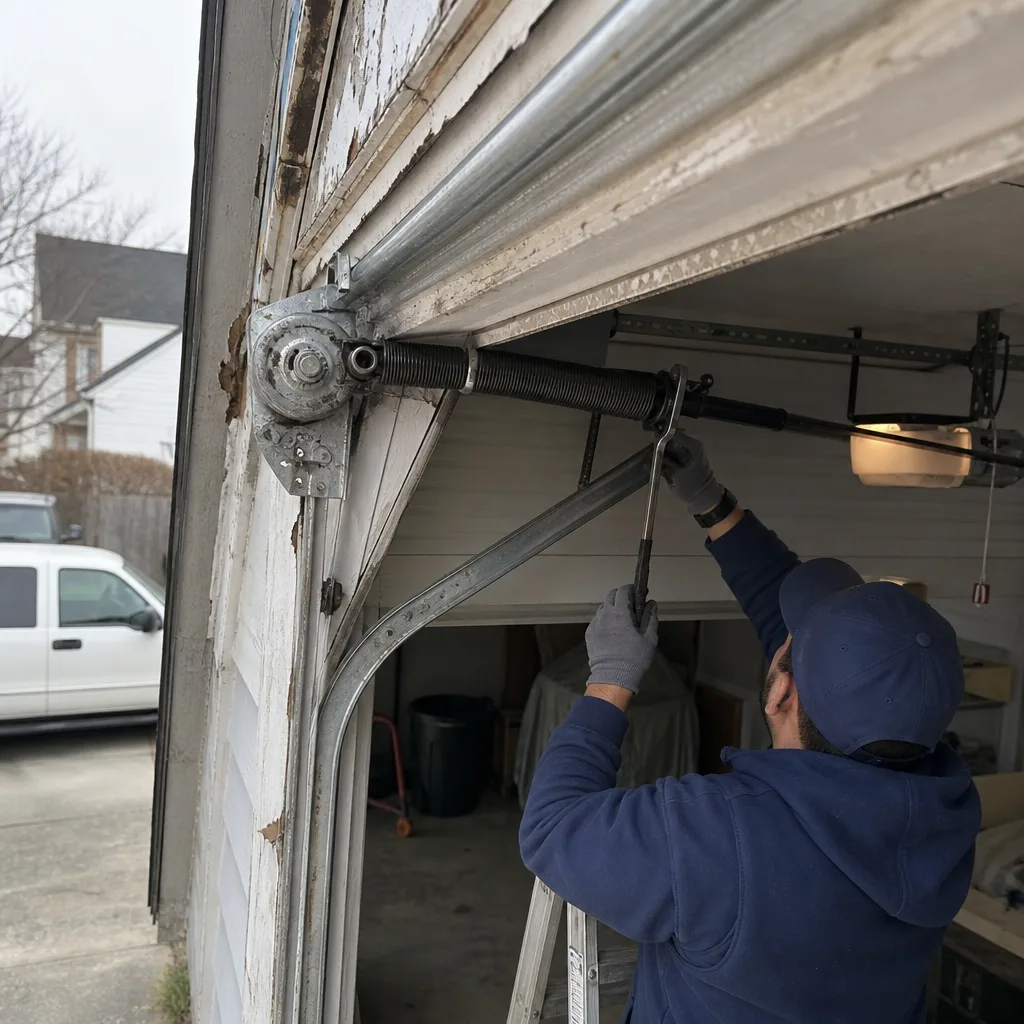 Before
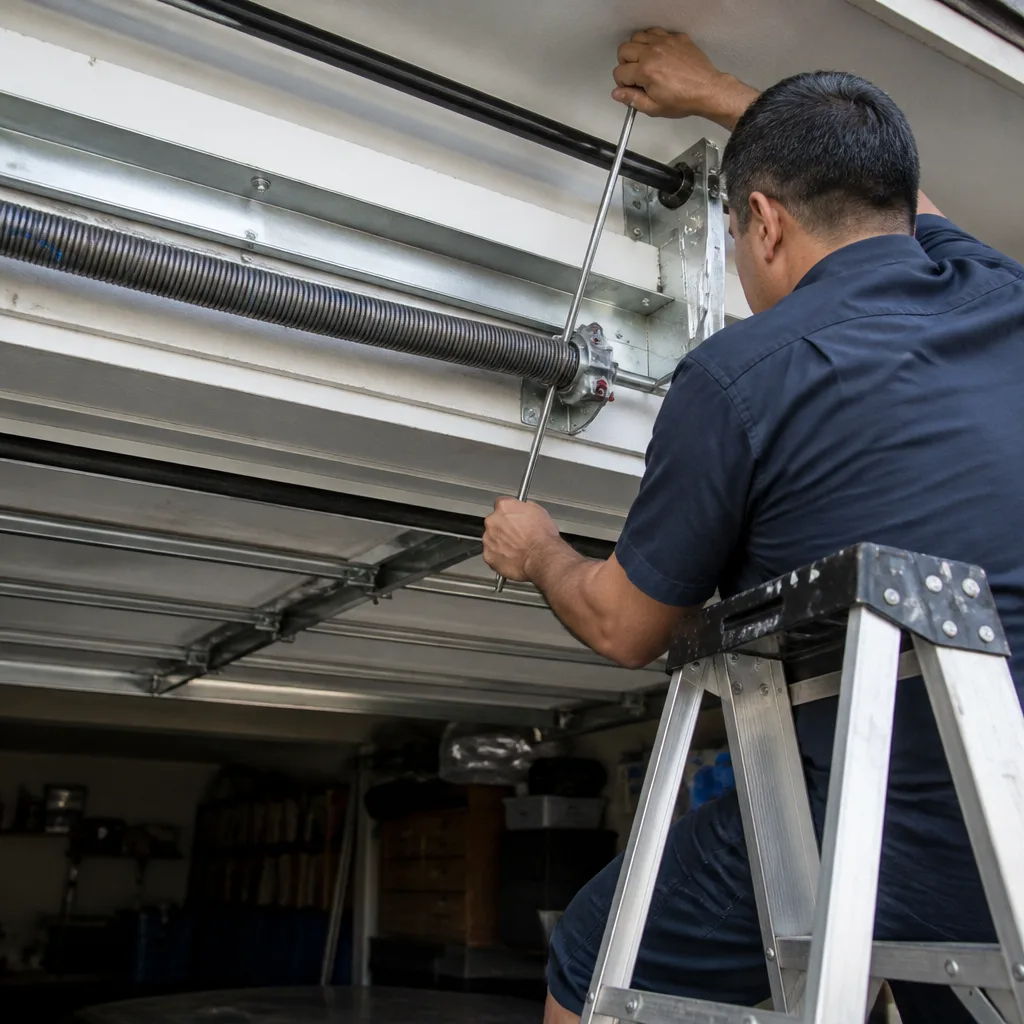 After
After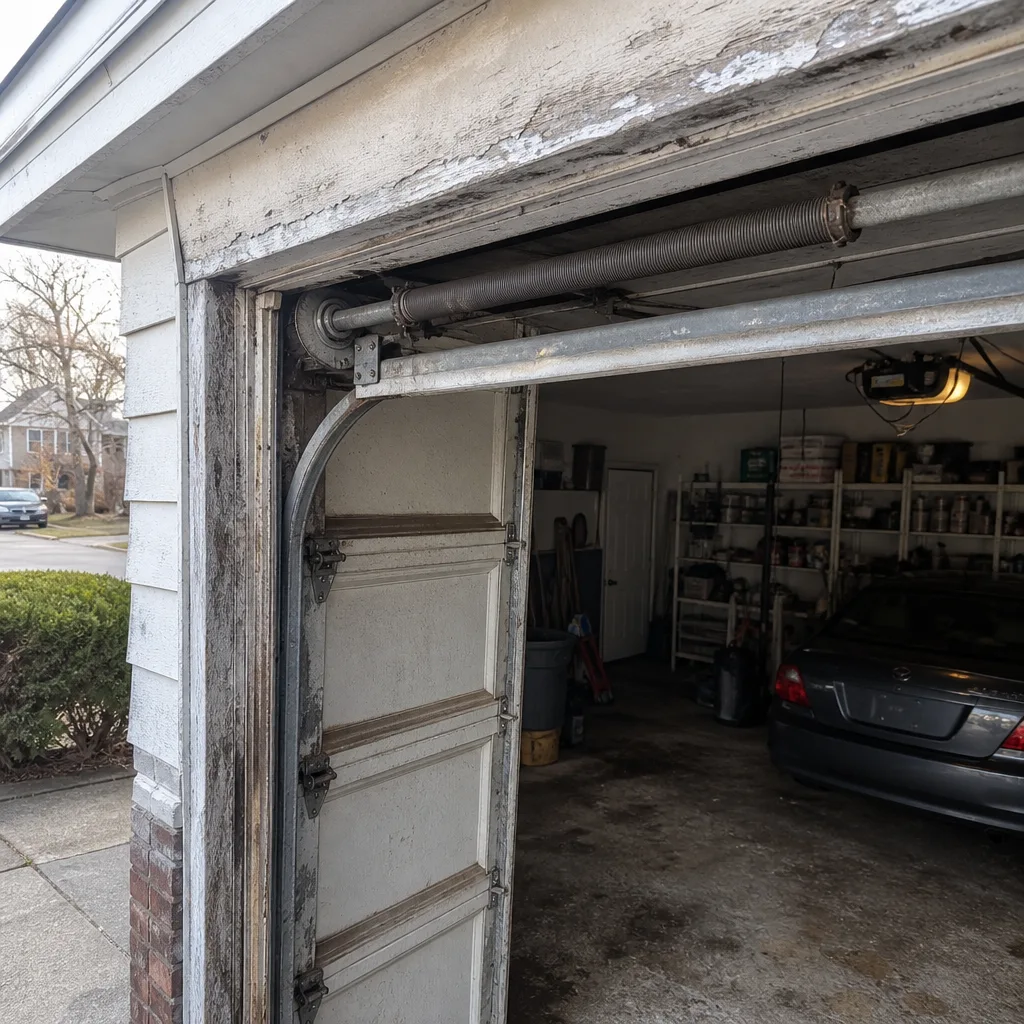 Before
 After
AfterGarage Door Won’t Stay Closed
A garage door that won’t stay closed is almost always caused by one of four things: misaligned or dirty safety sensors, a limit switch set too short, a broken or worn torsion spring, or a damaged bottom seal that keeps the door from reading as fully seated. In most cases, the door is bouncing back up immediately after it touches the floor, or reversing midway down without finishing the travel.
The door’s behavior is trying to tell you something specific. If it reverses the moment it hits the floor, the sensors or limit settings are the most likely cause. If it starts closing and then stalls or reverses partway through the travel, a spring or mechanical issue is doing the work. Understanding which one you’re looking at before anyone arrives saves time and means you can describe it clearly when you call.
Why It Happens
Misaligned or Dirty Safety Sensors
The two sensors mounted near the base of each track have to be pointed directly at each other to allow the door to close. If one bracket has been bumped, or if the lenses are coated in dust, grease, or a spider web, the opener reads the beam as broken and reverses the door rather than risk closing on something in the way. The clearest sign is a solid or blinking amber light on one of the sensor units, usually the sending side. If you look at both sensors and one light is out or blinking, alignment or a dirty lens is almost certainly the issue.
Limit Switch Set Too Short
Every opener has a limit switch that tells the motor how far down the door needs to travel before stopping. If that setting is too short, the opener reads the floor contact as an obstruction and reverses before the door fully seats. You’ll see this as a door that gets to within an inch or two of the floor and then immediately backs up. The limit adjustment is typically a small knob or dial on the back of the opener motor head – but the exact location varies by brand, and an incorrect adjustment in either direction can cause a different problem, so this is one best left to a technician if you’re not certain.
Worn or Broken Torsion Spring
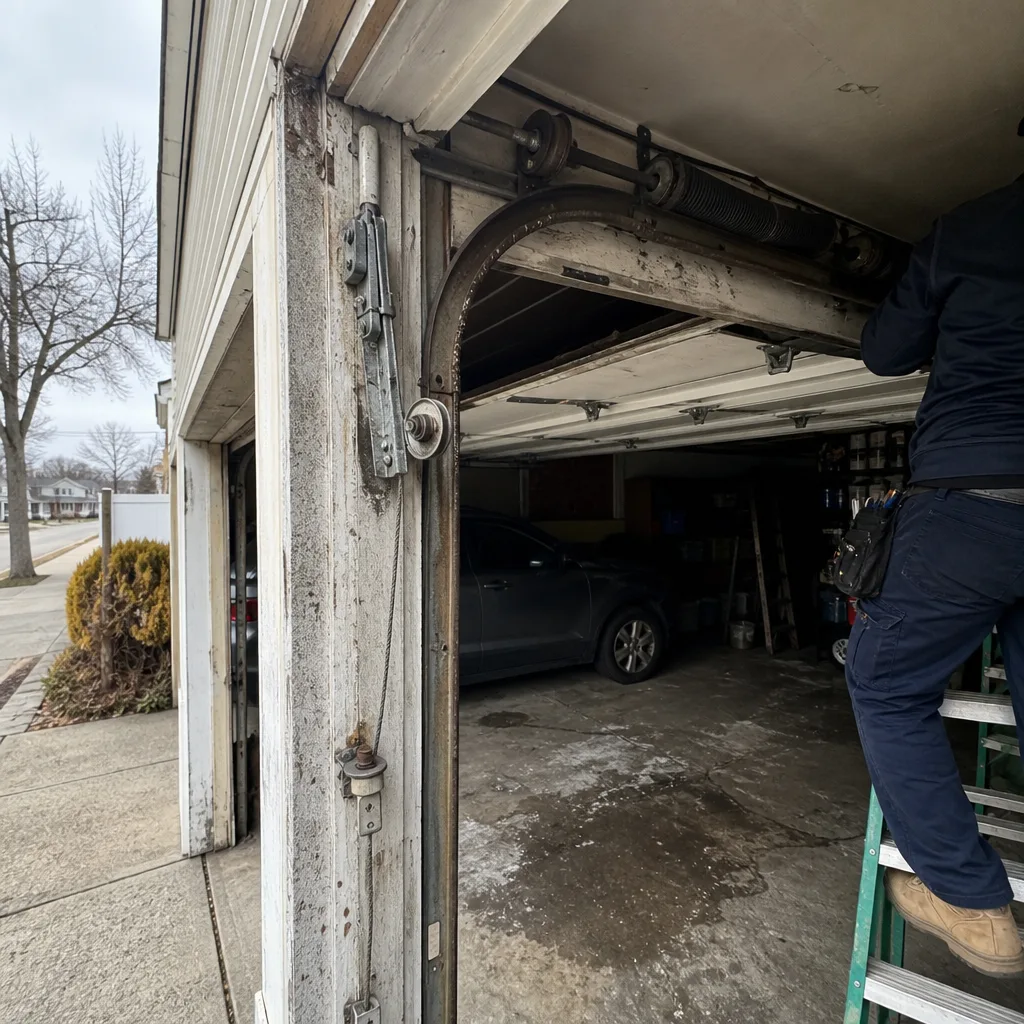
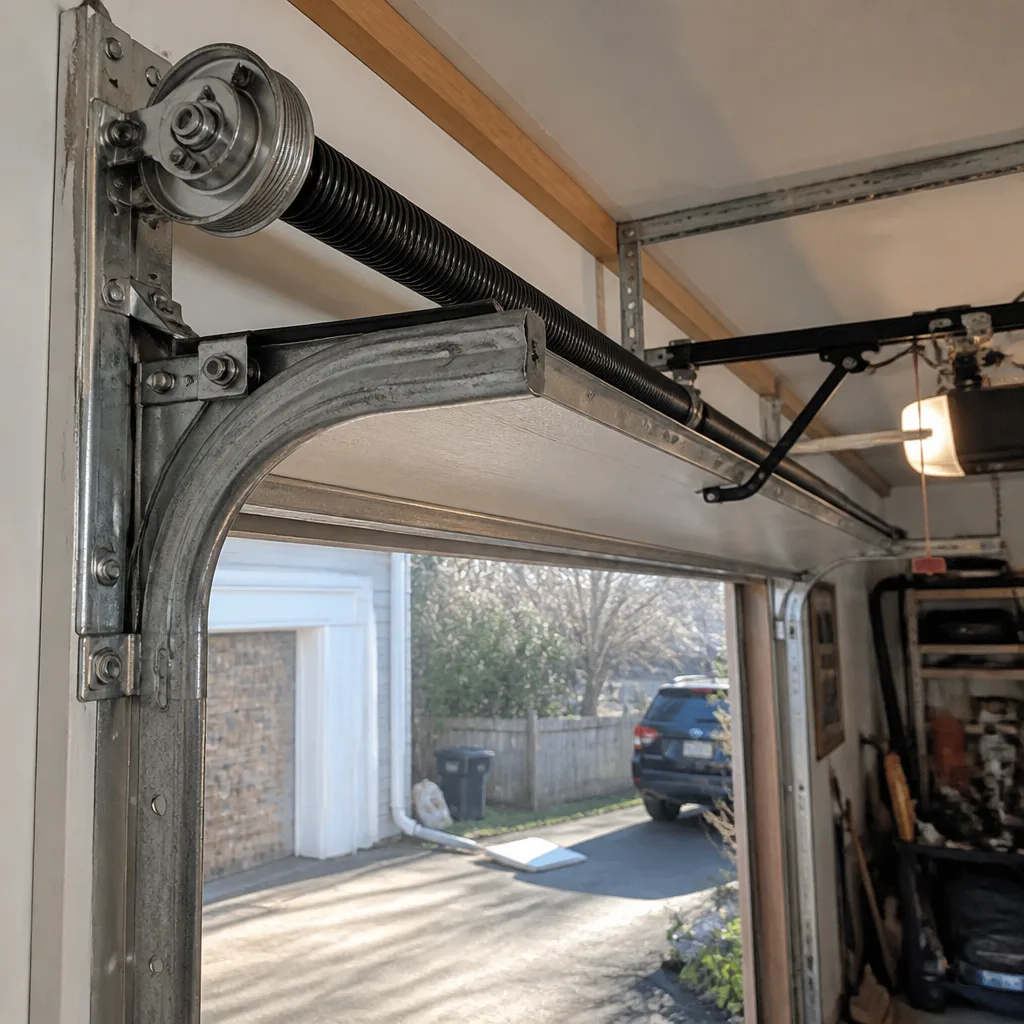
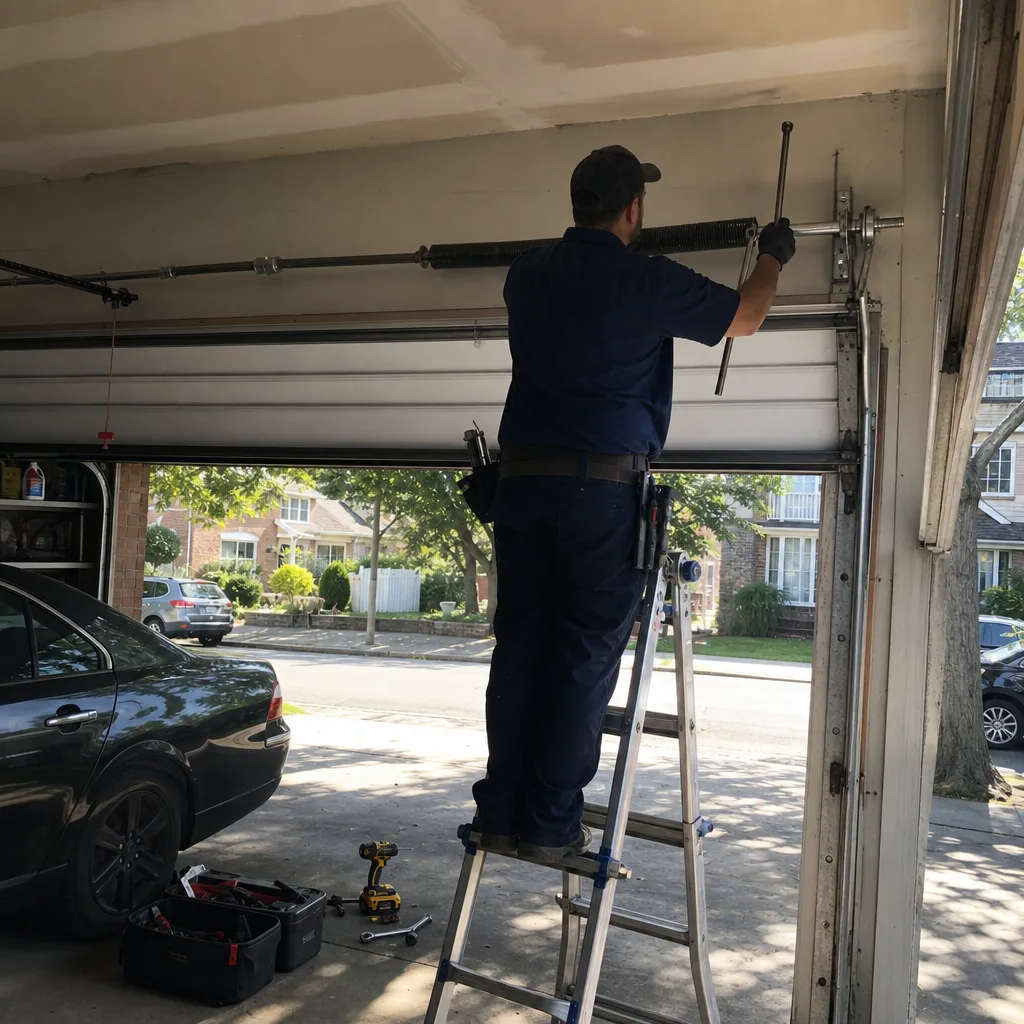
The torsion spring sits horizontally above the door and carries most of the door’s weight during travel. When a spring breaks or loses tension, the opener motor strains to compensate. In some cases the door reverses because the opener’s torque sensor detects the resistance and treats it as an obstruction. A visible gap in the spring coil, a loud bang that preceded the problem, or a door that now feels extremely heavy when you try to lift it manually are all signs of spring failure. Do not attempt to adjust, repair, or bypass a torsion spring yourself. These components are under hundreds of pounds of stored tension and can cause serious injury if mishandled. Stop using the door and call.
Damaged or Missing Bottom Seal
The rubber weatherstrip along the bottom edge of the door seals it against the floor and, on some opener models with floor-contact detection, helps the opener confirm the door is fully down. If the seal is torn, compressed flat, or missing entirely, the door may not seat evenly and the opener may read it as still in travel. Look at the bottom edge from inside the garage: the seal should be a uniform rubber strip with no gaps, cracks, or sections that are visibly shredded or missing.
What to Do Right Now
- Stop cycling the door repeatedly. If there’s a spring issue or a sensor alignment problem, running the opener through repeated attempts adds wear and, in a spring failure scenario, real risk. One or two test cycles to observe the behavior is enough.
- Check both sensor lights. Walk to the sensors at the base of each track and look at the LED indicators. Both should be steady – typically one green, one amber or both the same color depending on brand. A blinking or unlit indicator tells you where to look first.
- Wipe the sensor lenses. Use a dry cloth to clean both lenses. Dust, grease, or a web across one lens is one of the most common causes and one of the few things safe to address yourself. After cleaning, watch whether the light stabilizes.
- Look at the torsion spring above the door. From inside the garage, look at the horizontal spring above the door header. If you can see a clear gap in the coil or a section that looks separated, that spring is broken. Do not operate the door. Do not attempt to touch or adjust the spring. Call your local Servo Garage Doors team.
- Photograph what you see before anyone arrives. A photo of the sensor lights, the spring condition, or the point at which the door stops is useful for the technician and consistent with how Servo documents every job from the start – evidence first, not description.
BeforeAfterHow We Fix It
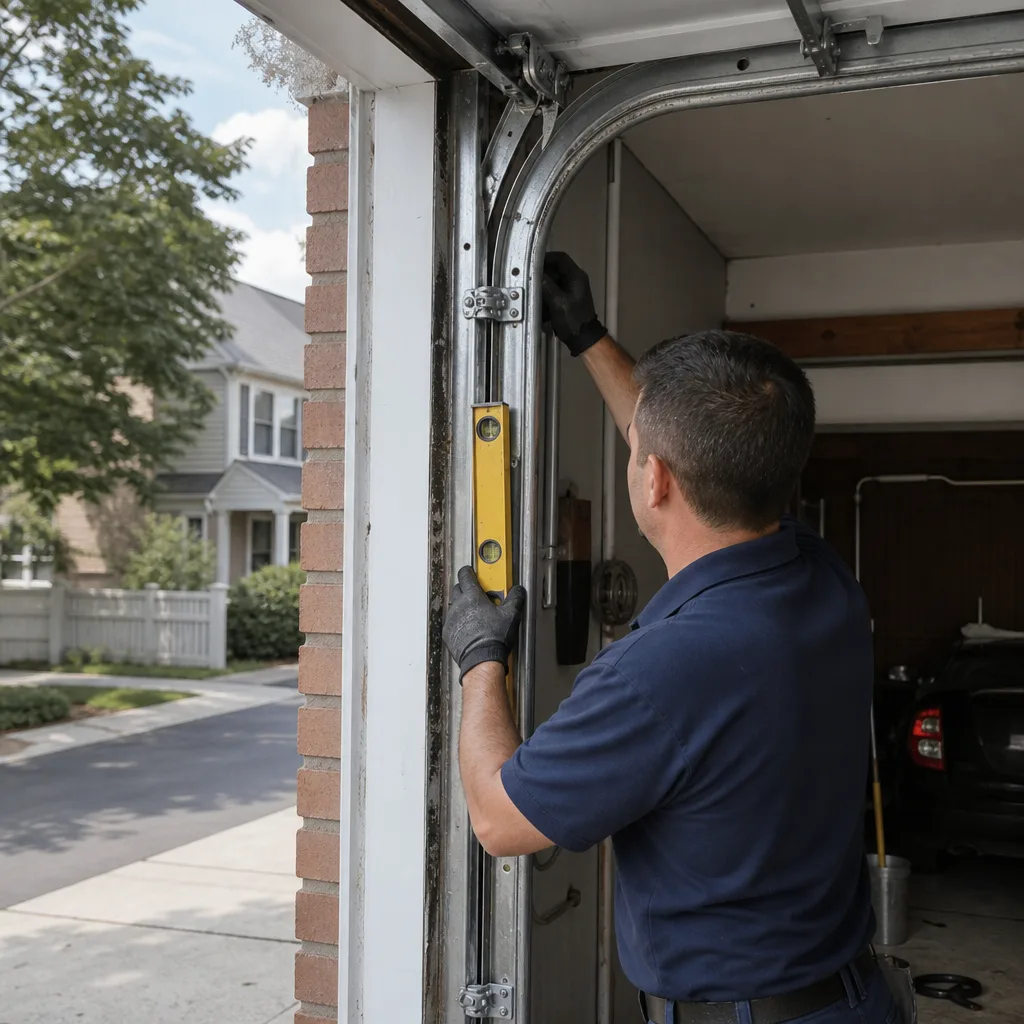
When your local Servo Garage Doors technician arrives, the first thing they do is run the door through its travel and observe the failure point directly. They’re looking at sensor alignment and output readings, opener limit and force settings, spring tension, and the door’s mechanical balance – tested by disconnecting the opener and lifting the door by hand to the midpoint. If it drifts up or drops, the spring balance is off.
From that assessment, they put together a flat, written price and a written scope before any tool comes off the truck. That is Clause 1 of The Haven Standard, and it applies to a sensor realignment the same way it applies to a full spring replacement. You see what was found – photographed – and you see what it costs to fix it, before you decide. The repair itself, whether it’s a sensor bracket, a limit adjustment, a new torsion spring, or a bottom seal swap, typically takes under two hours for most of these causes. The service falls under our Garage Door Repair offering, and every job closes with a documented photo record of findings and completed work, covered by the 365-Day Done Right Promise.
Frequently Asked Questions
It depends on the cause, but yes, in some cases it is. A broken torsion spring means the door is unsupported and can drop suddenly if the opener’s trolley mechanism releases for any reason – that’s a real safety hazard for anyone standing underneath it. Beyond physical risk, a door that won’t fully close leaves your home unsecured. If you suspect a spring failure, stop using the door entirely and call (970) 536-1724 – this is not a situation to monitor overnight.
For repair calls, yes – your local Servo Garage Doors team handles same-day service, and emergency calls are answered by a live person 24 hours a day, 7 days a week, including holidays. When you call (970) 536-1724, you reach a real person, not a recording, and you’ll get a named technician and a text when they’re on the way. No callback windows.
No. The written price and written scope are delivered before any work starts – that’s Clause 1 of The Haven Standard, and it doesn’t have an asterisk. If the technician finds something additional once the door is open, they stop, photograph it, and give you a revised written price before proceeding. You decide whether to add it. No scope creep, no surprises on the invoice.
Bring the paperwork. Servo offers a free second opinion on any written estimate from another company – no coupon needed, no obligation. A technician will look at the same problem, tell you what they actually find, and give you a written price of their own. If the other quote was fair, they’ll tell you that too.
Get It Fixed
Call (970) 536-1724 – live answer, 24 hours a day, 7 days a week. Your local Servo Garage Doors team arrives with a named technician, a text when they’re on the way, and a written price before any work starts. Same-day repair service available. No callbacks, no surprises.
Written by Marcus Deller, Owner at Servo Garage Doors, serving communities nationwide under The Haven Standard since 2015.
What Our Customers Say
"Opener had been stalling for months. The tech showed me the logic board reading, replaced the board instead of the whole unit, and it cost a third of the other quote I had."
- Robert K."They sent a photo of the snapped torsion spring before quoting anything. Price on the estimate was the price on the invoice. I have never had that happen with a home repair."
- Dana W."Text came through with the technician name and photo twenty minutes before he arrived. Small thing, but I stopped worrying about who was at the door."
- Priscilla M.